
How Much Is a Half Cow? Unraveling the True Cost
How Much Is a Half Cow? Cost, Cuts, and Real-World Value
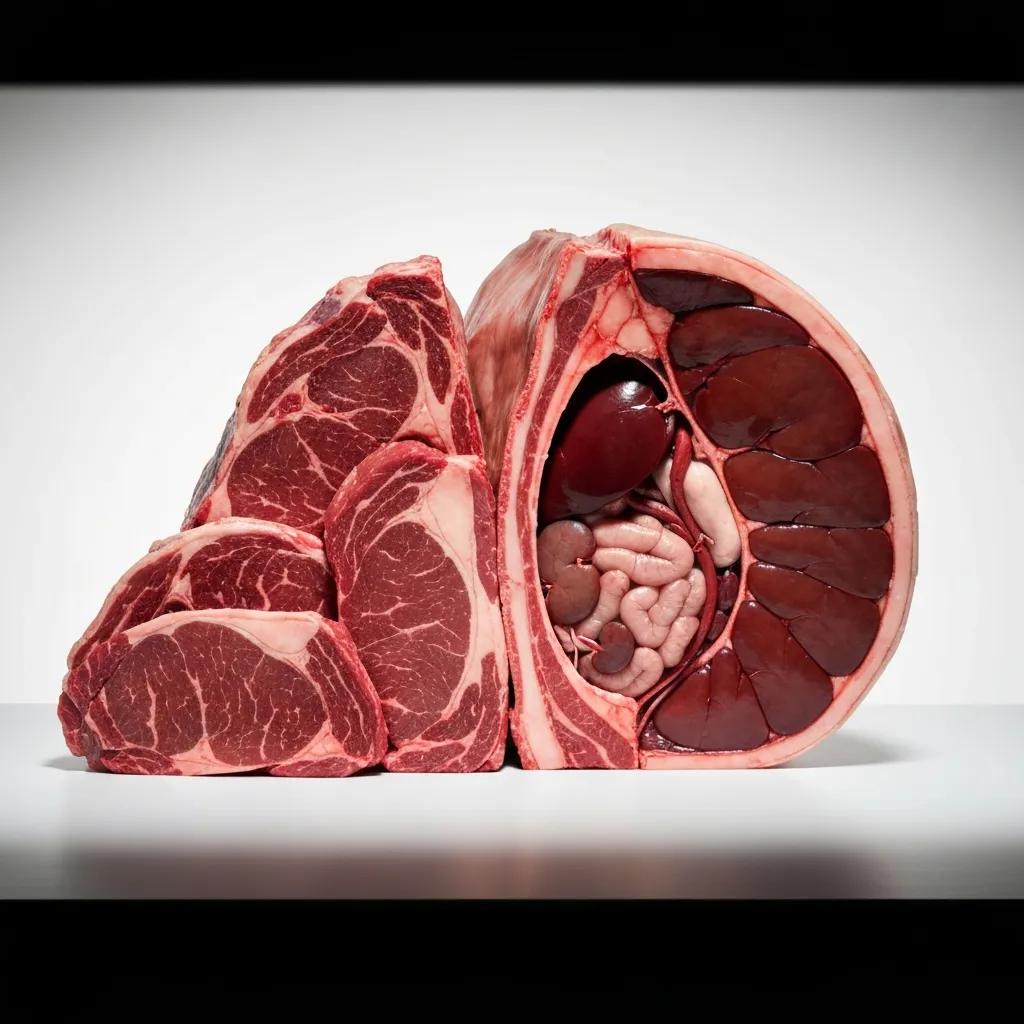
Buying a half cow is one of the most practical ways to fill your freezer with high-quality beef while choosing the cuts, packaging sizes, and source. This guide walks you through what a half-cow share actually is, how hanging weight converts to take-home packaged pounds, simple cost-per-pound math, and the trade-offs between more steaks or more ground beef for everyday meal planning. You’ll also learn how much freezer space a half cow needs, best practices for packaging and storage, and how breed and finishing methods shape flavor and yield. We use a real example—a premium Corriente half-cow—to show the yield and pricing math in action so you finish with usable numbers, planning tables, and a checklist to decide whether a half cow fits your household.
What Is a Half Cow Share and How Much Meat Do You Get?
A half cow share means you buy one side of a processed animal and receive a mix of steaks, roasts, and ground beef, all portioned and packaged for home use. Instead of paying retail per cut, you receive the full take-home packaged weight and usually save on a per-pound basis while getting to customize cut counts and package sizes. Converting live or hanging weight to take-home pounds depends on slaughter, dressing, and trimming choices, so knowing those conversion factors is key to estimating what you’ll actually store. Below is a quick overview of common beef share sizes and what buyers typically receive, to clarify how a “half cow” compares to other bulk options.
- A half cow share delivers roughly half the hanging weight of a slaughtered animal after processing is complete.
- A quarter cow share provides about half of a half cow and is a common choice for smaller households or limited freezer space.
- A whole beef share supplies the entire animal and suits large families or groups splitting cost and storage.
Those models show how a half cow balances volume with manageability. The next section explains the technical terms used in yield calculations so you can plan accurately.
What Does “Half Cow” Mean in Hanging Weight vs. Take-Home Weight?
Hanging weight is the carcass weight after slaughter and dressing but before cutting into retail portions. Take-home packaged weight is what you actually bring home after cutting, trimming, and packaging. Typical conversion from hanging weight to take-home weight runs about 60%–70%, which accounts for bone, fat trim, moisture loss, and processing decisions that affect yield. For example, a 300 lb hanging weight at a 60% yield produces roughly 180 lb of vacuum-packed, take-home beef; yields go up with minimal trimming and down if you request very lean cuts. Understanding these terms makes cost-per-pound math and realistic freezer planning much easier—we demonstrate this next with a Corriente half-share example.
How Many Pounds of Packaged Beef Are Included in a Half Cow Share?
Most half cows yield between 150 and 250 pounds of packaged beef, with many falling in the 160–200 lb range depending on breed, finish, and processing choices. Factors that change final packaged pounds include the animal’s frame, fat cover, whether you choose bone-in or boneless cuts, and how much ground beef you request. For a planning example, one premium Corriente half-cow offering lists a take-home packaged weight of about 158.5 pounds—an example at the conservative end of the typical range that helps you calculate freezer needs and per-pound cost more precisely. Having a specific take-home number makes the pricing math straightforward and actionable.
How Much Does a Half Cow Cost? Pricing Breakdown and Value Comparison
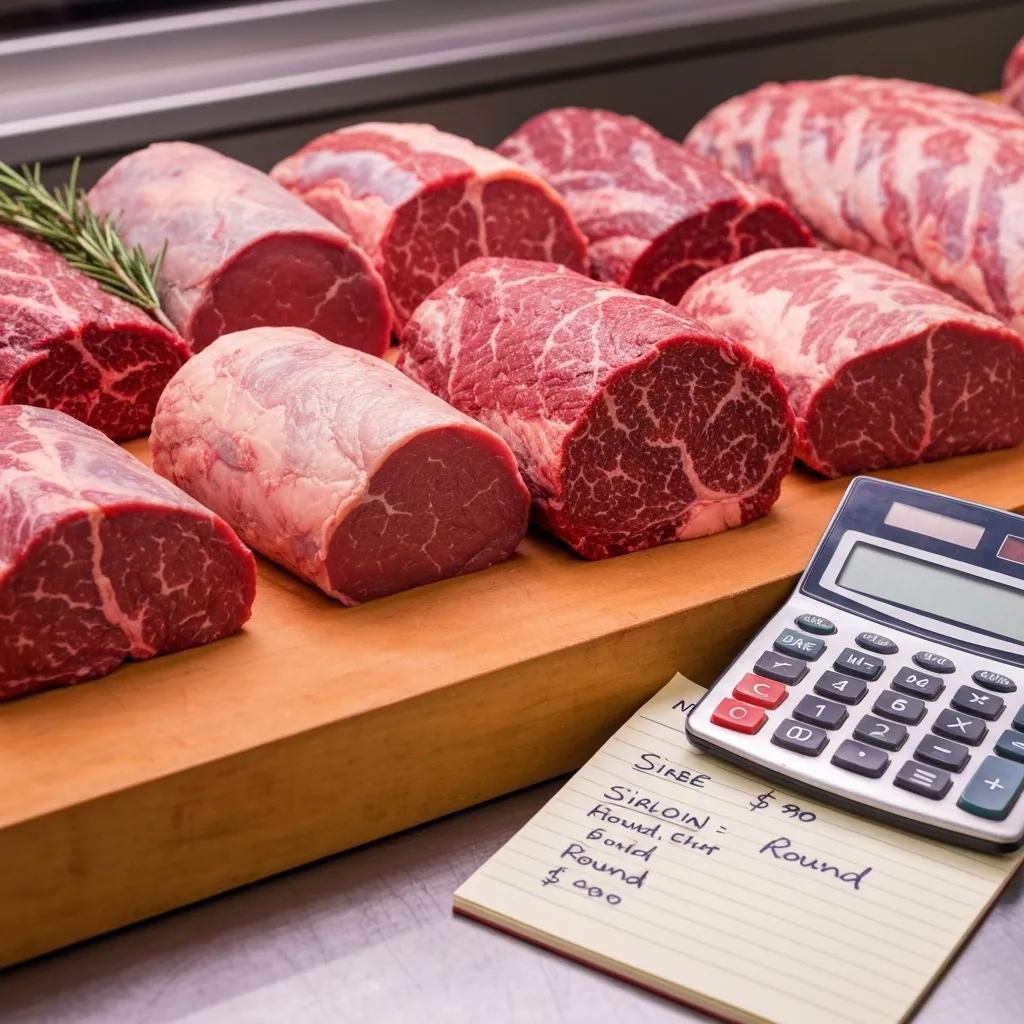
The total cost of a half cow combines the farm product price plus any processing, packaging, and optional butchery fees. The headline product price is what most buyers compare to retail. To compare apples to apples, divide the product price by the take-home packaged weight to get a simple cost-per-pound. Below are the common cost components to watch so you aren’t surprised by add-ons.
- Product price for the half share, which covers the animal and finishing costs.
- Processing and cut-and-wrap fees charged by the butcher for portioning and vacuum-sealing.
- Optional fees for specialty packaging, custom steak thickness, or extra trimming.
With those elements in mind, the table below converts product price and packaged weight into an easy per-pound metric so you can compare a bulk purchase to store-bought meat.
The following table shows price components and an implied cost per pound using a specific product example and typical packaged weight. It’s meant to make the math transparent so you can compare options quickly.
| Component | Description | Value |
|---|---|---|
| Product Price | Example premium half-cow product price | $2,199.00 |
| Packaged Weight | Example take-home weight for the half cow | 158.5 lbs |
| Implied Cost Per Pound | Product price divided by take-home weight | $13.88 per lb |
This worked example shows how the headline product price translates to a per-pound figure you can compare to grocery prices; processors’ fees will raise the final per-pound number, while higher take-home yields lower it.
What Is the Cost Per Pound for a Half Cow from Capital Farms?
Using the example product price and packaged weight above, divide $2,199.00 by 158.5 lb to get about $13.88 per pound. That calculation reflects the farm product price as listed and assumes processing and packaging may be included or added depending on the provider’s policy—confirm what’s covered before you buy. Comparing this per-pound number to retail steak and ground-beef prices shows the potential savings, which we summarize in the next paragraph for context.
In many markets, premium retail steaks cost far more than $13.88 once trimming and grocery markup are factored in—especially ribeyes and strips. The per-pound advantage is clearest when a half cow supplies many ground beef and roast packages that would otherwise be bought at retail. Remember to include any local processing, transport, or pickup costs when calculating your final effective per-pound price.
Is Buying a Half Cow Cheaper Than Retail Meat?
Often, yes. Buying a half cow can be significantly cheaper per pound than buying the equivalent volume of premium retail meat, particularly if you keep trimming minimal and control package sizes. Conservative estimates commonly show savings of 20–50% per pound with a half or whole beef share versus retail. Your actual savings depend on the cuts you prioritize: a share loaded with steaks will raise the average per-pound cost compared with one focused on ground beef and roasts. So planning your cut mix is key to maximizing value.
Below are retail categories to consider when comparing them to a half-cow per-pound figure for household budgeting.
- High-end steaks like ribeye and strip carry premium retail prices and drive up household retail equivalents.
- Ground beef and chuck roasts bought at retail are often the best items to replace with bulk meat for the biggest savings.
- Mixing steaks with value cuts in a half share helps balance cost and meal variety across months.
These points help you judge whether a half cow suits your eating habits and budget. The next section lists typical cuts included so you can plan your preferred mix.
What Cuts Are Included in a Half Cow Share? Exploring Beef Cuts and Portions
A half cow share usually contains a mix of steaks (ribeye, NY strip, sirloin), roasts (chuck, rump, brisket), and bulk ground beef. Exact quantities depend on the butcher’s cut sheet and how you customize the order. Knowing which cuts you’ll get and approximate counts and weights makes meal planning and freezer organization easier. Below is a short list of the most common categories, followed by a table with sample package counts and weights to help schedule meals.
- Steaks for grilling or pan-searing—ribeye, NY strip, and sirloin.
- Roasts for slow cooking or braising—chuck, brisket, and rump.
- Ground beef in varying package sizes for burgers, sauces, and weeknight meals.
The table below outlines typical package counts and total weights per cut so you can estimate how many meals each category will cover.
| Cut | Typical package count | Approx. total weight (lbs) |
|---|---|---|
| Ribeye steaks | 6–10 packages | 20–30 lbs |
| NY strip / sirloin steaks | 8–14 packages | 25–35 lbs |
| Chuck roasts / pot roasts | 6–10 packages | 30–40 lbs |
| Ground beef packs | 8–15 packages | 30–50 lbs |
| Brisket / specialty cuts | 1–3 packages | 10–20 lbs |
This breakdown shows how a half cow supplies a balance of ready-to-cook steaks and bulk packages you can stretch across weeks. Customization shifts counts between categories so the share matches your household’s eating habits.
Which Premium Corriente Beef Cuts Are Offered in a Half Cow?
Corriente shares tend to emphasize lean, flavorful cuts from a smaller-framed animal. Expect classic grill steaks like ribeye and strip, roasts for slow cooking, and multiple ground beef packages for everyday meals. Most producers let you request more steaks or more ground beef depending on family needs, and slightly larger ground-beef packages can simplify meal prep.
Capital Farms’ Corriente options are described as hormone-free, grass-fed and grain-finished, with premium steak and roast choices and customizable packaging. Breed and finishing style influence flavor and lean percentage, which affects meal planning and perceived value—one reason some buyers choose breed-specific shares.
How Does Cut Variety Affect the Overall Value of a Half Cow?
The cuts you prioritize change the effective per-pound value and how quickly the meat moves through your freezer. More steaks increase the retail-equivalent value up front, while more ground beef lowers per-meal cost and stretches the share further. The trade-off is simple: high-value steaks raise average cost; bulk ground beef and roasts lower it. Match your cut mix to household size, cooking habits, and freezer capacity to get the most value from your purchase.
Use these considerations when deciding your cut distribution to balance value and everyday usability.
- Choose more steaks if you entertain often or prioritize premium meals.
- Choose more roasts and ground beef if you need weeknight meal coverage and cost efficiency.
- Use customization to fit seasonal needs—more roasts in winter, more steaks in summer.
That planning ties into storage needs—next we explain freezer space and packaging so your share stays fresh and easy to use.
How Much Freezer Space Do You Need for a Half Cow? Storage and Logistics Guide
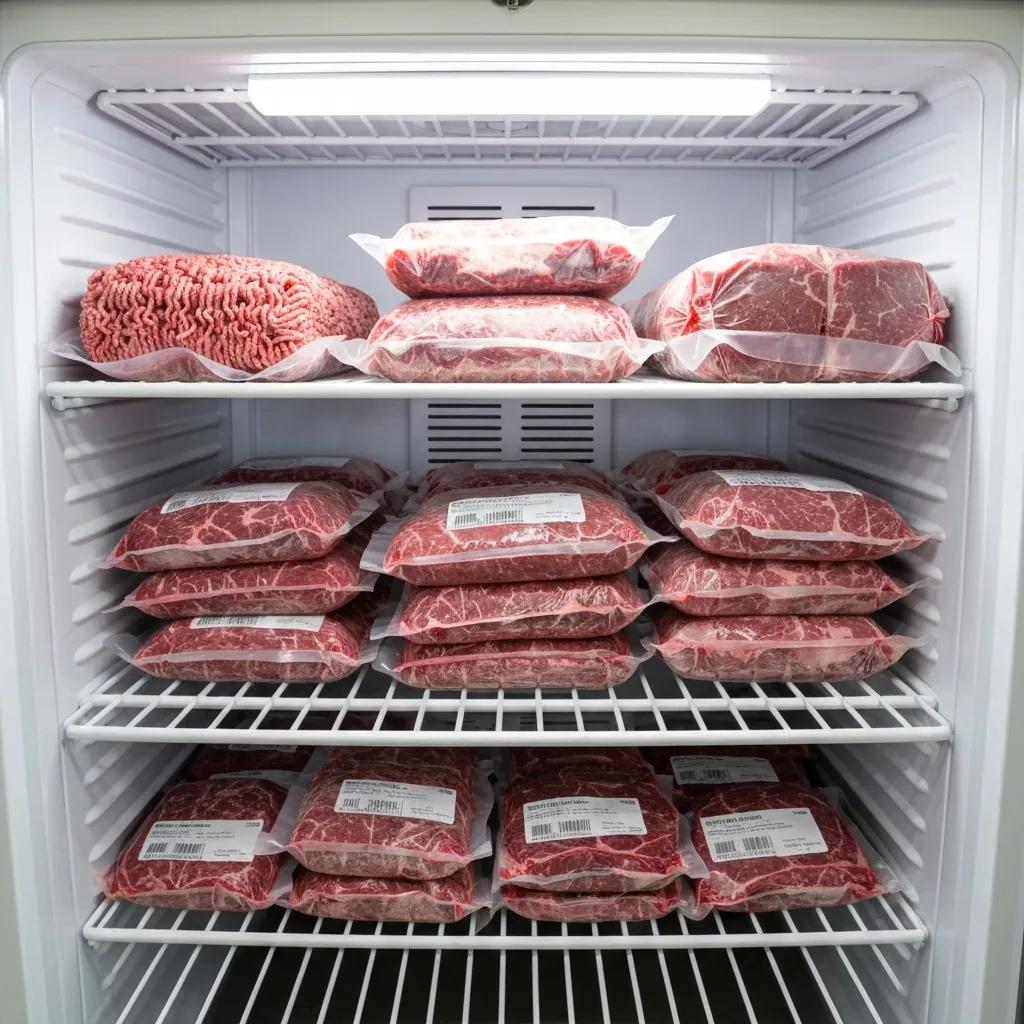
Estimate freezer volume based on packaged weight and packing density. A practical rule of thumb is that vacuum-sealed beef takes about 25–30 lb per cubic foot when packed efficiently. That means a 150–200 lb take-home share typically needs roughly 6–8 cu ft; heavier yields push toward 8–10 cu ft. Consistent package sizes and good organization make it easier to maximize space and reduce unnecessary thaw cycles. Below are packing strategies to help you get the most from your freezer while protecting quality.
- Use consistent package sizes for efficient stacking and faster single-meal thawing.
- Vacuum-seal to limit air exposure and freezer burn while allowing flat, stackable packages.
- Label packages with contents and pack dates to keep inventory clear and rotation simple.
The table below maps common packaged-weight ranges to recommended cubic feet so you can match expected take-home pounds to a practical freezer footprint.
| Packaged Weight (lbs) | Recommended Cubic Feet | Typical Freezer Type |
|---|---|---|
| 120–160 lbs | 6–8 cu ft | Small upright or chest freezer |
| 160–200 lbs | 8–10 cu ft | Medium chest or compact upright |
| 200–250+ lbs | 10–14 cu ft | Large chest or dedicated deep freezer |
This guidance helps you decide whether your current freezer will hold a half cow or whether you should upgrade or arrange shared storage. The following subsection covers packaging practices to preserve quality and simplify meal prep.
How Many Cubic Feet of Freezer Space Are Required for Half a Cow?
Using the 25–30 lb per cubic foot rule, a half cow in the 150–200 lb range generally needs between 6 and 8 cu ft; larger yields trend toward 8–10 cu ft. Package shape matters—flat, stackable packages use space far more efficiently than bulky bone-in roasts—so factor that into your calculation. Leave a small margin above the calculated volume for other items and to avoid overfilling, which can reduce airflow and affect long-term quality.
If space is tight, short-term options include consuming or sharing portions quickly, buying smaller bulk volumes, or partnering with neighbors to split a larger share. Those tactics make bulk buys practical even with limited freezer capacity.
What Packaging Methods Ensure Freshness and Easy Storage?
Vacuum sealing is the best long-term packaging method: it removes oxygen, reduces freezer burn, and creates flat packages that stack neatly. Other best practices include portioning ground beef into meal-sized packs, using durable labels with cut and pack dates, and mixing boneless and bone-in packaging to balance convenience and flavor. For thawing, plan ahead and thaw in the refrigerator overnight for best texture; use cold-water immersion for faster needs while keeping food safety in mind.
Follow these simple packaging steps before storing your half cow:
- Vacuum-seal retail-size portions and label each with cut and pack date for efficient rotation.
- Portion ground beef into common meal sizes (1 lb or 0.5 lb) to avoid repeated thawing cycles.
- Store large specialty cuts like brisket in their own section to make seasonal cooking easier.
These practices preserve flavor and texture over months of storage and make meal planning and portion control straightforward for families buying in bulk.
Why Choose Capital Farms’ Half Cow? Corriente Beef and Regenerative Ranching Benefits
Where an animal comes from and how it’s raised affect both eating quality and environmental footprint. Corriente beef—often grass-fed then grain-finished—tends to show a distinct flavor and leaner profile that still develops marbling in the finishing phase. Regenerative ranching practices improve soil health and biodiversity while supporting animal welfare. Below are consumer-facing benefits to weigh when evaluating a supplier based on breed and ranching methods.
- Breed and finishing influence flavor and texture, which alters how cuts perform in recipes.
- Regenerative practices can improve pasture health and sustainable land management—appealing to eco-conscious buyers.
- Hormone-free and careful finishing protocols contribute to a product profile many home cooks prefer for taste and perceived health reasons.
Capital Farms highlights these attributes in its Corriente half-cow product: hormone-free, grass-fed and grain-finished Corriente cattle raised using regenerative practices in the desert Southwest. The product notes sourcing from the Sierra Madre mountains and an extended raising timeline—48 months or more with over 240 days of grain finishing—which the company says contributes to flavor development and maturity. Capital Farms also offers a 100 percent satisfaction guarantee to reassure buyers considering a premium half-cow purchase.
What Makes Corriente Beef Unique Compared to Other Breeds?
Corriente cattle are a smaller-frame, desert-hardened breed known for leaner carcasses and a distinct flavor that differs from larger continental breeds. Smaller-frame animals often yield slightly less total weight but can concentrate flavor in ways many buyers appreciate—especially when finished to develop marbling and tenderness. Practically, a Corriente share may emphasize lean steaks and richly flavored roasts, so these breed traits should shape your cut choices and cooking methods.
Understanding the animal’s background and finishing regimen helps set realistic expectations for packaged pounds and meal coverage.
How Do Regenerative Ranching Practices Enhance Beef Quality and Sustainability?
Regenerative ranching emphasizes practices that restore soil health, sequester carbon, and support biodiversity—outcomes that benefit ecosystems and the quality of forage animals eat. Healthier pastures can translate into improved animal health and, indirectly, differences in meat flavor and complexity. From a consumer perspective, buying beef from regenerative systems supports land stewardship and aligns purchasing with environmental outcomes. Producers often highlight these practices as a meaningful differentiator for quality-minded buyers.
Capital Farms frames its Corriente offering within this regenerative approach and emphasizes practices meant to support animal welfare and landscape health—attributes many buyers see as a meaningful complement to flavor and traceability claims.
Frequently Asked Questions
What are the benefits of buying a half cow compared to purchasing individual cuts?
A half cow typically delivers substantial cost savings—often 20–50% less per pound than buying comparable retail cuts—while giving you control over cut mix and packaging. Buying in bulk reduces shopping trips and provides a steady supply of quality beef, which is handy for families and home cooks. In short, it’s both economical and practical when you want predictable quality and portions.
How can I ensure the quality of the beef I receive?
Choose a reputable supplier that shares details about ranching methods and animal care. Look for hormone-free, transparent practices and ask about finishing methods. Also confirm processing and packaging standards, since proper handling is essential for freshness. If possible, request references, visit the farm, or ask for sample cuts to assess quality before committing.
What should I consider when planning meals with a half cow?
Think about the variety of cuts you’ll receive and how they match your cooking habits. Prioritize steaks if you grill often, and increase roasts and ground beef if you need more weeknight meals. Plan portion sizes and a consumption schedule so meat is used before peak flavor fades. A simple meal plan that rotates cuts helps you get the most value from the share.
Are there any specific cooking methods recommended for different cuts of beef?
Yes. Tender cuts like ribeye and sirloin shine on the grill or in a hot skillet, while tougher cuts like chuck and brisket reward slow cooking or braising to break down connective tissue and deepen flavor. Ground beef is versatile—use it for burgers, sauces, and casseroles. Matching cooking method to cut yields the best texture and taste.
What are the environmental benefits of choosing regenerative ranching practices?
Regenerative ranching aims to restore soil health, boost biodiversity, and improve animal welfare. Practices like managed rotational grazing can sequester carbon and enhance pasture resilience. By choosing beef from regenerative operations, consumers support healthier landscapes and more sustainable meat production—an outcome that resonates as environmental awareness grows.
How can I effectively manage freezer space when storing a half cow?
Vacuum-seal packages to reduce air and maximize stackability, organize by size and type, and label everything with contents and pack dates. Portion ground beef into meal-sized packs to avoid repeated thawing. Leave some extra space in your freezer for airflow and easy access, and rotate stock so older packages are used first.
Can I Customize My Half Cow Cuts and Order Options?
Yes—most farms and processors allow reasonable customization, including steak thickness, number of ground-beef packages, and bone-in versus boneless preferences. Extreme requests may be limited by processor constraints and yield realities. Buyers usually fill out a cut sheet at processing and the processor confirms what’s practical given the carcass. Customization can slightly change packaged weight due to differing trim levels, so expect small variations and confirm any fees up front to ensure the final boxes match your meal-planning needs.
How Long Does Half Cow Beef Last and What Is the Shelf Life?
Properly vacuum-sealed beef stored at 0°F will keep quality for roughly 6–12 months for most cuts and up to 12–24 months for well-wrapped roasts, though steaks and ground beef taste best within the first year. Ground beef is more prone to flavor loss and is often recommended for use within 6–9 months, while dense roasts can hold longer if consistently frozen. Label packages with cut and pack date and follow safe thawing practices—refrigerator thawing or cold-water methods—to preserve safety and texture. These timelines help plan consumption to enjoy meat at peak flavor.
This guide covered yield definitions, cost math, cut lists, freezer planning, packaging practices, breed and ranching benefits, and common buyer questions to help you decide on a half-cow purchase.
Conclusion
A half cow can deliver meaningful savings and steady access to high-quality beef while letting you choose the cuts and packaging that fit your kitchen. Understanding yield, cost breakdowns, and storage needs helps you make informed choices that maximize value and reduce waste. With a reputable supplier like Capital Farms, you also get the benefits of traceability and regenerative practices. Explore your options and see if a half-cow share is the right step for your household’s meals and values.