What Is a Beef Share and Why Farmers Love It
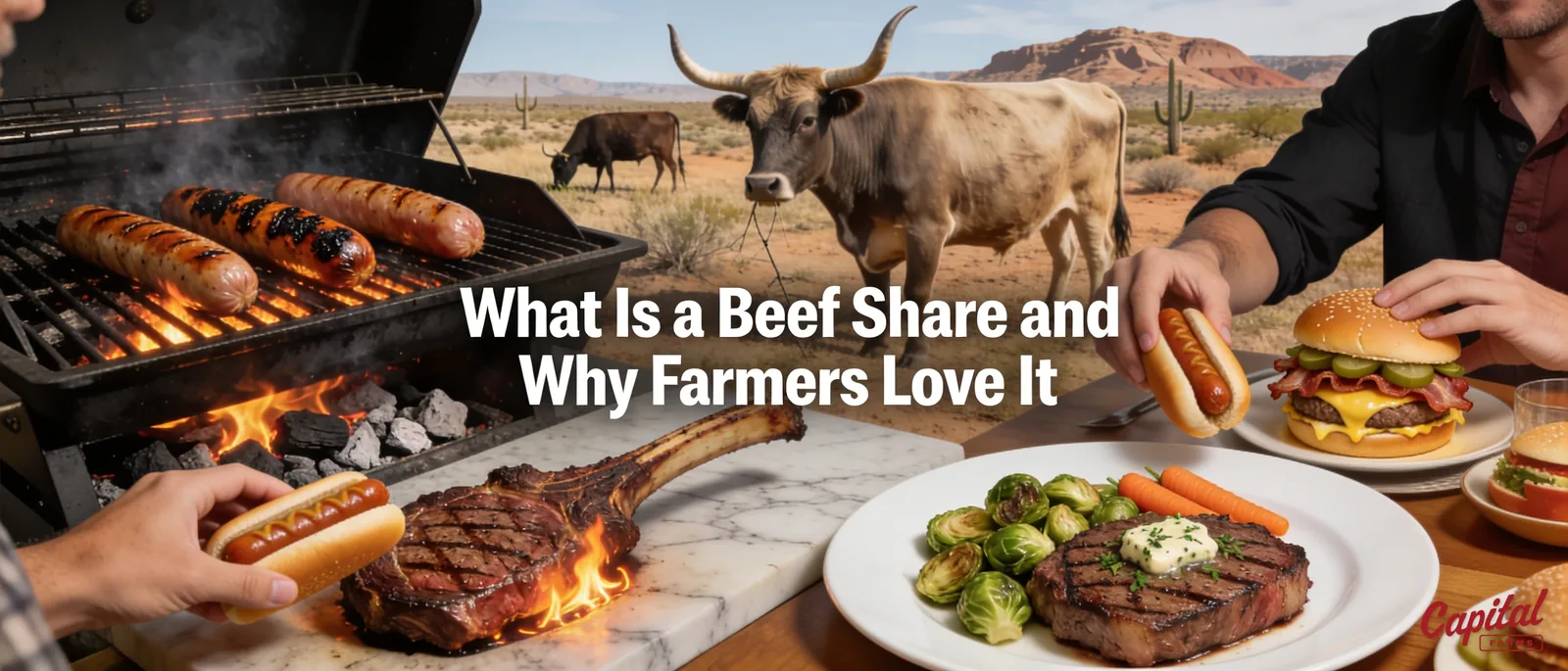
What Is a Beef Share and Why Farmers Love It
By Capital Farms Meats & Provisions Editorial Team · Updated 2026-07-28
A beef share allows customers to purchase a quarter, half, or whole animal directly from a rancher, often lowering per-pound costs compared to grocery stores. Farmers benefit through guaranteed bulk sales, reduced marketing overhead, and stronger customer loyalty. This model supports operations like Capital Farms, whose beef is grass-fed and 200-day grain-finished, ensuring quality justifies direct sale.
Key Takeaways
Beef shares let customers buy quarter, half, or whole animals directly from farmers at lower per-pound costs.
Buyers receive farm-direct, 100% grass-fed beef without paying grocery store markups or intermediary fees.
Capital Farms Meats & Provisions in Wickenburg, Arizona offers premium Corriente beef products through direct purchasing.
Beef shares require upfront planning including freezer space, bulk costs, and flexibility around available meat cuts.
What Is a Beef Share, Exactly?
A beef share is a bulk purchase arrangement. Buyers reserve a quarter, half, or whole animal directly from a farmer or ranch instead of selecting individual cuts at a store counter. This model bypasses the middleman entirely, connecting the freezer directly to the pasture.
The practice isn't new. Decades ago, families routinely bought a hog or cow from a neighboring farm, filling a chest freezer for the year ahead. Rising grocery prices and a renewed interest in food sourcing have brought that tradition back into fashion among ranchers and home cooks alike.
Capital Farms builds its direct-to-consumer offering around premium Corriente beef, a breed prized for natural marbling. Every animal sold through a share follows the same production standard: grass-fed on rangeland, then grain-finished over 200 days. That extended timeline shapes flavor and texture in ways a typical 18-month feeder cattle program cannot match.
How Does a Beef Share Differ From Buying Individual Cuts?
A share locks in a set volume of meat from one animal before processing begins. Buyers receive a mix of cuts—steaks, roasts, ground beef—rather than choosing each item separately. Ranchers benefit too, since one transaction moves an entire animal instead of piecemeal sales:
Predictable demand for the producer
Lower per-pound cost for the buyer
Full traceability back to a single farm and feeding program
How Does a Beef Share Work?
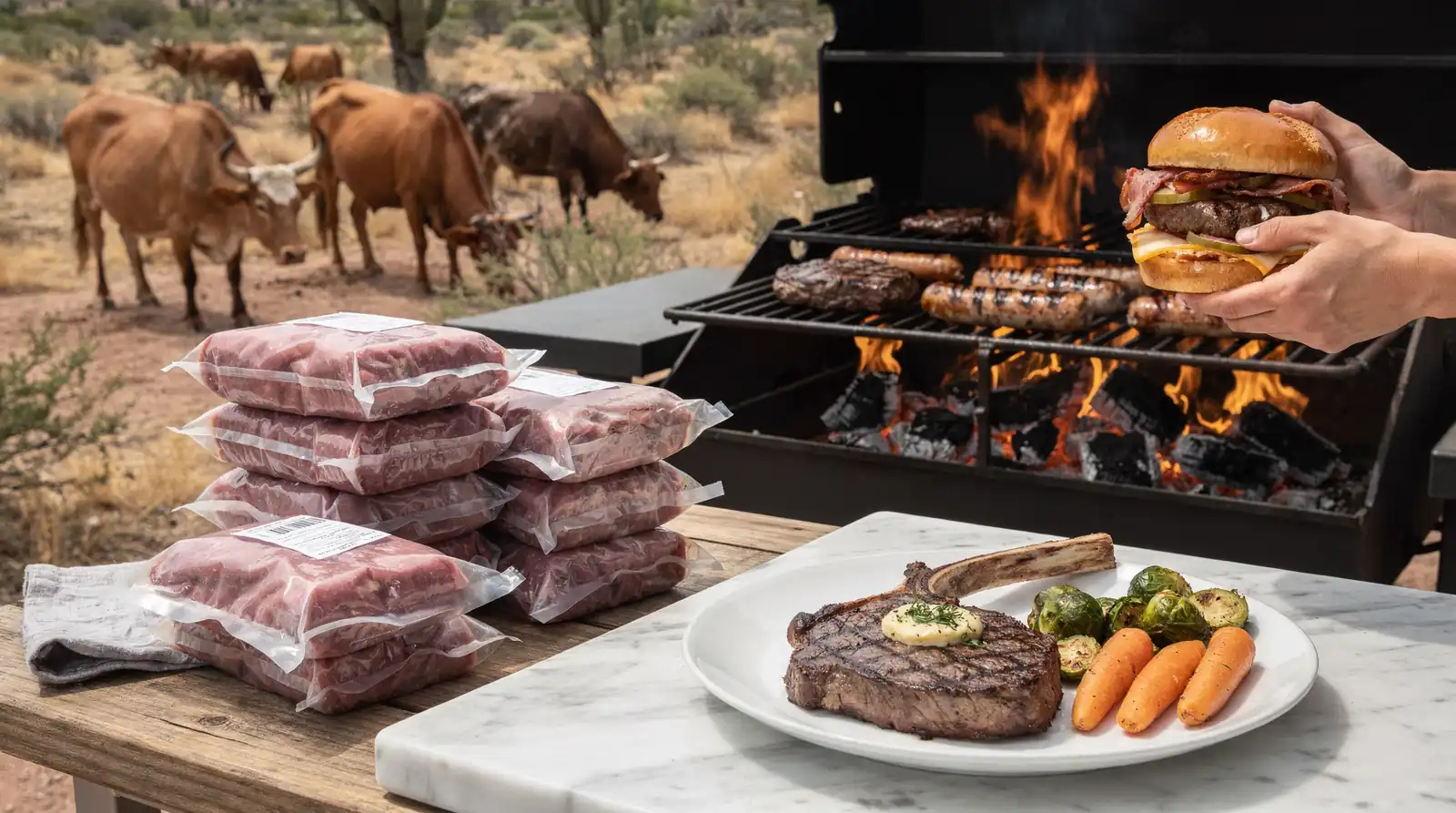
A beef share works on reservation, not retail browsing. Ranchers and farms secure a customer's portion of an animal with a deposit, then process and deliver the meat frozen and vacuum-sealed, ready to stack in a chest freezer. For farmers building a direct-to-consumer program, this structure locks in committed buyers before the animal ever reaches the processor.
Instead of selling cuts week to week, farms sell the whole animal in defined portions.
What size portions can customers choose?
Buyers typically pick a quarter, a half, or a whole animal rather than shopping a cut list. This matters for ranchers structuring their own program: portion sizes determine how many households one animal can serve, which simplifies inventory planning and reduces leftover cuts sitting unsold.
Does delivery and shipping factor into the model?
Yes, logistics shape the customer experience as much as the meat itself. Capital Farms extends shipping on qualifying orders across a thirteen-state region spanning Arizona, California, Nevada, Utah, New Mexico, Oregon, Colorado, Oklahoma, Texas, Idaho, Kansas, Montana, and Wyoming, which lowers the barrier for larger share purchases. That kind of built-in incentive rewards customers for buying bigger portions upfront.
Trust matters just as much as logistics. Capital Farms has earned a 4.9-star average across 3,400 customer reviews, evidence that a well-run share program builds lasting loyalty rather than one-time transactions.
Why Do Beef Shares Benefit Farmers?
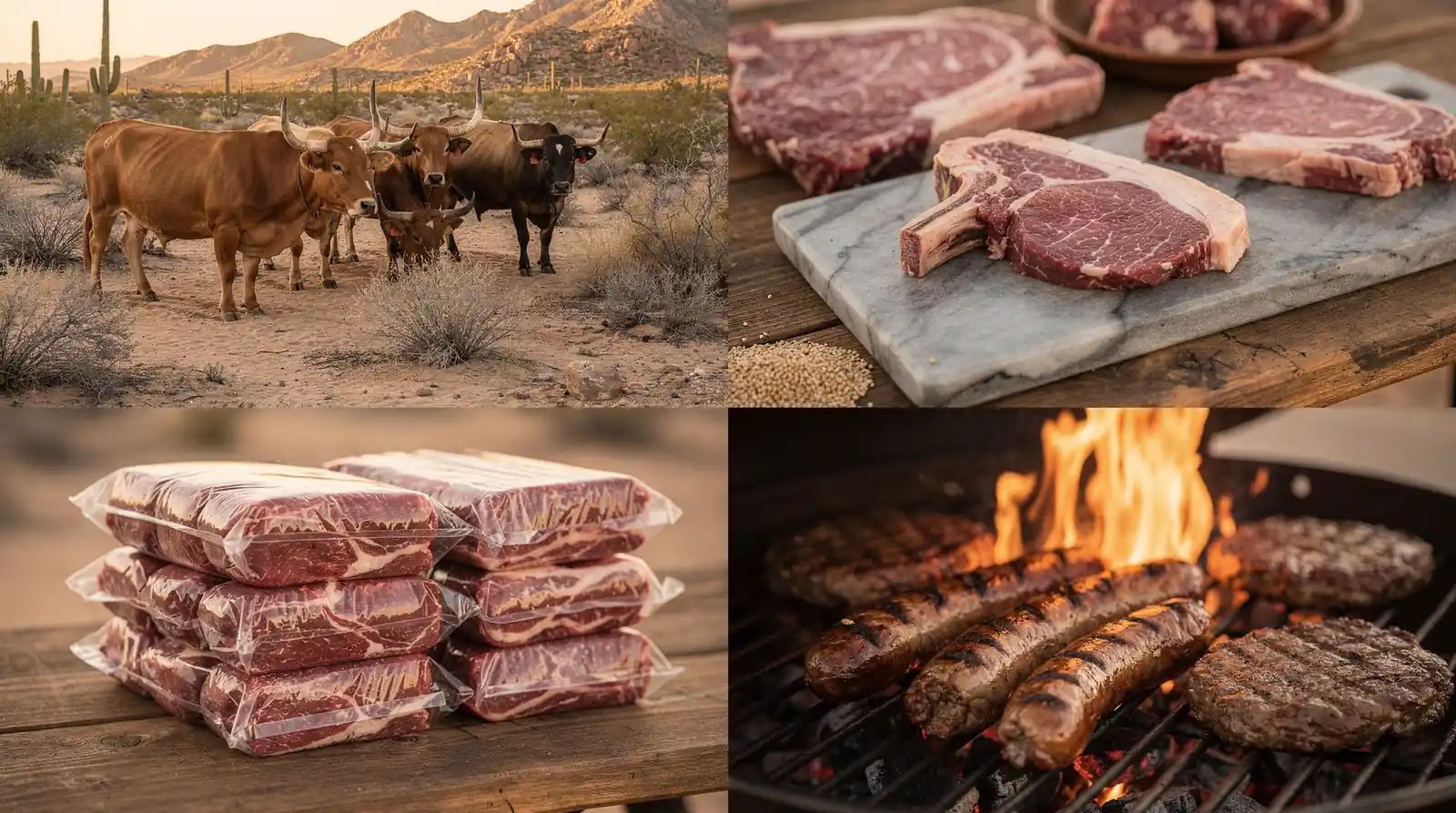
Selling meat in bulk moves large volumes of product through a single transaction. A beef share program lets ranchers close one sale instead of managing dozens of small orders, saving hours that would otherwise go toward marketing individual cuts. That time savings adds up across a season, especially for small and mid-size operations running lean crews.
Buyers gain, too, which strengthens the pitch for ranchers building loyal customer bases. Purchasing beef in bulk lowers the average per-pound cost for families. Simplifies meal planning around a freezer full of cuts. Many customers discover new favorite cuts they never would have picked out at a grocery counter, deepening their connection to the farm.
How should a farmer price a beef share fairly?
Pricing benchmarks from retail cuts offer a useful starting point. Pricing varies; ranchers can use current retail figures for individual cuts as a reference for calculating share values.
What justifies a premium beef share price?
Raising practices matter to buyers weighing cost against quality. Cattle raised without hormones and finished on grain over roughly 200 days produce richer flavor. Farmers can use that timeline to explain why a share commands a fair price rather than a discount.
FAQ
What is a beef share?
A beef share is a bulk purchase arrangement where buyers reserve a quarter, half, or whole animal directly from a farmer, bypassing the middleman and connecting the freezer directly to the pasture.
How do farmers benefit from selling beef shares?
Farmers gain guaranteed bulk sales, reduced marketing overhead, and stronger customer loyalty. One transaction moves an entire animal instead of piecemeal sales, creating predictable demand.
What should buyers plan for before purchasing a beef share?
Buyers need upfront freezer space, bulk costs, and flexibility around available cuts. The meat arrives frozen and vacuum-sealed as a mix of steaks, roasts, and ground beef.