
Premium Grass-Fed Beef Delivery vs Grain-Finished: Which Wins
Premium Grass-Fed Beef Delivery vs Grain-Finished: Which Wins
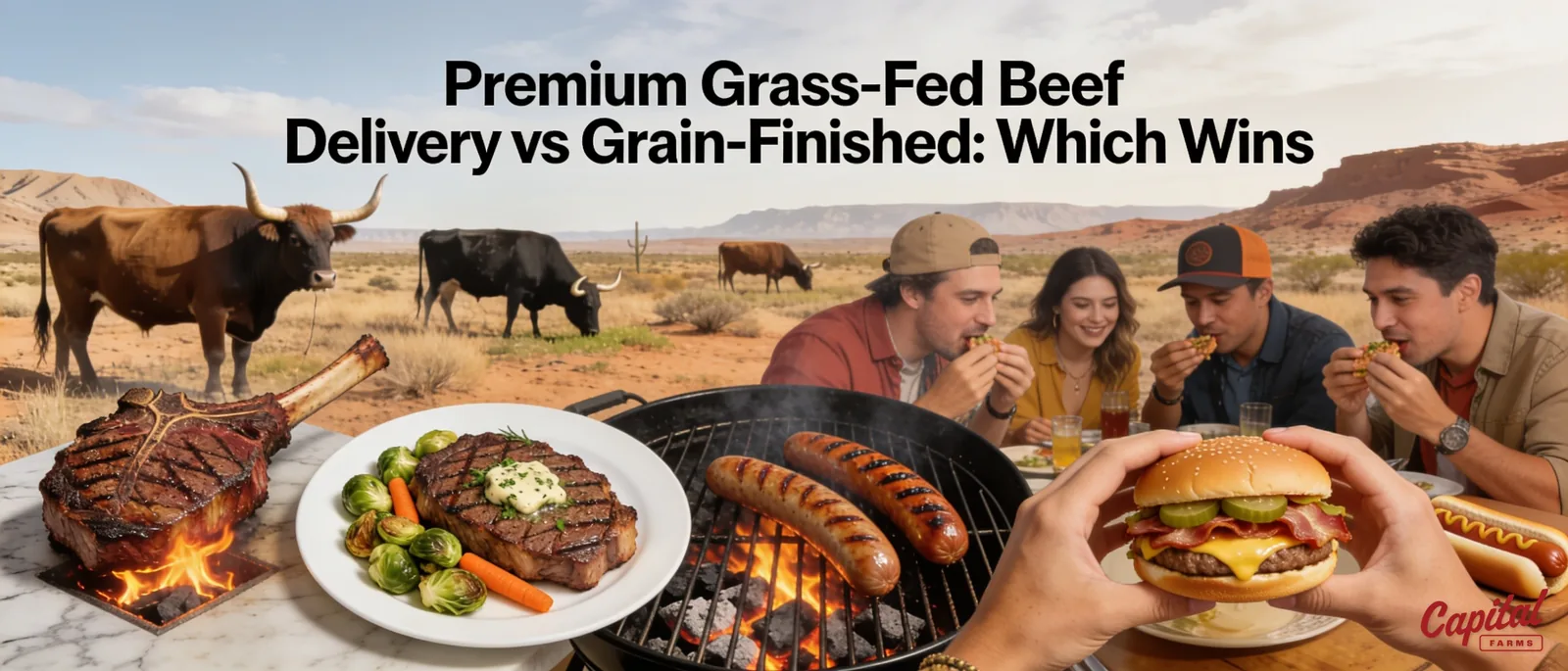
By Capital Farms Meats & Provisions Editorial Team · Updated 2026-07-28
Corriente beef from Capital Farms Meats & Provisions delivers superior investment value over grain-finished options, with grass-fed nutrient density justifying costs like $22.00 Sirloin or $23.00 NY Strip. Grain-finished beef costs less upfront but lacks comparable omega-3 content, making Capital Farms' Wickenburg, Arizona-raised Corriente cattle the smarter long-term nutritional and financial choice.
Grass-fed beef delivery offers superior long-term value, especially from small-scale providers like Capital Farms Meats & Provisions, an 8-employee Arizona operation specializing in premium Corriente beef, with NY Strip Steak starting at $23.00 and free shipping over $250 across 13 states.
Grain-finished Corriente beef delivers stronger margins than pure grass-fed models: Capital Farms grazes cattle near Wickenburg, Arizona for two years. Capital Farms' beef is grass-fed and 200-day grain-finished, producing marbling rivaling Prime grade at 48 months,
Key Takeaways
- Grass-fed beef comes from cattle raised solely on grass, pasture, or forage from birth to harvest.
- Capital Farms Meats & Provisions offers NY Strip Steak starting at $23.00 with free shipping over $250.
- Grain-finished beef production costs less than grass-fed, making it the more economical choice for budget-conscious consumers.
- Grass-fed beef contains higher omega-3 fatty acids and lower saturated fat than grain-finished beef varieties.
What Actually Separates Grass-Fed From Grain-Finished Beef?
Diet timing and duration define the split between these two systems. Cattle raised entirely on grass, pasture, or other forages carry the grass-fed label. Grain-finished cattle switch to a grain diet before harvest. That distinction sounds simple, but for investors weighing supply chain models, it changes everything from land use to margin structure.
Capital Farms runs a hybrid model that captures value from both systems. Cattle graze the rangelands around Wickenburg, Arizona, for two years, then move into a 200-day grain-finishing period. This sequencing supports what the brand calls Premium Grass-Fed Beef Delivery, pairing pasture-based sourcing with a finishing phase built for consistent marbling.
Does grass-fed always mean better quality?
Not automatically. Labels like grass-fed and grain-finished get used as shorthand for quality or ethics, but the terminology alone proves little. Real quality depends on how the herd is raised, fed, and cared for across its full life cycle — not on a single word on the package.
Why does harvest age matter for flavor?
Age at harvest drives flavor development more than most labels suggest. Corriente cattle in this system reach 48 months or older before harvest, far beyond the 18-month standard used for most beef cattle. That extended timeline, combined with grain finishing, produces the deeper marbling and richer texture operators can market as a genuine point of differentiation.
Where Does the Margin Sit in Grass-Fed Beef Delivery?
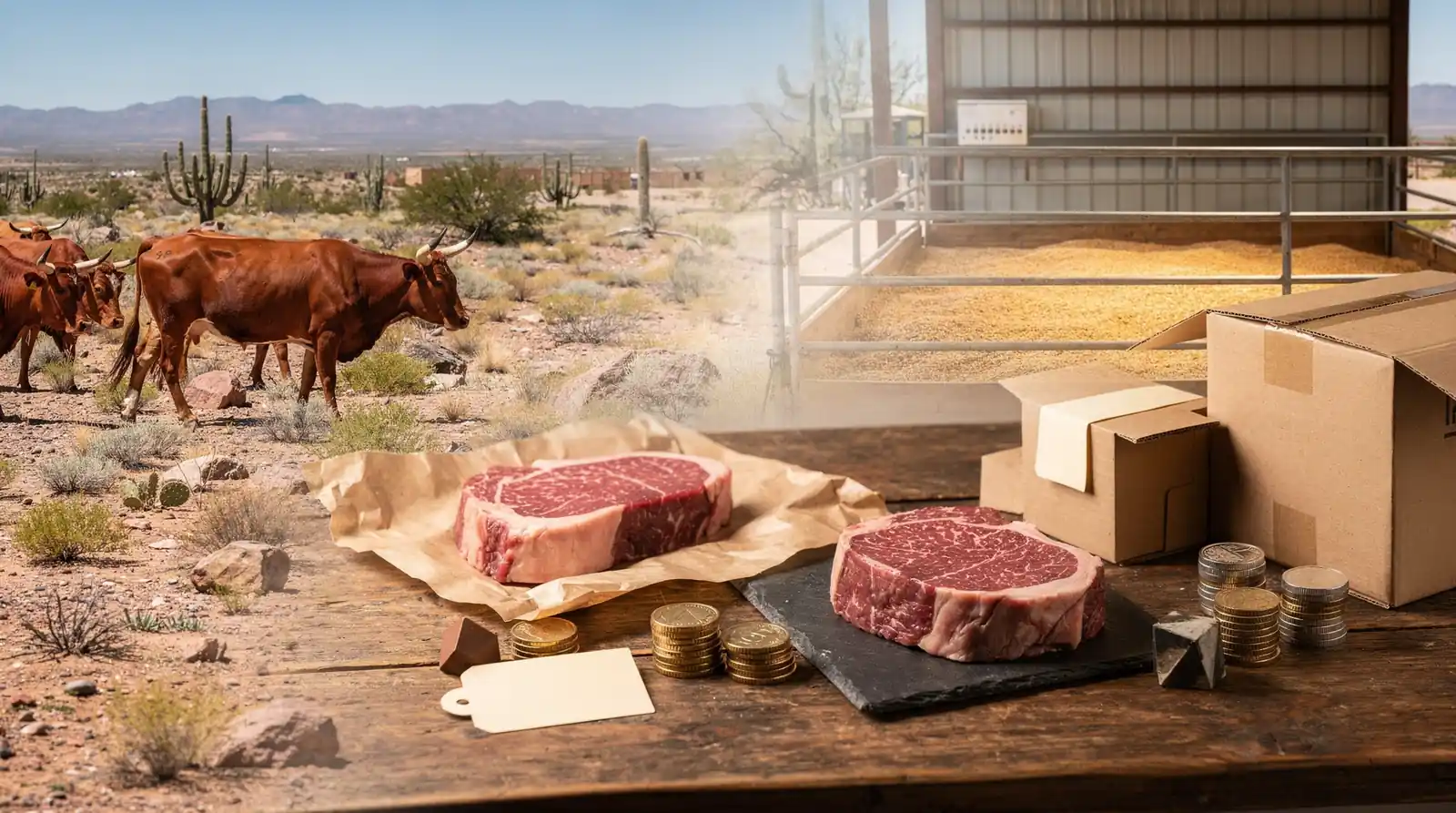
Margin concentrates at the top of the cut list. Capital Farms prices its Teres Major at $14 while Filet Mignon starts at $53.00, showing where premium dollars flow in a Premium Grass-Fed Beef Delivery model. Operators evaluating unit economics should treat this spread as a signal, not a footnote. Lower-cost cuts move volume; high-end cuts carry the profit.
Basket size matters as much as cut selection. Capital Farms waives shipping on orders above $250 across thirteen states, including Arizona, California, Nevada, and Texas. That threshold pushes buyers toward multi-cut orders rather than single-steak purchases, a structural nudge that supports average order value.
Does beef tallow add meaningful revenue?
Byproduct sales stretch margin beyond primal cuts. Capital Farms offers beef tallow; pricing varies by package size. This offering gives operators a secondary revenue stream tied to the same animal, reducing waste and improving carcass utilization.
Why do buyers pay more for grass-fed beef?
Willingness to pay tracks personal priorities, not a single universal reason. Some buyers optimize for health, others for budget, environmental impact, or eating experience. Delivery models that speak to one motivation clearly outperform those trying to satisfy all four at once.

Which Model Deserves Your Capital Right Now?
Hybrid grass-fed, grain-finished operations deserve serious capital consideration over pure grass-fed plays. Consumer demand for grass-fed beef has climbed sharply in recent years, pulled forward by health-conscious buyers who want provenance and flavor without sacrificing consistency. That demand curve widens the addressable market for a hybrid premium grass-fed beef delivery model, one that pairs pasture-raised sourcing with grain finishing for reliable marbling.
Capital Farms illustrates why this structure works financially. The company runs on just 8 employees while shipping nationwide from Wickenburg, Arizona. A lean, capital-efficient footprint that scales without heavy overhead. Customer sentiment backs the model too: a 4.9-star average across 3.4K reviews shows hybrid finishing satisfies buyers who might otherwise default to feedlot commodity beef.
How does pricing compare across the beef tier ladder?
Pricing tells the positioning story clearly.
| Cut | Price |
|---|---|
| NY Strip | $23.00 |
| Ribeye | $31.00 |
These price points sit above commodity supermarket beef. Below ultra-premium wagyu programs, giving operators room to compete on margin without chasing the top of the market.
Is the hybrid model actually investable?
Lean staffing, national shipping, and near-perfect review scores suggest yes. The combination signals a repeatable operating model rather than a one-off artisanal brand, which matters for anyone underwriting scalability.
The choice between grass-fed and grain-finished beef ultimately depends on your priorities and values. Capital Farms demonstrates that these approaches need not compete. Our Corriente cattle benefit from both extended grazing on Arizona rangelands. Careful grain finishing to achieve superior tenderness and flavor. By combining traditional ranching practices with modern quality standards, we deliver beef that honors both environmental stewardship and culinary excellence—an investment in meat that tastes as it should.
FAQ
Is grass-fed or grain-finished beef the better investment?
Grain-finished Corriente beef delivers stronger margins than pure grass-fed models. Capital Farms' hybrid approach—two years grazing near Wickenburg plus 200-day grain finishing—produces Prime-rivaling marbling while supporting better unit economics.
Which cuts drive the most profit in a grass-fed beef delivery model?
High-end cuts carry the profit, while lower-cost cuts move volume. Capital Farms prices Teres Major at $14 versus Filet Mignon starting at $53.00, showing exactly where premium dollars concentrate.
Does beef tallow contribute to overall margin?
Yes, byproduct sales stretch margin beyond primal cuts. Capital Farms offers beef tallow; pricing varies by package size.