
Nutritional Differences Grass-fed vs Grain-finished
Nutritional Differences Grass-fed vs Grain-finished
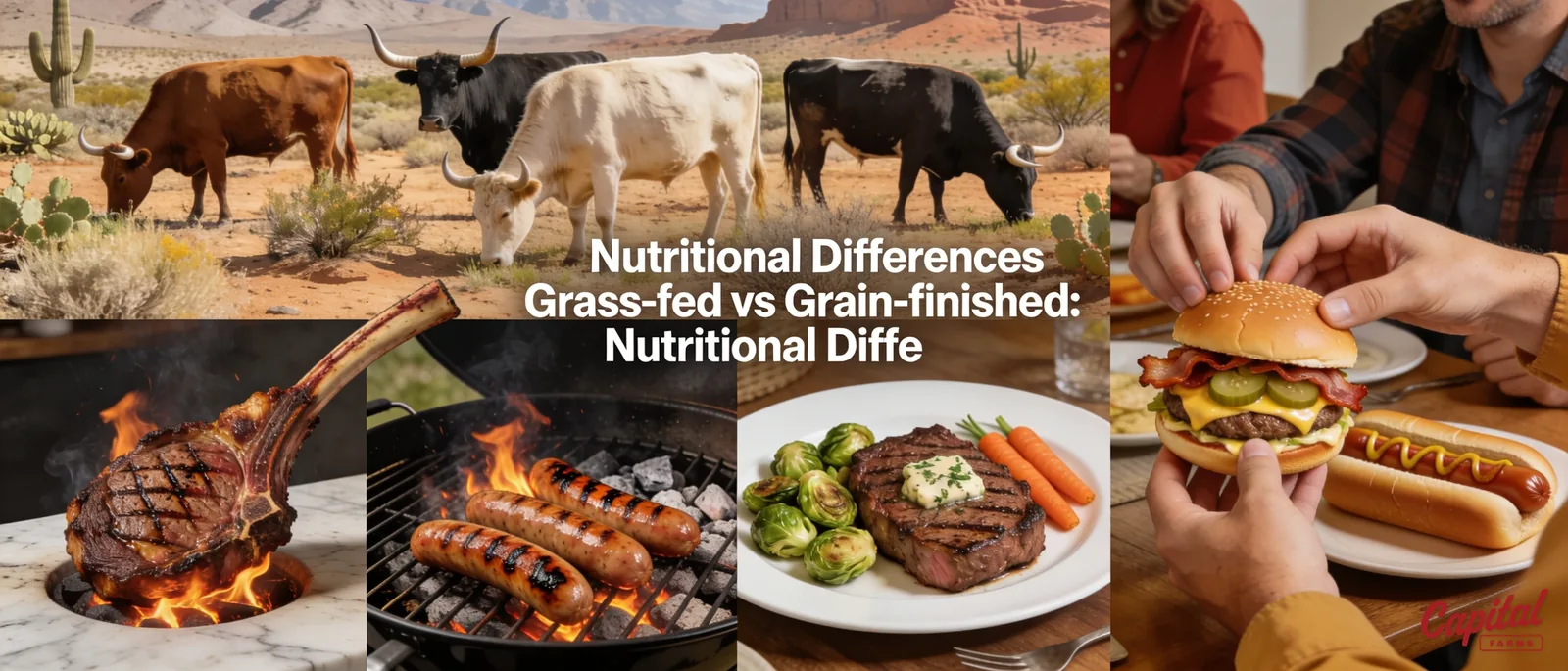
By Capital Farms Meats & Provisions Editorial Team · Updated 2026-07-28
Grass-fed beef from producers like Capital Farms typically contains higher omega-3 fatty acids. Lower overall fat content than grain-finished beef. Capital Farms' Premium Corriente Beef, sourced from cattle raised on natural pasture, reflects this leaner nutritional profile, priced at $22.00 for Sirloin Steak.
Leanness and fat marbling mark the core distinction: grass-finished beef tends toward lower overall fat with less marbling. Grain-finished beef develops more intramuscular fat for richer flavor. Capital Farms' Corriente options, including NY Strip from $23.00 and Sirloin from $22.00, let shoppers compare both styles directly.
Nutritional distinctions between grass-fed and grain-finished beef center on marbling, fat composition, and time to maturity. Capital Farms finishes its Corriente cattle on a grain-based diet for 240 days. Extended maturation to 48 months builds richer flavor and tenderness compared to standard 18-month harvest schedules.
Key Takeaways
Grain-fed cattle consume corn to enhance growth rates, a practice dating back to the 1800s.
Grass-fed beef requires cattle grazing on grass for the final 90 days before slaughter.
Capital Farms offers premium Corriente beef products including NY Strip Steak starting from $23.00.
Nutritional profiles differ between grass-fed and grain-finished beef due to distinct cattle feeding practices.
What Defines Grass-Fed vs Grain-Finished Beef?
Three feeding categories separate the beef aisle: grass-fed, grass-finished, and grain-finished. Each label describes a cattle's diet, and that diet shapes flavor, texture, and price at the register. Skipping this distinction leads shoppers to overpay for a marketing term rather than an actual production method.
Grass-fed/grass-finished cattle eat grass exclusively, from birth to harvest. No grain ever enters the diet. Grain-finished cattle spend most of their lives on grass, roughly 80 to 85 percent, then move to a grain diet near the end to build marbling and deepen flavor.
Capital Farms follows the grain-finished path, but with a documented timeline behind it. The Corriente cattle graze open rangeland near Wickenburg, Arizona, for two full years before finishing. That grazing period builds a hardy, grass-based foundation. Grain finishing then follows for a set number of days, adding richness without shortcuts.
Is grass-finished beef always leaner than grain-finished beef?
Generally, yes—grass-only diets tend to produce leaner beef with less intramuscular fat. Grain finishing, by contrast, builds marbling that many cooks associate with richer flavor and a more tender bite. Neither method is inherently "better"; the difference comes down to what a customer wants on the plate.
Category |
Diet |
|---|---|
Grass-fed/grass-finished |
Grass exclusively, entire life |
Grain-fed/grain-finished |
Grass for most of life, grain finish for marbling |
Capital Farms |
Two years grazing near Wickenburg, AZ, then grain finish |
How Do the Nutrient Profiles Compare?
Grass-fed and grain-finished beef land close together on a nutrition label. The nutritional differences between grass-fed and grain-finished beef come down mainly to fat composition, not overall healthfulness. Grass-fed cuts carry roughly twice the omega-3 fatty acids of grain-finished beef, an advantage of about 30 milligrams per serving. That gap matters to shoppers tracking heart-healthy fats, but it doesn't make one beef category nutritionally superior across the board.
Grain finishing exists for a different reason: marbling and flavor, not a nutrient overhaul. Cattle raised this way spend most of their lives on pasture, then finish on grain to build the fat that gives beef its rich taste. A 3-ounce ribeye, a grain-finished cut, delivers about 24 grams of protein, 21 grams of fat, 9 grams of it saturated, and roughly 80 mg of cholesterol. That same serving also supplies 2.2 mg of iron, a meaningful contribution toward a balanced diet.
Is grass-fed beef actually healthier than grain-finished?
Not dramatically. Grass-fed advocates point to leaner composition, while grain-fed supporters argue marbling produces better flavor. Neither side owns a clear nutritional win. The choice hinges on whether a shopper prioritizes slightly higher omega-3s or richer taste and texture.
Factor |
Grass-Fed |
Grain-Finished |
|---|---|---|
Omega-3s |
~2x higher |
Baseline |
Marbling/Flavor |
Leaner |
Enhanced |
Protein/Iron |
Comparable |
~24g protein, 2.2mg iron per 3 oz |
Which Beef Wins for Your Goals?
The answer depends on what shoppers value most: patience-built flavor or lifelong grass grazing. Nutritional differences between grass-fed and grain-finished beef come down to time, diet, and finishing method rather than a simple better-or-worse verdict. Capital Farms finishes its Corriente cattle on a grain-based diet for 240 days, using no hormones and letting quality grains do the work slowly. That cattle also reach harvest at 48 months or older, far past the typical 18-month timeline for most beef breeds, which builds deeper flavor and a buttery texture.
Factor |
Grass-Fed (Lifelong) |
Capital Farms Grain-Finished |
|---|---|---|
Harvest age |
Typically younger |
48+ months |
Finishing period |
Grass throughout |
240 days on grain |
Hormones |
Varies by producer |
None used |
Customer rating |
N/A |
4.9 stars, 3,400 reviews |
Does grain finishing sacrifice quality?
Not at Capital Farms. The extended 240-day grain finish, paired with hormone-free standards, has earned a 4.9-star average across 3,400 customer reviews. Consistency, not shortcuts, drives that trust.
Flavor preference still tips the scale for many shoppers. Those chasing rich, marbled taste tend to favor grain-finished beef aged well beyond industry norms.
The nutritional distinction between grass-fed and grain-finished beef reflects fundamental differences in cattle diet and finishing methodology. While grass-fed beef emphasizes natural forage consumption. Environmental stewardship, grain finishing delivers the tenderness and flavor profile that discerning consumers expect. Capital Farms' approach—combining two years of rangeland grazing with controlled grain finishing—harnesses the strengths of both methods, producing beef that satisfies both nutritional considerations and culinary excellence.
FAQ
Is grass-fed beef leaner than grain-finished beef?
Yes, grass-only diets produce leaner beef with less intramuscular fat. Grain finishing builds marbling for richer flavor and a more tender bite. Neither method is inherently better nutritionally.
How does fat composition differ between the two beef types?
Grass-fed beef carries roughly twice the omega-3 fatty acids of grain-finished beef, about 30 milligrams more per serving. The core difference lies in fat composition, not overall healthfulness.
What feeding approach does Capital Farms use for its Corriente cattle?
Capital Farms grazes its Corriente cattle on open rangeland near Wickenburg, Arizona, for two years, then finishes them on a grain-based diet for 240 days to build richness.