
Long-Term Beef Storage Solutions for Families
Long-Term Beef Storage Solutions for Families
By Capital Farms Meats & Provisions Editorial Team · Updated 2026-08-26
Long-term beef storage for families relies on proper freezing, vacuum-sealing, and clear labeling to maintain quality for 6–12 months or longer. Capital Farms' beef, grass-fed and 200-day grain-finished, freezes exceptionally well when portioned and dated, giving households a dependable, hormone
Key Takeaways
- Long-term beef storage requires proper freezing, canning, or tallow preservation to maintain nutritional quality and safety.
- Capital Farms Premium Corriente Beef Tallow provides 7.2 lbs in a 1-gallon bucket for $79.99.
- Vacuum-sealed frozen beef maintains quality for 6-12 months when stored at 0°F or below.
- Rendered beef tallow extends shelf life significantly compared to fresh meat without refrigeration or freezing.
What Do You Need Before Storing Beef Long Term?
A reliable source of quality beef comes first, along with proper fat, containers, and a plan for freezer or pantry space. Families skipping this preparation risk freezer burn, wasted meat, and money lost on spoiled bulk purchases. Long-Term Beef Storage Solutions start with sourcing, not with the freezer door.
Capital Farms Meats & Provisions, based in Wickenburg, Arizona, gives families a direct source for bulk beef purchases suited to extended storage. Buying straight from the ranch cuts out middlemen and lets buyers plan around known quantities and cuts.
Do families need fat on hand for long-term storage?
Fat matters for cooking and preservation, not just flavor. Capital Farms sells Premium Corriente Beef Tallow in a 14 oz jar, a shelf-stable fat option that pairs well with stored beef for everyday meals. For households planning further ahead, a 1 Gallon Bucket (7.2 lbs) offers a larger format built for long-term supply needs.
Before placing a bulk order, families should confirm the following:
- Enough freezer space for the intended quantity of beef
- Fat supply, such as tallow, for cooking stored cuts
- Shipping eligibility, since orders over $250 ship free to Arizona, California, Nevada, Utah, New Mexico, Oregon, Colorado, Oklahoma, Texas, Idaho, Kansas, Montana, and Wyoming
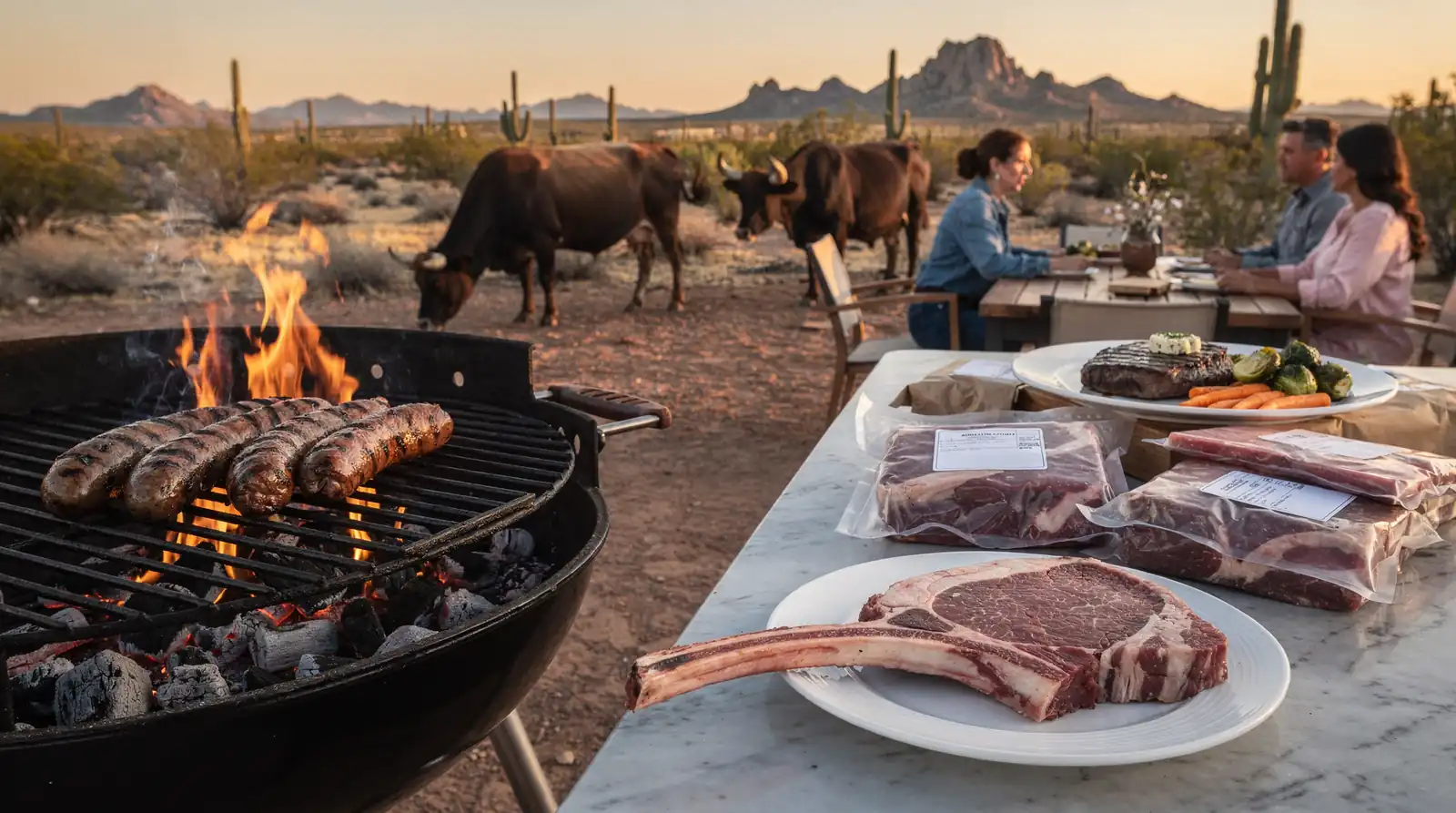
How Do You Store Beef Step By Step?
Proper beef storage follows a specific sequence, not a single action. Bacteria such as salmonella and E. coli multiply rapidly once beef sits at room temperature. Each step below moves the product toward cold storage without delay. Skipping a step risks spoilage or illness, even with premium cuts.
Long-term beef storage solutions work best when families follow this order:
- Move beef to refrigeration immediately after purchase or cooking; never leave raw or cooked beef on the counter longer than necessary.
- Portion the meat into meal-size servings before freezing, since smaller portions cool and thaw faster and reduce waste.
- Wrap tightly in freezer paper, vacuum-sealed bags, or airtight containers. Because Capital Farms beef is grass-fed and 200-day grain-finished, the fat content differs from conventional grain-fed beef, so snug packaging matters for preventing freezer burn and preserving texture.
- Label each package with the cut and date, keeping older beef in front for easy rotation.
- Freeze at 0°F or below and store for the recommended window based on the cut.
- Thaw in the refrigerator, never on the counter, to keep bacterial growth in check.
Why does freezing method matter for grass-fed beef?
Grass-fed beef carries less external fat than conventional beef, offering less natural insulation against freezer burn. Tight, air-free packaging protects flavor and tenderness during long storage periods.
Is it worth the extra storage effort?
Customers rating Capital Farms an average of 4.9 stars across 3,400 reviews expect that same quality at the dinner table months later. Careful storage protects that investment and preserves the rich flavor built into every cut.
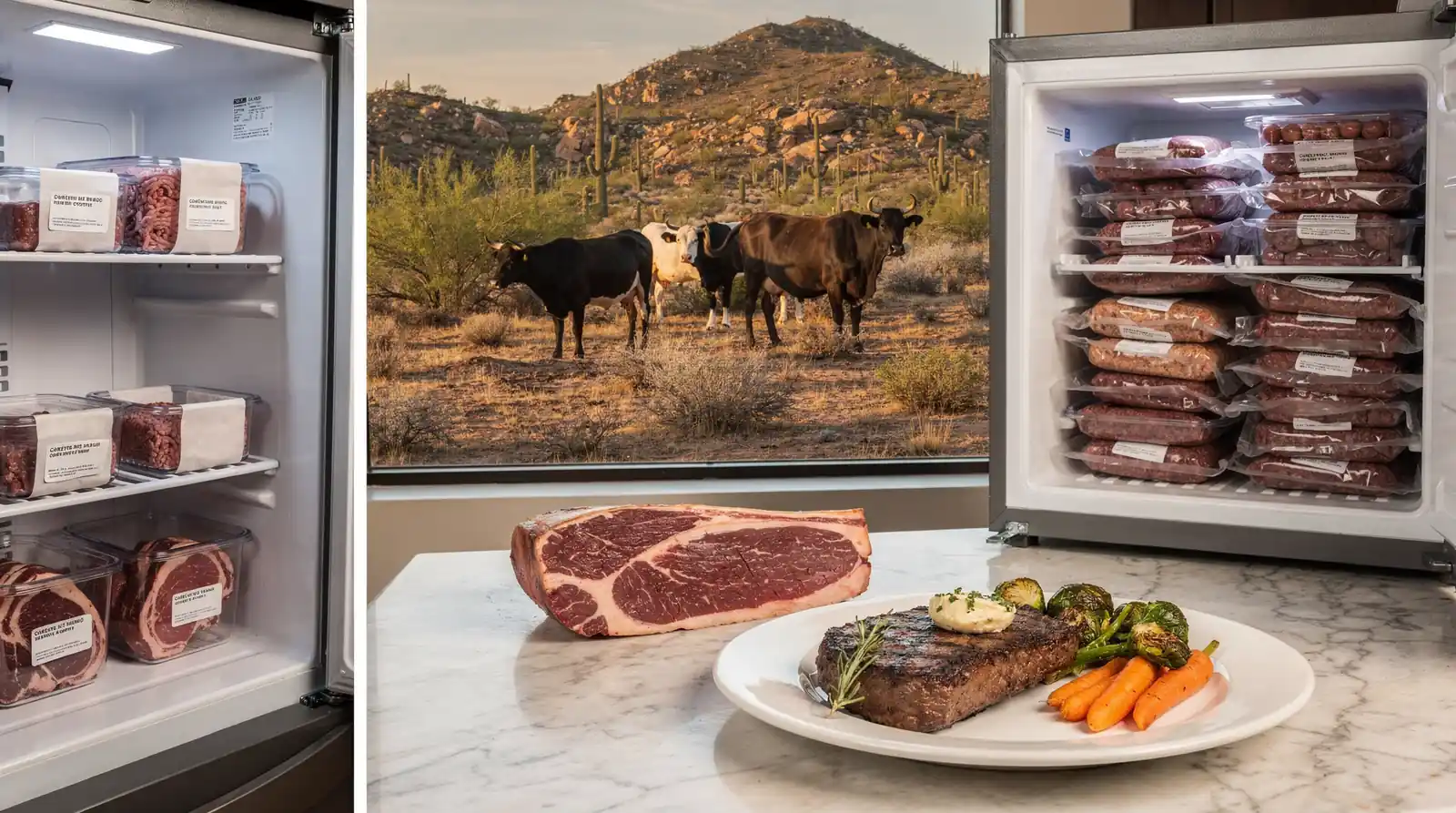
What Mistakes Should You Avoid With Storage?
The most common mistake confuses short-term refrigeration with true long-term beef preservation. These two methods demand different packaging and different timelines, and mixing them up leads to spoiled meat or wasted freezer space. Families often assume one storage rule fits every cut. long-term beef storage solutions call for airtight, freezer-rated packaging and a clear rotation plan, not just a spot in the fridge.
Portioning mistakes rank close behind. A household of seven needs a far larger stock than a single buyer living alone. Package sizes should match actual household consumption, not a generic default.
How Much Beef Should a Family Store?
Family size determines the right quantity. Larger households benefit from bulk portions divided into meal-sized packages. Smaller buyers do better with fewer, smaller cuts to avoid excess thawing.
Where Does Beef Fit Into Emergency Prep?
Beef belongs inside a broader emergency kit, not stored separately. Disaster planning guidance recommends organizing food supplies, including beef, alongside other emergency items so power outages or storms don't catch a household unprepared.
Avoid these errors:
- Treating fridge storage and freezer storage as interchangeable
- Ignoring household size when portioning
- Leaving beef out of the household's emergency supply plan
FAQ
How long does properly frozen beef maintain quality?
Vacuum-sealed beef stored at 0°F or below maintains quality for 6–12 months or longer. Proper portioning, wrapping, and labeling before freezing preserve both texture and safety.
What role does beef tallow play in long-term storage?
Rendered beef tallow extends shelf life significantly compared to fresh meat, without requiring refrigeration or freezing. Capital Farms offers it in a 14 oz jar or a 1-gallon bucket for larger supply needs.
Why does packaging matter more for grass-fed beef?
Grass-fed beef carries less external fat, giving it less natural insulation against freezer burn. Tight, air-free packaging, like vacuum-sealed bags, protects texture and prevents spoilage during storage.
Conclusion
In closing, families seeking reliable long-term beef storage solutions benefit from understanding both proper preservation techniques and the quality of the product being stored. Premium Corriente beef from Capital Farms provides the foundation for successful storage strategies, offering naturally superior marbling and flavor that sustains its character through extended preservation. By combining sound storage practices with ethically raised, hormone-free beef, families establish a dependable protein source that honors both nutritional needs and commitment to quality sourcing.