Local Grass-Fed Beef Shares: Whole vs Half vs Quarter
Local Grass-Fed Beef Shares: Whole vs Half vs Quarter

By Capital Farms Meats & Provisions Editorial Team · Updated 2026-07-28
Cow shares scale by freezer space and household size: quarters suit smaller households, halves fill months of meals, and wholes maximize bulk savings. Capital Farms, an 8-employee Wickenburg, Arizona operation, complements these shares with premium Corriente cuts like NY Strip from $23.00 and shipping over $250 across AZ, CA, NV and other states.
Grass-fed beef shares divide one animal into portions sized for different households: a whole cow delivers maximum cuts and value, a half cow (also called a side of beef) fills a family freezer with steaks, roasts. Ground beef for months. A quarter cow suits smaller kitchens needing variety with less freezer space and lower upfront cost.
Key Takeaways
Whole, half, and quarter cow shares offer bulk beef purchases directly from local ranchers at discounted prices.
A half cow typically fills your freezer for several months with various premium cuts included.
Quarter cow purchases provide an affordable entry point for first-time buyers ordering grass-fed beef directly.
Capital Farms Meats & Provisions offers premium Corriente beef with shipping over $250 to ten states.
What Is a Local Grass-Fed Beef Share?
A beef share means purchasing a whole, half, or quarter animal directly from a ranch instead of buying individual cuts at a grocery store. Local grass-fed beef shares put families in direct contact with the ranch that raised their meat, cutting out the middlemen who typically mark up retail beef. Buyers reserve a portion of one animal and receive a mix of steaks, roasts, and ground beef sized to that portion.
Capital Farms raises its cattle on rangeland surrounding Wickenburg, Arizona, where Corriente cattle graze before heading to finishing. The beef spends two full years grazing on grass, then finishes on grain for 200 days before reaching a customer's freezer. That extended timeline shapes flavor and texture in ways a fast-growing feedlot animal simply can't match.
Why Buy a Share Instead of Store Cuts?
Ordering a share gives buyers access to higher-quality beef while directly supporting the ranch behind it. Store shelves rarely disclose how an animal was raised or how long it was finished.
A share answers both questions upfront. Buyers know the origin, the timeline, and the ranching practices before the meat ever arrives.
Whole, Half, or Quarter: Which Size Fits?
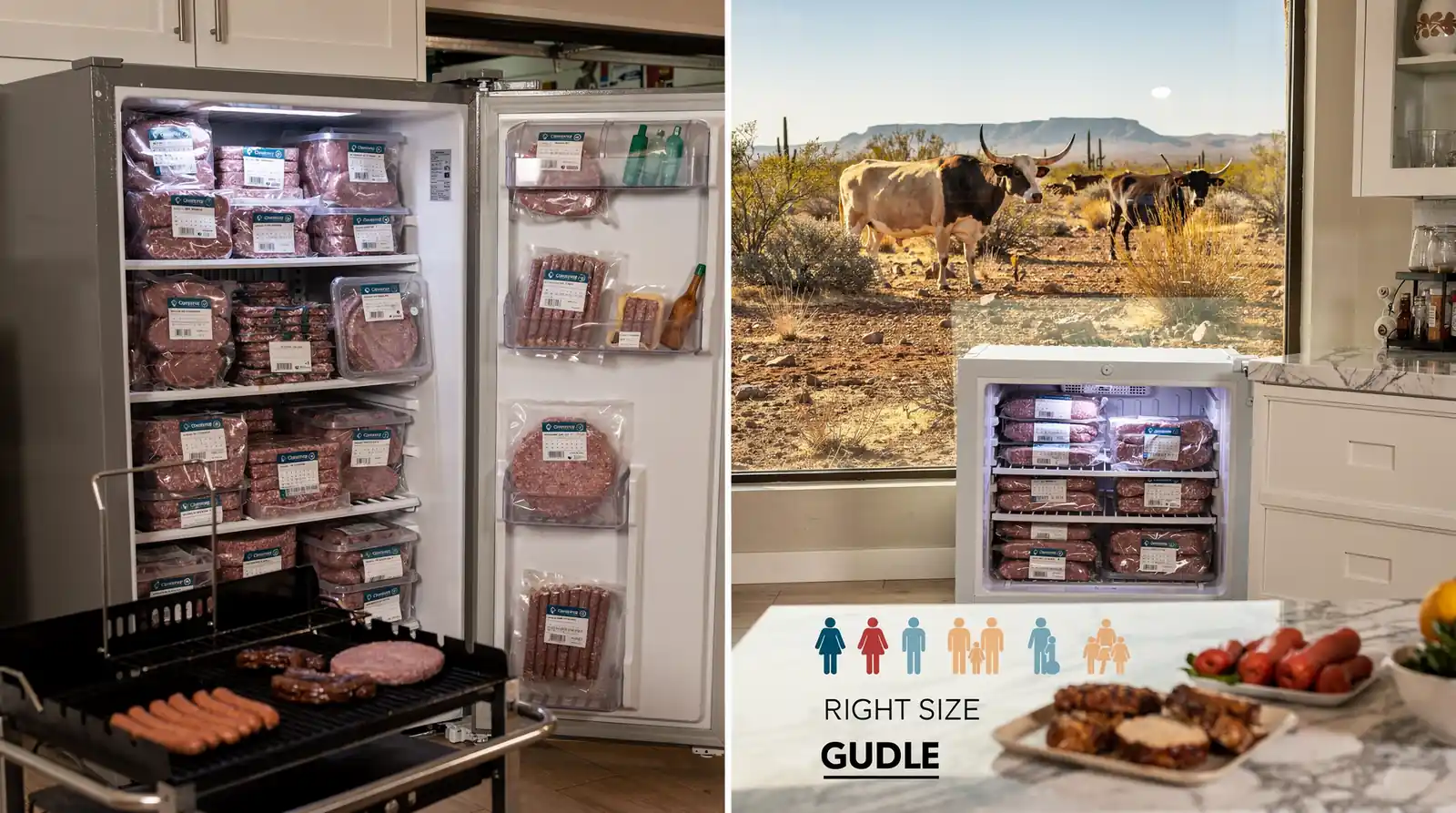
Freezer space and household size determine the right portion, not guesswork. A family that orders too small ends up reordering every few weeks. One that orders too large without a plan often faces a freezer packed beyond capacity. Matching a household's cooking habits and budget to the correct local grass-fed beef shares size prevents both problems before the order ships.
How much beef does a household actually need?
The answer depends on freezer capacity, family size, and how often beef appears on the weekly menu. Smaller households with limited freezer space often do better starting with a quarter share. Larger families with chest freezers can handle a half or whole share comfortably. A sizing guide helps buyers weigh those factors against their kitchen habits before committing.
Does the size affect the quality of the beef?
No. Every share, regardless of size, comes from Capital Farms Corriente cattle raised the same way. These cattle reach harvest at 48 months or older, well beyond the typical 18-month industry standard, which builds deeper, richer flavor into every cut.
Quality holds steady across sizes:
Hormone free raising practices apply to quarter, half, and whole orders alike
Grass fed, grain finished beef delivers consistent texture whether the order fills a shelf or a chest freezer
Natural marbling rivaling Choice or Prime grade appears in every cut, from ground beef to steaks
Size changes the quantity in the freezer. It never changes the standard behind the beef itself.
What Cuts and Costs Should Buyers Expect?
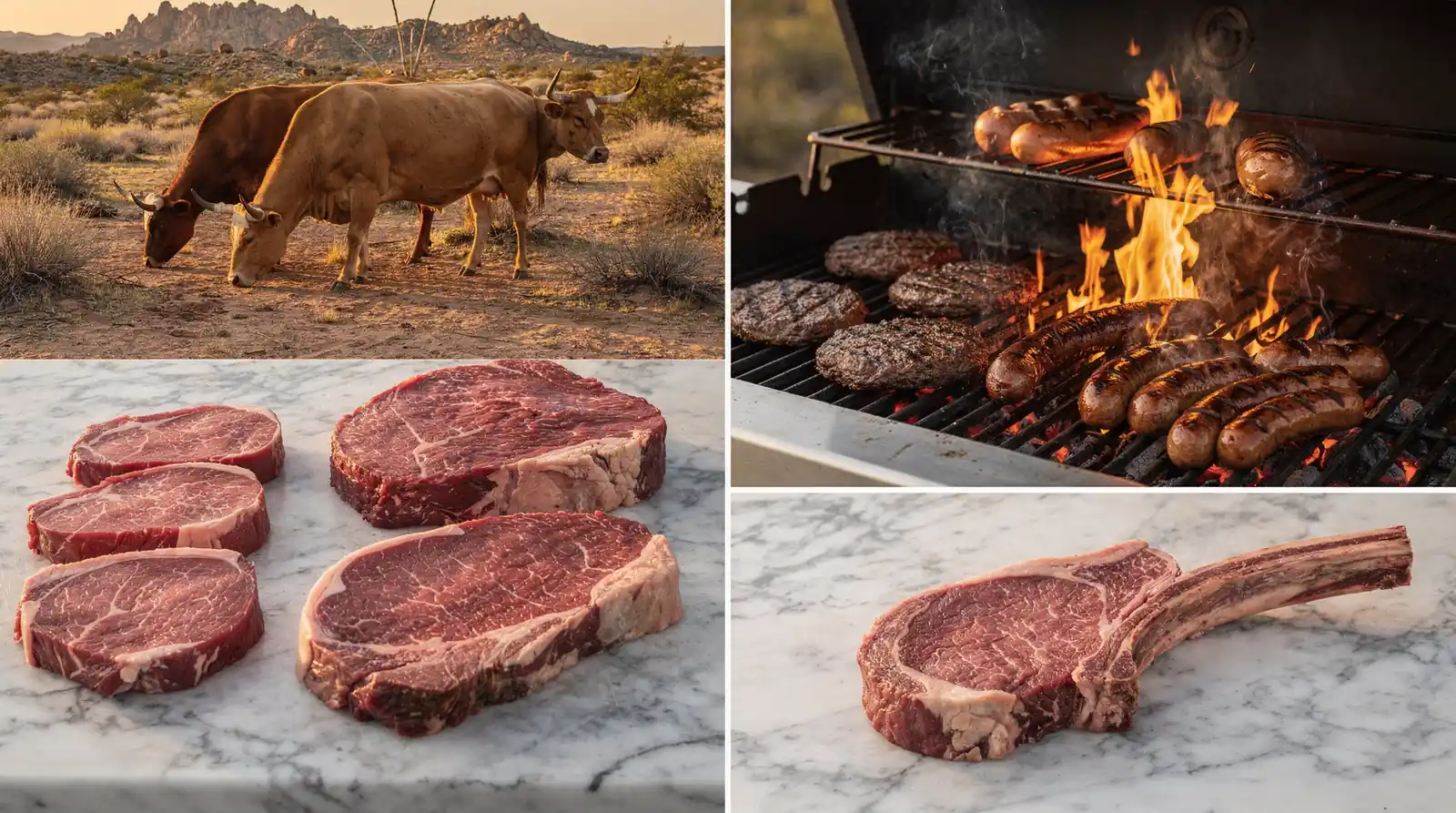
Cost depends heavily on which cuts fill the box. Individually, Capital Farms prices NY Strip Steak starting from $23.00, Ribeye Steak starting from $31.00, and Filet Mignon Steak starting from $53.00. Figures that give families a benchmark for judging whether a bulk order delivers real value.
Local grass-fed beef shares typically bundle steaks, roasts, and ground beef together, so buyers rarely pay premium per-pound pricing across the entire box. Bulk purchasing lowers the average cost per pound compared to buying the same cuts one at a time at retail counters. Small ranchers selling direct-to-consumer can use these individual prices as anchors when explaining share value to first-time customers.
Does shipping affect the total cost of a beef share?
Shipping matters for buyers ordering online rather than picking up locally. Capital Farms offers shipping on orders over $250 to a defined group of states, including Arizona, California, Nevada, Utah, New Mexico, Oregon, Colorado, Oklahoma, Texas, Idaho, Kansas, Montana, and Wyoming.
Families budgeting for a share should factor this threshold into their order size:
Orders under $250 may carry shipping charges.
Orders over $250 within eligible states ship.
Buyers outside the listed states should confirm delivery costs before ordering.
Selecting the right beef share size represents a meaningful decision that aligns your household's needs with sustainable ranching practices. Whether you choose a whole, half, or quarter cow, you invest in premium Corriente beef raised according to established agricultural traditions and rigorous quality standards. Capital Farms' commitment to transparency and ethical sourcing ensures that your investment delivers both exceptional flavor. The assurance that your beef comes from cattle managed with care and expertise from Arizona's rangelands to your table.
FAQ
What is the difference between a whole, half, and quarter cow share?
A whole cow maximizes bulk savings, a half cow fills a family freezer for months with steaks, roasts, and ground beef, and a quarter cow suits smaller households needing less freezer space and lower upfront cost.
Does choosing a smaller share mean lower quality beef?
No, every share size comes from the same Corriente cattle raised the same way, harvested at 48 months or older for deeper, richer flavor regardless of portion size.
How do I decide which share size fits my household?
Match your freezer capacity, family size, and how often beef appears on your weekly menu. Smaller households do better with a quarter share. Larger families with chest freezers handle a half or whole share comfortably.