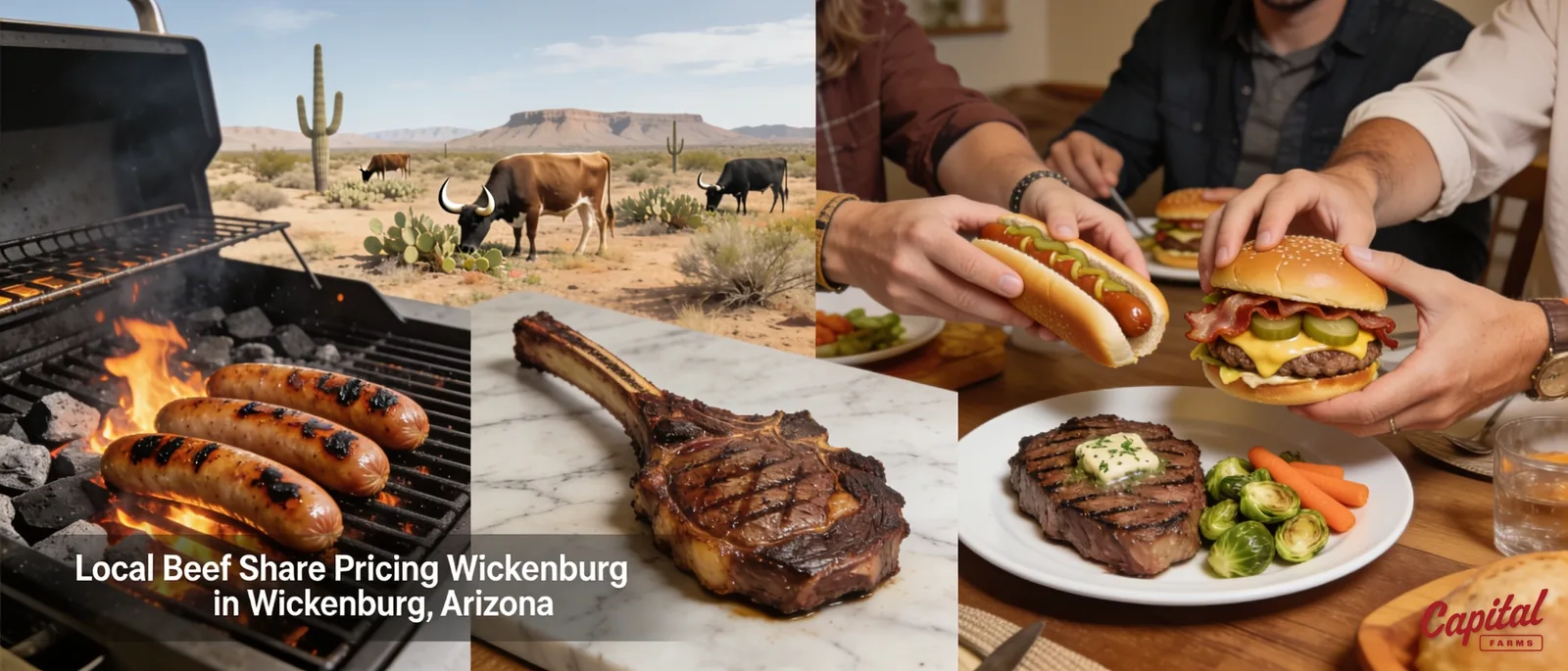
Local Beef Share Pricing Wickenburg in Wickenburg, Arizona
Local Beef Share Pricing Wickenburg in Wickenburg, Arizona
By Capital Farms Meats & Provisions Editorial Team · Updated 2026-07-28
Beef share pricing near Wickenburg, Arizona follows a per-pound structure based on hanging weight. Whole beef runs roughly $8.93 per pound, with total pricing varying by share size. Half beef costs about $9.29 per pound, with total pricing varying by share size. Quarter beef pricing varies based on specific share details. Farmers set these tiers using hanging weight, not retail cuts, giving buyers transparent, bulk-based value.
Key Takeaways
Capital Farms Meats & Provisions in Wickenburg offers whole beef shares at $8.93 per pound hanging weight.
Whole beef shares yield approximately 400-500 pounds of meat from a hanging weight of 850-1000 pounds.
Half beef shares provide 200-350 pounds of meat with 10-14 cubic feet storage space available.
All processing charges are included in the per-pound hanging weight price with no additional fees.
What Sets Beef Share Pricing Near Wickenburg Apart?
Local Beef Share Pricing Wickenburg hinges on one detail buyers often miss: the price quoted per pound refers to hanging weight, not finished cuts sitting in a cooler. That distinction matters for anyone comparing a beef share against a grocery store receipt. Hanging weight reflects the carcass before trimming and processing, so the final take-home total looks smaller than the number on the invoice.
Regional programs offer a useful benchmark. Whole beef shares in comparable operations run near $8.93 per pound hanging weight, while smaller shares. Quarters and eighths — typically carry a higher per-pound rate because processing costs get spread across less volume.
Why does Wickenburg-area beef cost more per pound in smaller shares?
Fixed processing fees apply whether a rancher cuts a whole animal or a fraction of one. Splitting those fees across fewer pounds pushes the per-pound price upward for eighth and quarter shares.
Two production factors also shape value here:
Grass-fed, grain-finished cattle spend 200 days on a grain-finishing program, adding time and feed cost that separates this beef from fast-finished commodity cattle.
Corriente cattle reach harvest at 48 months or older, nearly triple the typical 18-month timeline, building flavor and marbling that standard pricing models rarely account for.
Capital Farms Meats & Provisions operates directly in Wickenburg, Arizona, giving local ranchers and buyers a benchmark rooted in the same land and climate they're already working with.
How Much Meat Do You Actually Get?
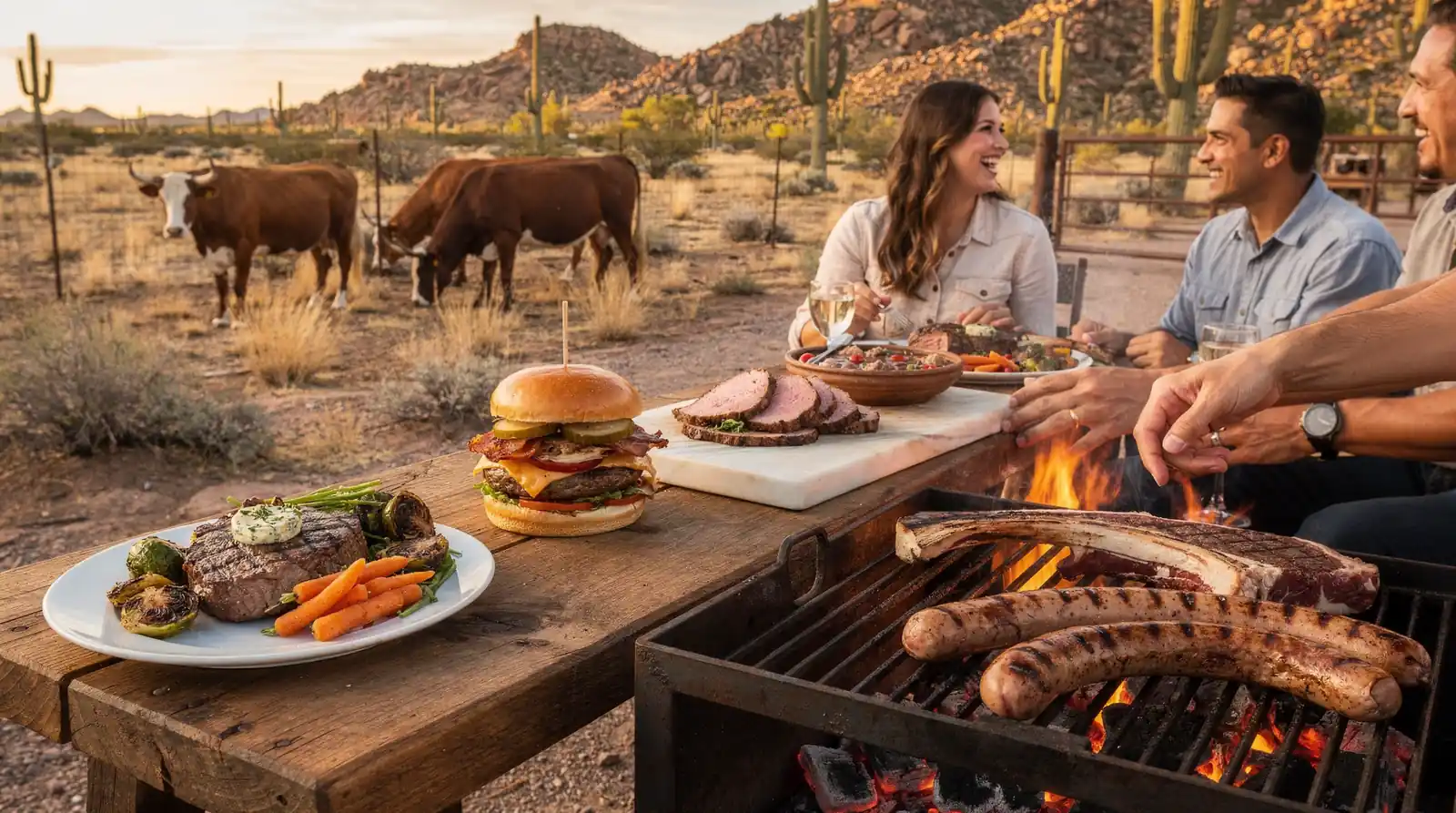
A quarter, half, or eighth share breaks down into roughly 30% steaks, 30% roasts, and 40% ground and stew beef. That ratio matters more than the sticker price on the invoice. Ranchers near Wickenburg, Arizona setting local beef share pricing need buyers to understand this breakdown before money changes hands, and buyers need it to judge real value.
Hanging weight tells only part of the story. Once a carcass is trimmed, boned, and wrapped, buyers typically receive just 50% to 60% of that hanging weight as usable cuts. A share quoted at 300 pounds hanging might land closer to 149 pounds in the freezer. Skipping this math inflates expectations and shrinks perceived value fast.
How does a share compare to buying individual cuts?
Cut-by-cut pricing offers a useful benchmark for Wickenburg buyers weighing a full share. Capital Farms lists Ribeye Steak starting at $31.00 and Filet Mignon starting at $53.00, both premium cuts. NY Strip Steak starts at $23.00, Sirloin Steak at $22.00, and Teres Major Steak at $14.00.
Is a beef share worth it for a smaller household?
An eighth share suits buyers wary of freezer space or big upfront costs. The same 30/30/40 cut ratio applies, just scaled down, giving smaller households variety without overcommitting.
Is Buying A Share Worth It Here?
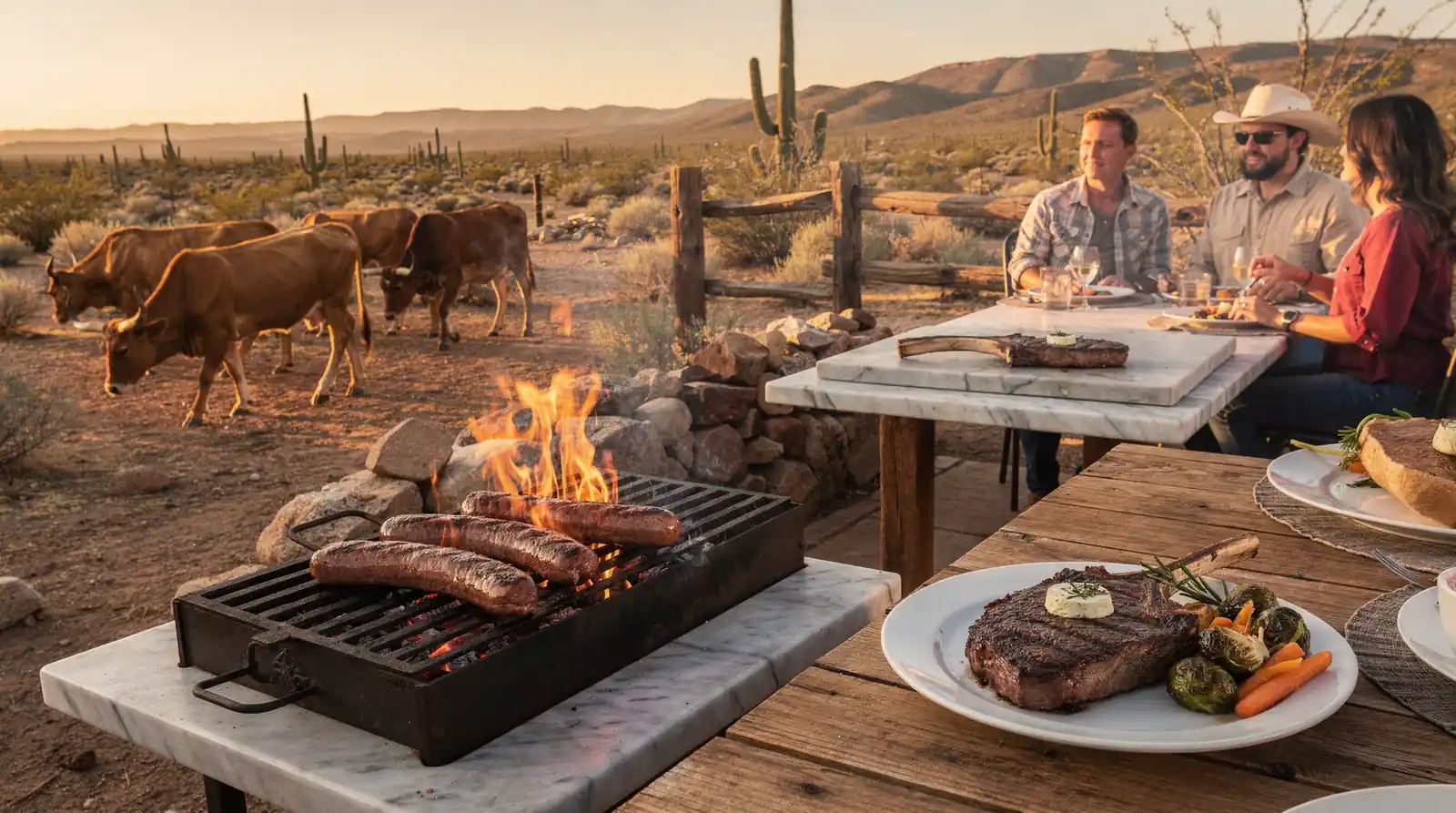
Value depends on freezer space, household size, and how a buyer weighs bulk savings against upfront cost. A beef share ranks as the most economical route to exceptional local beef, according to industry data on regenerative farm shares. It supports the ranchers raising the animal while filling a freezer for months. For families near Wickenburg, Arizona, comparing local beef share pricing Wickenburg buyers face against grocery-store cuts often tips the scale toward the share.
Shipping costs shape the math too. Capital Farms offers delivery across Arizona. Eleven other states, trimming the per-pound premium that share-sized orders can carry.
Reputation matters as much as the invoice total. Capital Farms holds a 4.9-star average across 3.4K customer reviews, a track record worth weighing alongside any price tag.
Are There Other Ways To Stretch A Beef Share?
Buyers looking to round out a freezer order beyond steaks and roasts have options. Capital Farms sells a 1-gallon bucket of Premium Corriente Beef Tallow, weighing 7.2 pounds, for $79.99. Adding tallow to a share order stretches the value further. It supplies cooking fat that would otherwise require separate purchases at retail prices.
FAQ
What does hanging weight mean for beef share pricing?
Hanging weight refers to the carcass weight before trimming, not the final packaged cuts. Whole beef pricing near $8.93 per pound. Half beef near $9.29 per pound both use this measurement as the basis for cost.
Why do smaller beef shares cost more per pound?
Fixed processing fees apply whether ranchers cut a whole animal or a smaller portion. Spreading those same fees across fewer pounds in quarter or eighth shares pushes the per-pound price higher than whole shares.
How much usable meat comes from the hanging weight?
Buyers typically receive