
Half Cow Purchase Tips for First-Time Buyers
Half Cow Purchase Tips for First-Time Buyers

By Capital Farms Meats & Provisions Editorial Team · Updated 2026-07-28
Half cow purchases typically yield 130-200 pounds of packaged beef. First-time buyers should confirm freezer space, cut preferences, and hanging weight pricing upfront. Capital Farms Meats & Provisions in Wickenburg, Arizona, recommends choosing Corriente beef for leaner quality and delivery options.
Freezer space requirements top the list: reserve at least 7 to 9 cubic feet before ordering. A half cow yields 130 to 200 pounds of meat, with pricing that varies by package (contact the brand directly for current costs), and verify antibiotic labeling standards. NAE means zero antibiotics while NAIHM still permits some.
First-time buyers should confirm hanging weight, freezer space of at least 6 to 8 cubic feet, and cut preferences before ordering. Capital Farms' Corriente cattle graze near Wickenburg, AZ; Capital Farms' beef is grass-fed and 200-day grain-finished, producing hormone-free beef with rich marbling worth budgeting for and planning around.
Key Takeaways
A half cow yields 200 to 250 pounds of take-home beef after processing and butchering.
Pricing varies by package; contact the brand directly for current costs on half cow meat alone, excluding processing and delivery fees.
Reserve 6 to 8 cubic feet of freezer space before ordering your half cow purchase.
Capital Farms Meats & Provisions delivers premium Corriente beef with free shipping over $250 to ten western states.
What Should First-Time Buyers Prepare Before Ordering?
Freezer space, budget, and a trustworthy supplier top the checklist before any deposit changes hands. Following sound half cow purchase tips early prevents wasted money and a cramped kitchen freezer later. A half cow yields 200 to 250 pounds of beef. That volume demands 6 to 8 cubic feet of dedicated freezer space, so measuring available room comes first.
Preparation follows a logical order:
Measure the freezer's cubic footage before signing any agreement.
Clear 6 to 8 cubic feet minimum for a half-cow order.
Pricing varies by package; contact the brand directly to determine the full cost, including processing.
Compare suppliers on feeding practices and customer reviews.
How much does a half cow typically cost?
Pricing varies by package and includes processing fees; contact the brand directly for current cost details. Confirming costs in advance avoids surprise charges after the meat is already cut and packaged.
What quality signs should buyers look for in a supplier?
Grass-fed, grain-finished beef signals a supplier committed to flavor and consistency; Capital Farms' beef is grass-fed and 200-day grain-finished. Reviews matter, too. Capital Farms carries a 4.9-star average across 3.4K customer reviews, a benchmark first-time buyers can use when comparing options.
How Do You Complete a Half Cow Purchase?
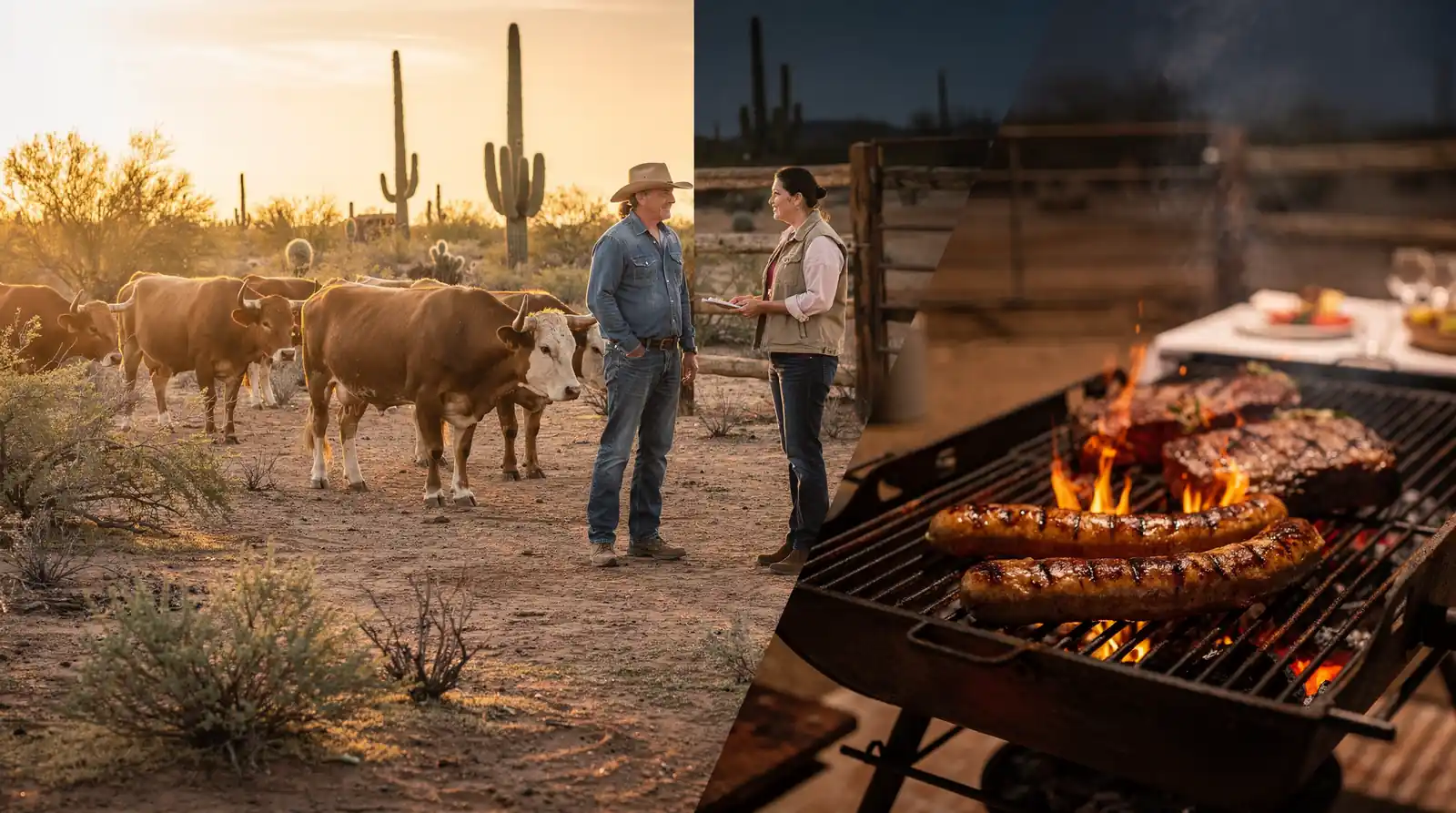
Completing a half cow purchase requires five clear steps, starting months before delivery day. Skipping any step risks a freezer full of the wrong cuts or an unexpected bill. Following sound half cow purchase tips protects both the budget and the quality of the meat.
Contact the ranch three to six months before the desired delivery date. Ranchers process animals on set seasonal schedules, so late orders often miss the current cycle entirely.
Confirm the animal's raising and finishing practices before submitting a deposit. Reserving a half cow means buying a share of a live animal, not a set of packaged cuts.
Ask about breed specifics and cut selection. Capital Farms offers premium Corriente beef, and buyers should request details on how that breed affects marbling and available cuts.
Verify the location and sourcing of the herd. Capital Farms raises its cattle in Wickenburg, Arizona, and confirming the ranch's location builds confidence in the final product.
Review shipping terms before finalizing payment. Capital Farms provides free shipping on orders exceeding $250 within Arizona, California, Nevada, Utah, New Mexico, Oregon, Colorado, Oklahoma, Texas, Idaho, Kansas, Montana, and Wyoming.
What Should First-Time Buyers Confirm Before Paying a Deposit?
First-time buyers should confirm the ranch's finishing method and the expected timeline for delivery. A deposit locks in a share of an animal still being raised. Clarity on practices and dates matters before money changes hands.
What Mistakes Should You Avoid After Delivery?
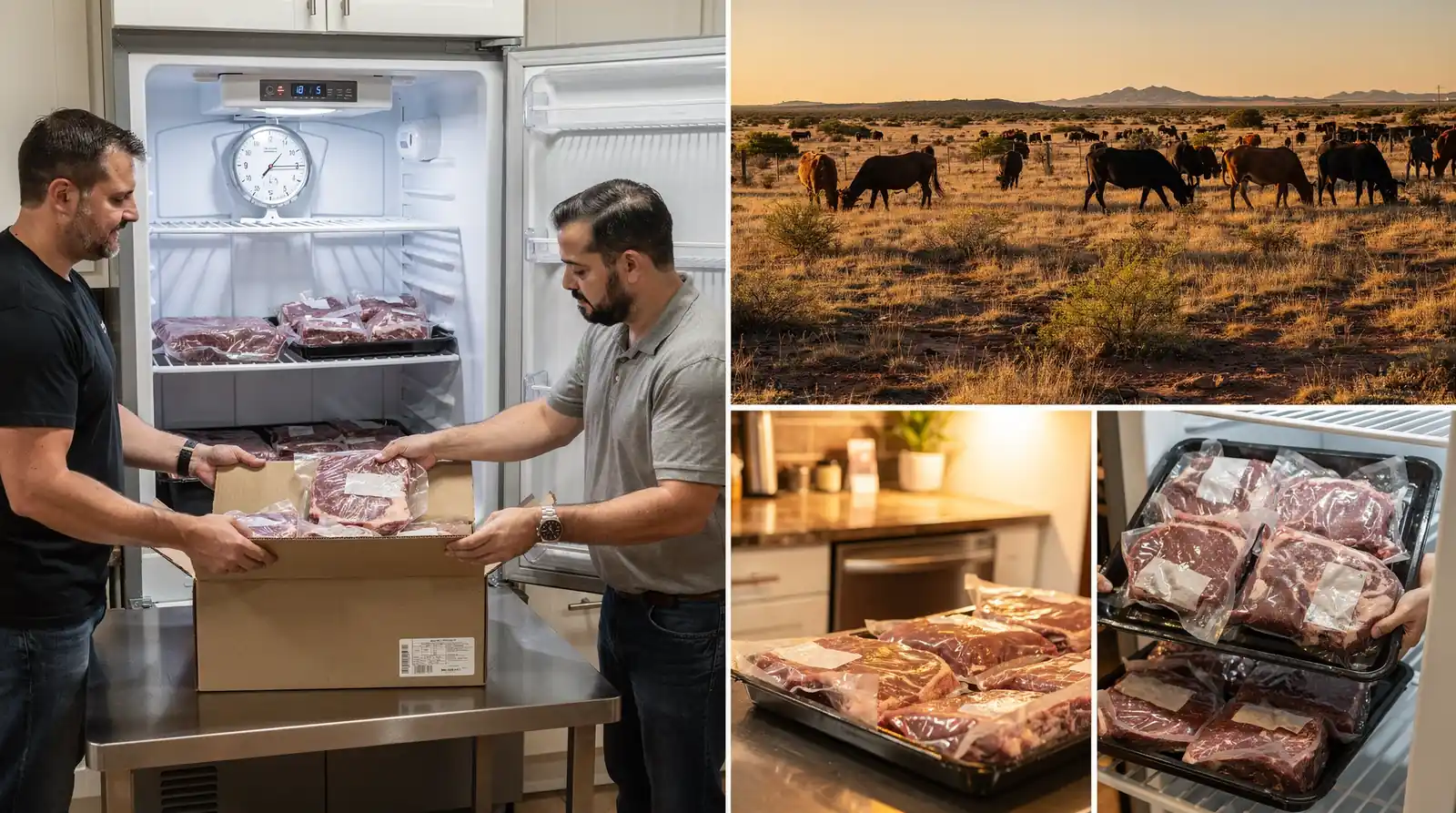
The biggest mistake happens in the first ten minutes: letting boxes sit on the porch or counter while other errands get finished. Raw beef left at room temperature invites bacterial growth fast. Improper handling can lead to foodborne illnesses like salmonella and E. coli. First-time buyers following smart half cow purchase tips treat delivery day as an active task, not a delivery to deal with later.
Follow these steps as soon as the truck pulls away:
Bring every package inside immediately, even if sorting happens later.
Check that cuts feel cold to the touch, not room temperature.
Move refrigerator-bound cuts into a fridge set to 40°F or below.
Transfer freezer cuts to the freezer within two hours of arrival.
Inspect packaging for tears or leaks before stacking anything.
What if something arrives damaged or wrong?
Contact the seller right away rather than assuming nothing can be done. Capital Farms offers a replacement or a full refund when a customer isn't satisfied with an order. That guarantee removes much of the risk for someone buying beef in bulk for the first time.
FAQ
How much freezer space does a half cow require?
Reserve at least 6 to 8 cubic feet of dedicated freezer space before ordering. A half cow yields 200 to 250 pounds of beef, which demands that minimum room for proper storage.
How far in advance should buyers contact the ranch?
What does NAE labeling mean on beef?
NAE means zero antibiotics were used in raising the animal. NAIHM, by contrast, still permits some antibiotic use, so buyers should verify labeling standards before ordering.