Half Cow Beef Share Options for Farmers
Half Cow Beef Share Options for Farmers

By Capital Farms Meats & Provisions Editorial Team · Updated 2026-07-28
Half cow shares typically require a deposit—such as a reservation deposit for a 50% live-animal share—followed by a final balance, yielding around 150 lbs of custom-cut meat. Alternatively, Capital Farms Meats & Provisions in Wickenburg, Arizona offers individual Corriente beef cuts like NY Strip Steak from $23.00, ideal for investors avoiding bulk commitment.
Half cow beef shares deliver roughly 150 pounds of custom-cut meat, split into steaks, roasts, and ground beef, typically secured through a deposit that reserves a live animal. Capital Farms uses Corriente cattle. Capital Farms' beef is grass-fed and 200-day grain-finished, giving farmers a premium direct-sale product and households a cost-effective, hormone-free bulk beef investment.
Key Takeaways
Half cow shares require a reservation deposit to reserve your 50% portion of a live animal.
A typical half beef share yields approximately 150 pounds of usable meat for your freezer.
Capital Farms Meats & Provisions offers premium Corriente beef with shipping to eight western states.
Buyers customize their cuts through direct consultation with the farm after completing their reservation deposit.
What should you know before buying a half cow share?
Evaluating Half Cow Beef Share Options starts with three factors: deposit size, meat yield, and freezer readiness. Skipping that review risks wasted freezer space or an unexpected bill down the line. Most programs require a reservation deposit before an animal enters processing — with the amount varying by farm, to secure a 50% share of a live animal. That deposit locks in the animal and starts the countdown to delivery.
Before committing, ranchers and buyers alike should confirm the following:
Deposit amount needed to reserve a percentage of the animal
Total yield, since a half share typically delivers roughly 200 pounds of finished meat, with organs and bones included at no extra charge
Freezer capacity on hand to store that volume without crowding other food
Cut preferences, decided in advance or left to the processor's standard breakdown
Is a half cow share worth it for a small household?
Households without spare freezer space or a clear cut preference often do better buying individual premium cuts instead. A single NY strip steak, for example, offers portion control without the upfront commitment.
How does grain-finishing affect share quality?
Feeding programs matter as much as the deposit terms. Capital Farms finishes cattle on grass followed by 200 days of grain feeding, a useful quality benchmark for comparing any share program under consideration.
How do you reserve and receive a half cow share?
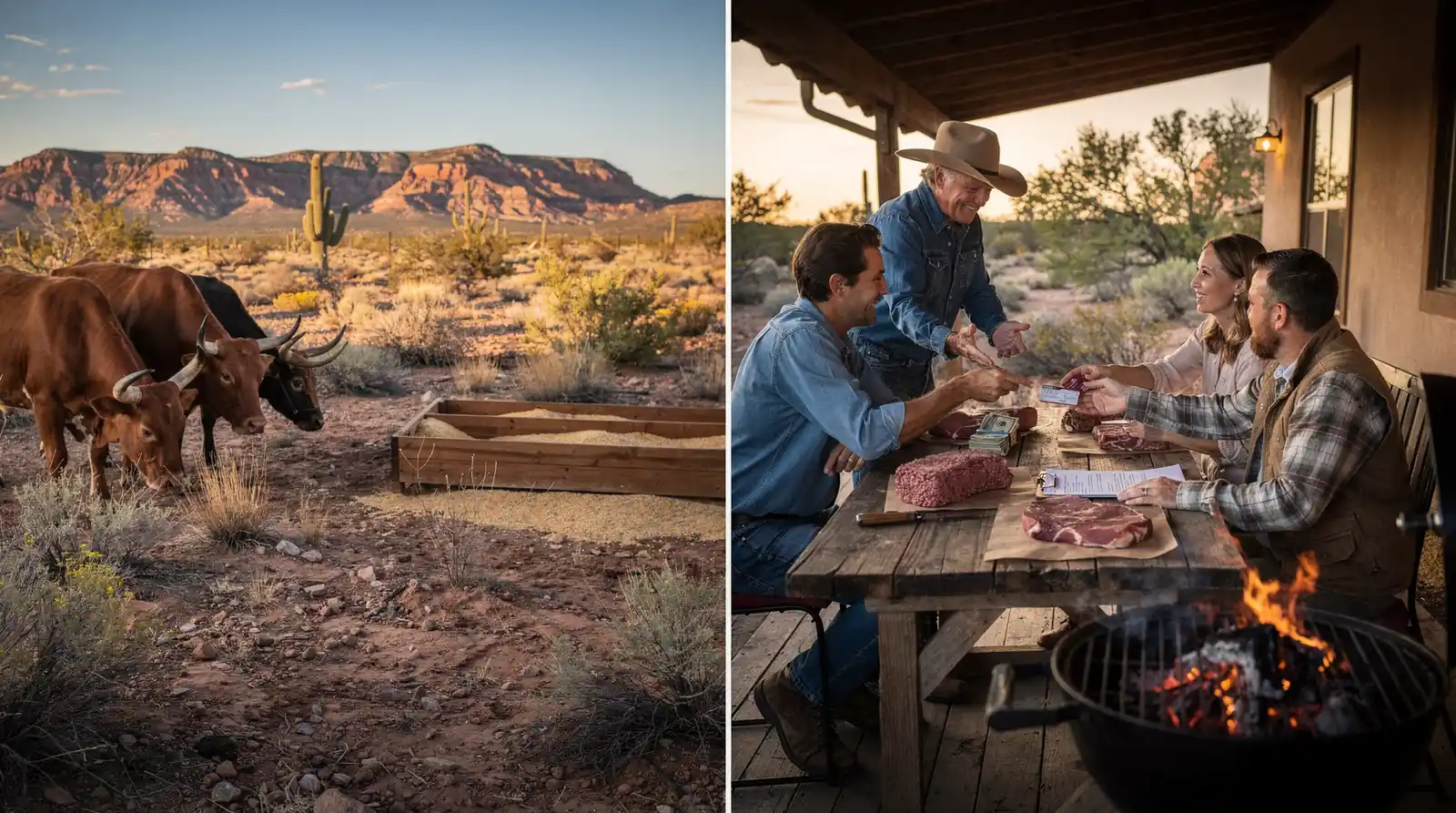
A deposit locks in the animal first, and processing follows a set sequence after that. Ranchers evaluating half cow beef share options for their own direct-to-consumer programs. Households weighing a bulk purchase, both benefit from understanding the timeline before committing funds.
The process generally unfolds in four stages:
Submit a reservation deposit. A deposit, with the amount varying by farm, secures the 50% share of a live animal and starts the process moving.
Discuss cut preferences. A follow-up call covers how the buyer wants the beef prepared. Buyers who prefer not to choose receive a balanced recommendation of steaks, roasts, ground beef, and specialty cuts.
Wait for processing. The animal moves through custom processing, and pricing gets finalized once the finished hanging weight is known.
Pay the balance and receive the order. The remaining cost is calculated per pound against that finished weight, then the packaged beef ships or gets picked up.
How long does the half cow process take from deposit to delivery?
Timing depends on the processor's schedule and the animal's finishing weight, so exact windows vary by ranch. Buyers should expect the wait to stretch across several weeks between the initial deposit and final pickup.
Is there a faster way to get premium cuts without a deposit?
Households wanting curated cuts immediately, without a deposit or long wait, can order steaks such as Ribeye or Filet Mignon directly. Capital Farms lists Ribeye Steak starting from $31.00, with no reservation required. Orders over $250 also ship to Arizona, California, Nevada, Utah, New Mexico, Oregon, Colorado, Oklahoma, Texas, Idaho, Kansas, and Wyoming.
What mistakes should you avoid with beef shares?
Four errors trip up most first-time buyers evaluating half cow beef share options: treating the purchase like a retail order, ignoring freezer needs, skipping farm research, and overlooking quality standards.
Cow shares work as a cooperative arrangement between a household and a farm, not a simple checkout transaction. Buyers who expect same-day convenience often misjudge the planning a farm-direct purchase demands.
How much freezer space does a half cow require?
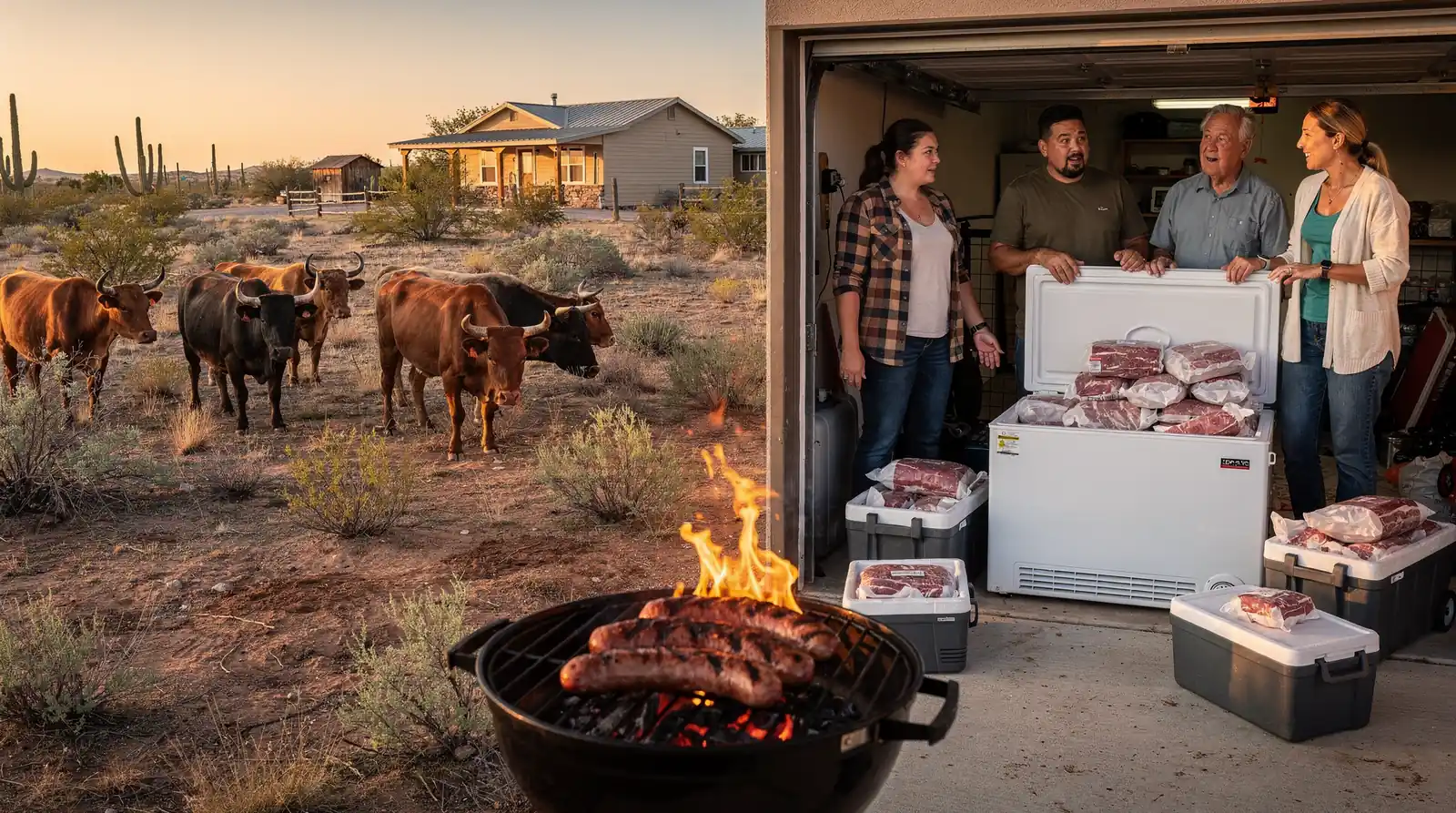
A half share arrives as a large volume of processed cuts, so households need dedicated freezer capacity ready before delivery. Failing to plan storage space is one of the most common oversights among new buyers.
What should buyers check before choosing a farm?
Reputable operations operate within a transparent, holistic farm system built on documented care practices. Skipping this verification step risks disappointment once the meat is in hand.
Buyers should also confirm testing standards. Quality and tenderness testing practices vary by farm. Merit direct verification before purchase, a benchmark worth comparing against any farm under consideration:
Confirm cooperative terms and communication expectations
Measure freezer space in advance
Research the farm's transparency and animal care practices
Ask how quality and tenderness are verified before processing
Capital Farms demonstrates that premium beef sourcing need not compromise ethical stewardship or agricultural tradition. By combining heritage Corriente genetics with rigorous quality standards. Transparent practices, we deliver products that reflect both our commitment to the ranching community and our responsibility to discerning consumers. Whether you seek direct partnership or premium retail offerings, Capital Farms provides the foundation for sustainable, flavorful beef that honors the land and the craft.
FAQ
How much does a half cow beef share deposit cost?
A reservation deposit, with the amount varying by farm, secures a 50% share of a live animal, locking in the animal and starting the processing timeline toward final delivery.
How much meat does a half cow share provide?
A half cow share yields approximately 150 pounds of custom-cut meat, including steaks, roasts, ground beef, organs, and bones at no extra charge.
What feeding method does Capital Farms use for its Corriente beef?
Capital Farms finishes its Corriente cattle on grass followed by 200 days of grain feeding, offering a quality benchmark for comparing other share programs.