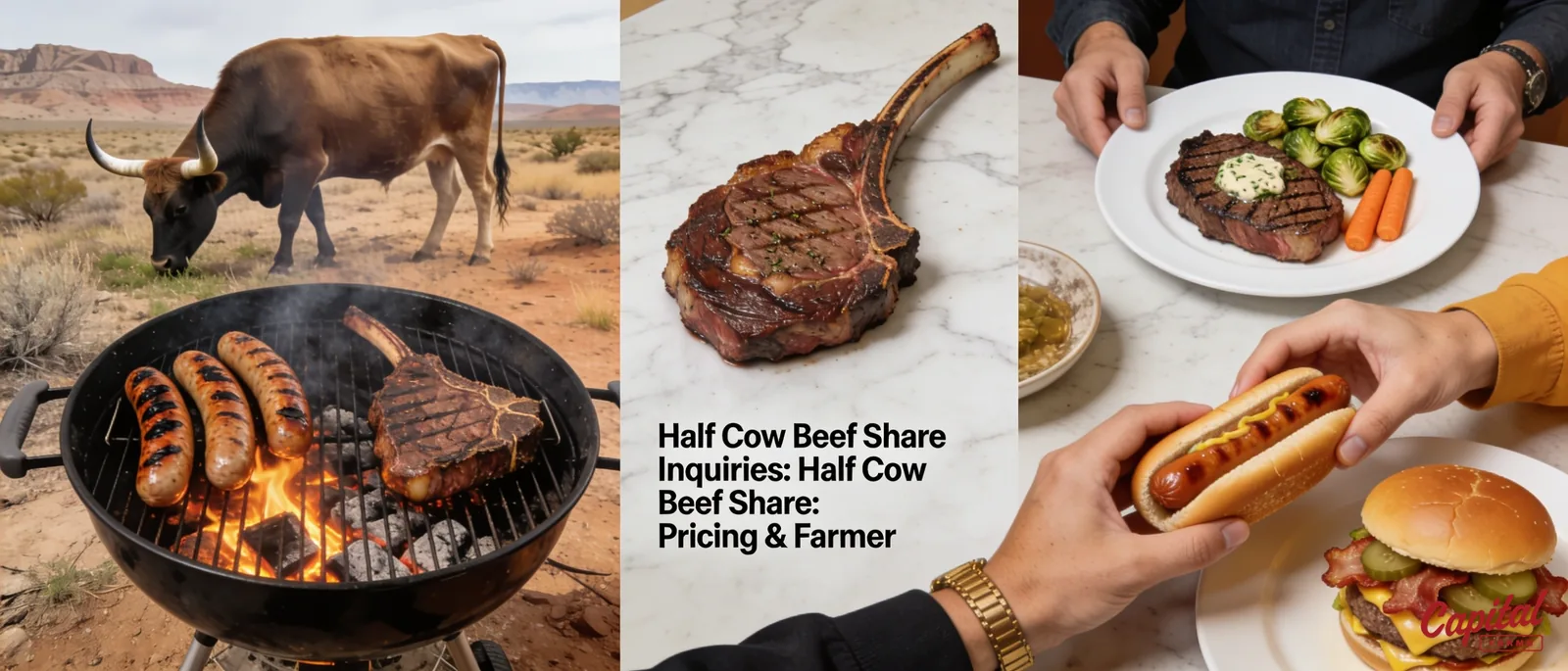
Half Cow Beef Share Inquiries: Half Cow Beef Share: Pricing & Farmer
Half Cow Beef Share Inquiries: Half Cow Beef Share: Pricing & Farmer
By Capital Farms Meats & Provisions Editorial Team · Updated 2026-07-28
Half cow beef shares from Capital Farms Meats & Provisions in Wickenburg, Arizona, deliver premium Corriente beef at bulk value, complementing items like NY Strip Steak from $23.00. Farmers benefit through direct sales, steady demand, and free shipping on orders over $250 across 13 states.
Half-cow beef shares typically price by dressed weight, often $10.00 per pound, with a dressed weight range of 320 to 390 lbs, producing an estimated total that varies based on weight. For farmers and ranchers, this model delivers predictable bulk revenue, reduces per-cut marketing effort, and builds repeat direct-to-consumer relationships that strengthen long-term farm profitability.
Key Takeaways
- Half beef shares cost $10.00 per pound as an initial deposit at participating local farms.
- Capital Farms Meats & Provisions offers premium Corriente beef with free shipping over $250 to eight western states.
- Bulk beef purchases fill freezers with high-quality meat while reducing per-pound costs compared to retail pricing.
- Local farm beef shares eliminate middleman markups, allowing farmers to retain higher profit margins on direct sales.
What Determines Half Cow Pricing?
Dressed weight sets the final number on a half beef invoice, not a apartment sticker price. Ranchers who sell direct-to-consumer typically collect a deposit priced per pound, then calculate the true total once the animal's carcass weight is confirmed at the processor. This structure protects both the seller and the buyer from guesswork, since no two animals dress out exactly the same.
A half beef commonly dresses between 320 and 390 pounds. That range drives an estimated final price based on the weight of the beef for most half cow beef share inquiries. Weight variation from animal to animal shifts the total up or down. Ranchers who communicate this range upfront avoid disputes at pickup.
Industry data supports similar figures. For most families, a pasture-raised half cow's total cost varies based on weight, covering the beef itself along with butchering and packaging fees. Ranchers pricing below that range risk undervaluing their labor and feed costs.
How does bulk pricing compare to retail cuts?
Retail cut pricing offers a useful benchmark for ranchers setting share prices. Capital Farms lists individual Ribeye Steak starting at $31.00 per unit. Filet Mignon starting at $53.00, figures that show how quickly per-cut costs add up compared to buying by the half or whole animal. Framing this comparison for customers helps justify the upfront deposit and builds trust in the final invoice.
Why Do Ranchers Offer Beef Shares?
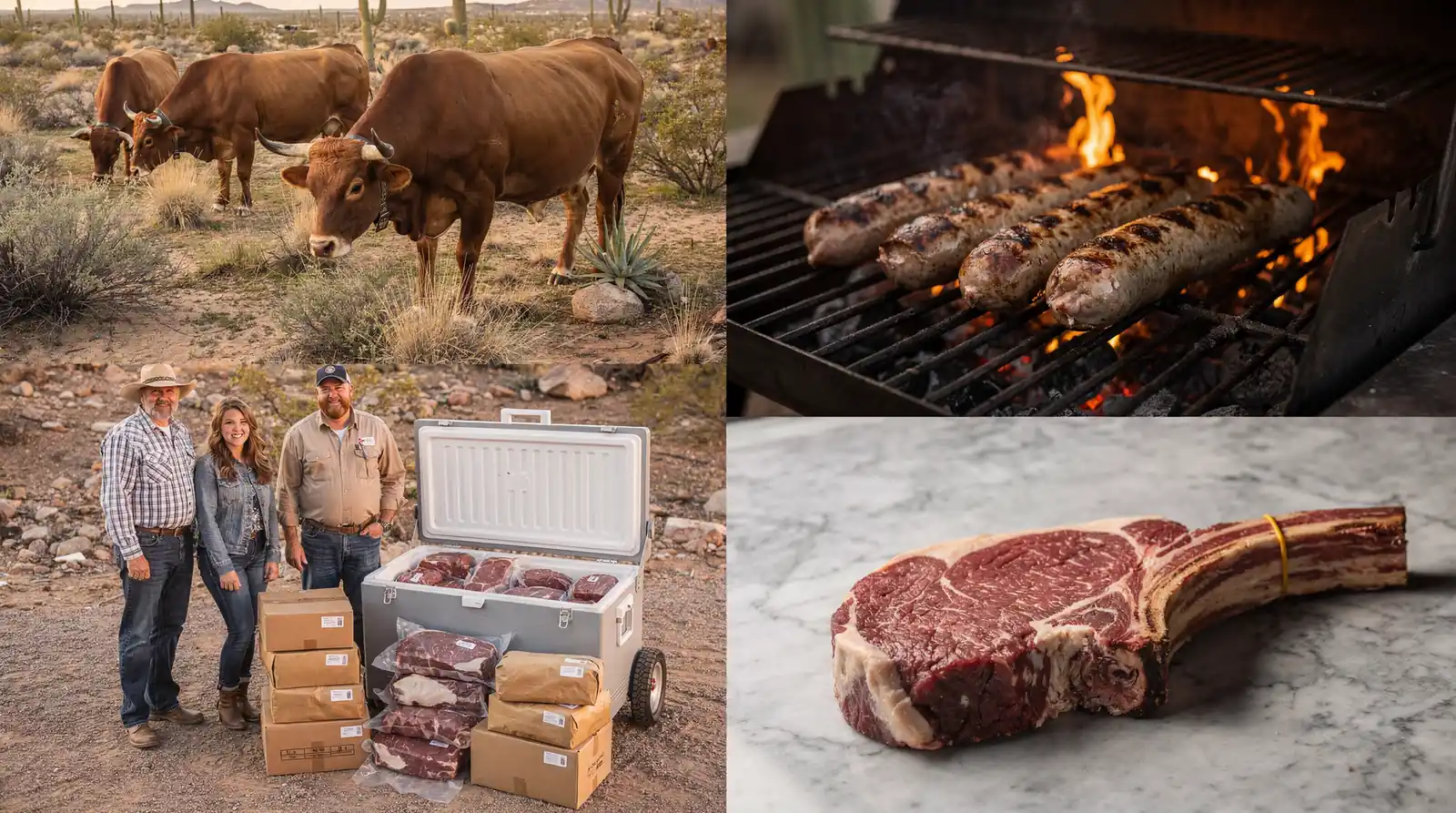
Ranchers offer beef shares because bulk sales move an entire animal through a single transaction, cutting overhead while rewarding the customer with lower per-pound pricing. Selling by the half or whole animal streamlines inventory, reduces marketing costs, and turns one sale into hundreds of pounds of product. Many operations field regular Half Cow Beef Share Inquiries from families looking to fill a freezer once and skip the weekly meat counter.
How much beef does a family actually need?
A half beef share, weighing roughly 200 pounds, lines up closely with what the average American family eats across a full year. That match between supply and demand gives ranchers a repeatable, predictable sales unit instead of guessing at retail demand cut by cut.
What makes bulk sales easier for the customer to say yes to?
Covering butcher fees on the customer's behalf removes a confusing extra step and often decides the sale. Low-input grazing models, like two years on rangeland without irrigation or fertilizer, keep production costs down and support that kind of pricing flexibility.
Retail cuts still matter for cash flow between bulk orders:
- Teres Major Steak, starting at $14.00
- NY Strip Steak, starting at $23.00
Running both channels from the same herd spreads revenue across the whole animal, not just the popular cuts.
How Should Ranchers Handle Buyer Questions?
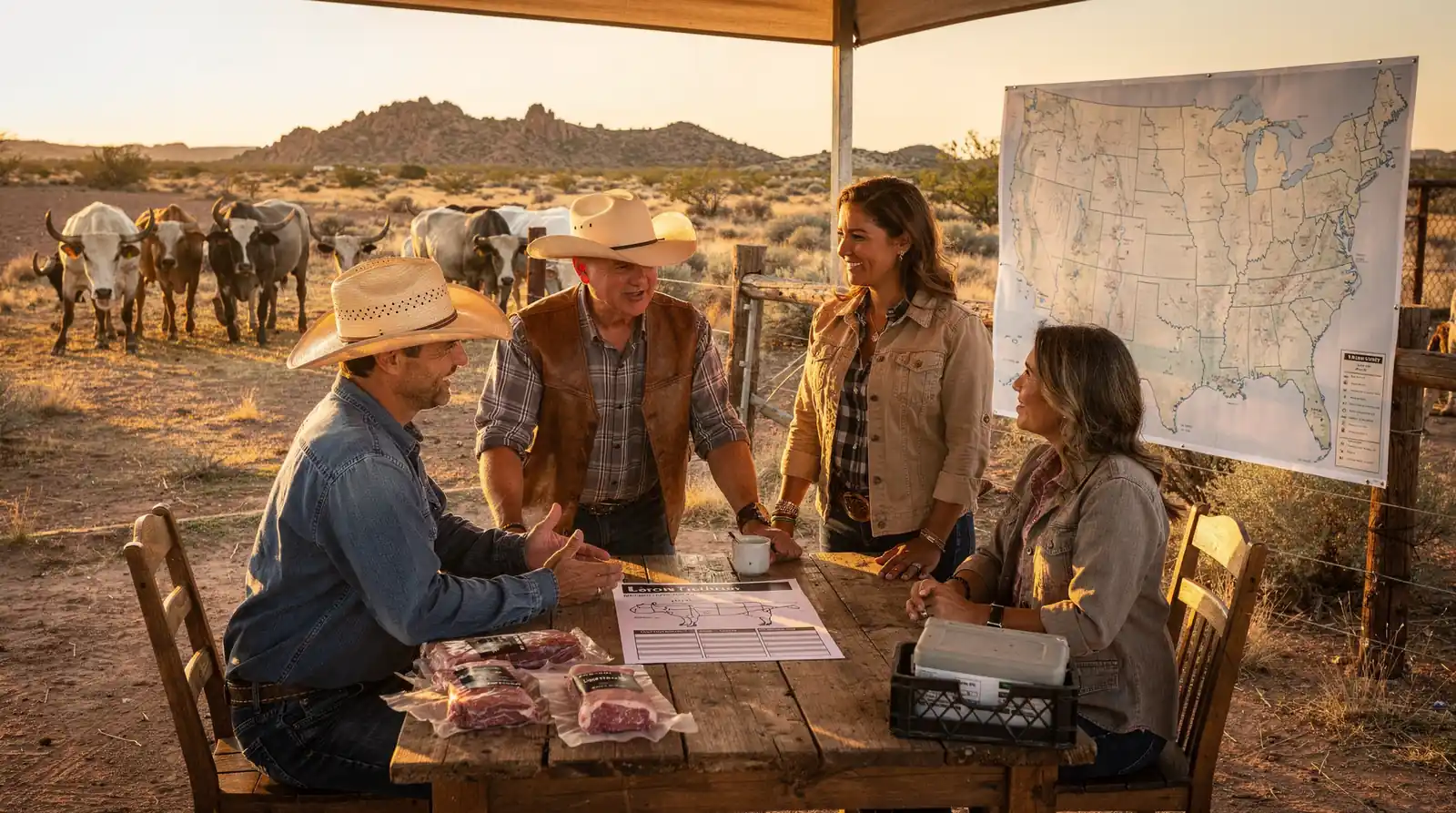
Clear documentation resolves most half cow beef share inquiries before confusion sets in. Ranchers who supply a detailed cut sheet let buyers specify exactly how each portion gets processed, from steak thickness to ground beef ratios. Vague answers cost sales; a written form builds confidence instead.
Bundling matters just as much as paperwork. Packaging every expected cut into one prearranged share, paired with free shipping or a simple farm pickup option, removes the hassle of separate butcher visits and confusing cutting instructions. Buyers want a straightforward path from order to freezer.
Does Free Shipping Encourage Larger Orders?
Yes. Capital Farms structures free shipping on orders above $250 across a defined multi-state region spanning Arizona, California, Nevada, Utah, New Mexico, Oregon, Colorado, Oklahoma, Texas, Idaho, Kansas, Montana, and Wyoming. Tying delivery perks to order size gives hesitant buyers a concrete reason to commit to a larger share.
Can a Small Team Manage Bulk Beef Sales?
Absolutely. Capital Farms runs its entire direct-to-consumer operation with just 8 employees, proving that lean staffing handles cut sheets, logistics, and buyer questions without strain. Trust matters too: a 4.9-star average across 3.4K reviews shows that consistent communication turns first-time inquiries into repeat customers.
FAQ
How is half cow beef share pricing calculated?
Pricing is based on dressed weight, typically $10.00 per pound, with total costs varying based on the final weight.
Why do ranchers benefit from selling beef shares directly to consumers?
Bulk sales move an entire animal in one transaction, cutting overhead, reducing marketing costs, and building repeat direct-to-consumer relationships that strengthen long-term farm profitability.
How does buying a half cow compare to buying retail cuts?
Retail cuts like Ribeye Steak at $31.00 and Filet Mignon at $53.00 show costs add up quickly. Buying a half or whole animal lowers per-pound pricing through a single bulk purchase.