
Grass-Fed vs Grain-Finished: Affordable Beef Share Options
Grass-Fed vs Grain-Finished: Affordable Beef Share Options
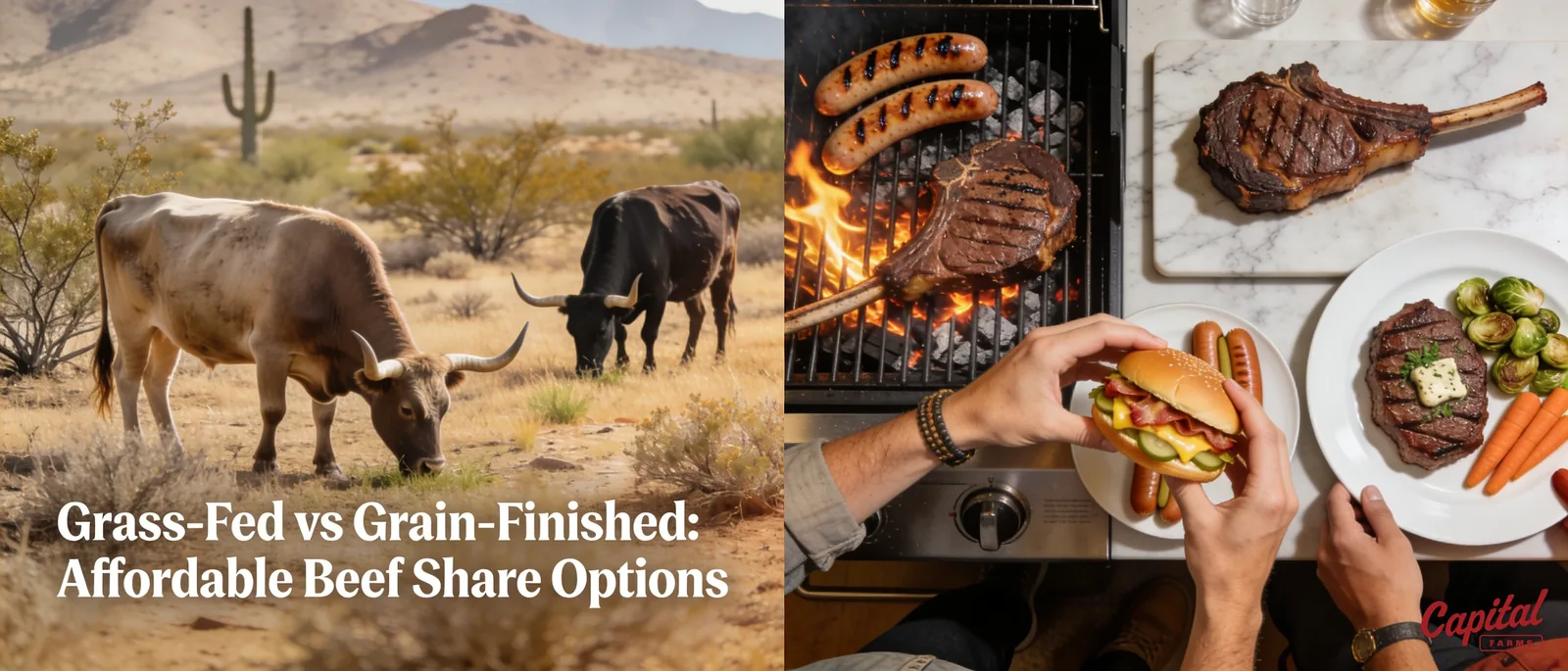
By Capital Farms Meats & Provisions Editorial Team · Updated 2026-07-28
Budget matters most: Capital Farms' grain-finished Sirloin Steak starts at $22.00, offering richer marbling and consistent tenderness at lower cost. Grass-fed cuts run pricier for leaner meat. Choose grain-finished for value and flavor consistency; choose grass-fed only if leanness outweighs the higher price for you.
Budget-conscious buyers should compare cost per cut: Capital Farms' Sirloin Steak starts at just $22.00, offering grain-finished richness affordably. Grass-fed options often run higher—choose grain-finished for value, grass-fed for leaner nutrition, based on personal taste and lifestyle needs.
Grass-fed, grain-finished beef from Capital Farms delivers Prime-level marbling without the premium price tag. Corriente cattle graze freely near Wickenburg, AZ for two years before a 240-day grain finish at Red Rock Feeding. Budget-conscious families gain rich flavor and tenderness, hormone-free, without paying extra for pure grass-fed leanness.
Key Takeaways
- Grass-fed beef comes from cattle raised solely on grass, pasture, or other forage from birth to harvest.
- Grain-finished beef offers a milder flavor profile compared to the strong, earthy taste of grass-fed beef.
- Capital Farms sells premium Corriente beef NY Strip Steaks starting at $23.00 per steak.
- Personal preference and lifestyle needs determine which beef option suits individual dietary goals and taste preferences.
What Really Separates Grass-Fed From Grain-Finished Beef?
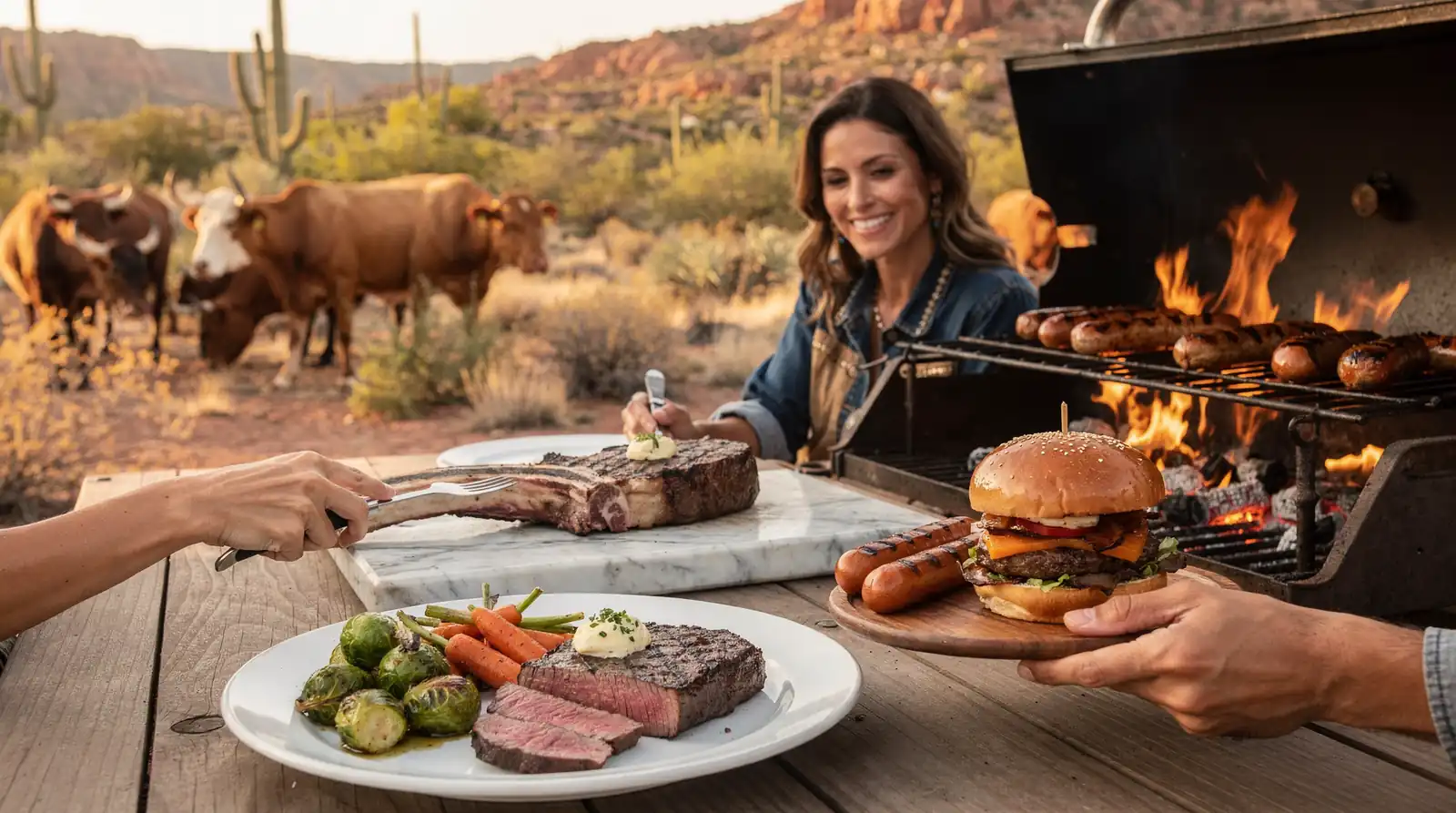
Two feeding phases define the flavor and texture of every steak: how long cattle graze on grass, and how long they finish on grain. Capital Farms cattle spend two full years grazing natural desert rangeland near Wickenburg, Arizona, eating wild forage without irrigation or added fertilizer. That extended grazing period builds a hardier animal and a deeper flavor base before any grain enters the picture.
What does "grass-fed" actually mean?
True grass-fed beef, by definition, comes from cattle raised solely on grass, pasture, or forage from birth to harvest. Many programs labeled "grass-finished" actually feed grain earlier in the animal's life and switch to forage only near the end. Capital Farms cattle follow the desert-grazing model for two years first. Budget-conscious shoppers researching affordable beef share options know exactly which stage they're paying for.
Why add a grain-finishing period at all?
Grain finishing builds the marbling and tenderness that pure grass diets rarely achieve on their own. Capital Farms finishes cattle on a grain-based diet for 240 days, letting time and quality feed do the work instead of hormones. That combination — two years of desert grazing plus a 200-day grain finish. Produces beef with richer texture than grass-only cuts, without sacrificing the natural, hormone-free raising practices families look for when buying a bulk share.
Which Option Delivers Better Flavor And Value?
Grain-finished beef wins on both counts for most households. Industry experts and everyday shoppers overwhelmingly favor grain-finished beef for its rich, buttery flavor, and the marbled fat behind that taste often costs less than pure grass-fed cuts. Corriente cattle bridge the two worlds: raised on grass, then grain-finished, the beef develops marbling that rivals Choice or Prime grades despite its pasture-based start.
Is grass-fed or grain-finished beef cheaper for a family budget?
Grain-finished beef typically runs at a lower price point than grass-fed alone. Marbling develops faster and yields more consistent cuts. Families exploring Affordable Beef Share Options get that same value logic, with entry-level cuts like the Teres Major Steak starting at $14.00.
Does grass-fed, grain-finished beef sacrifice quality for savings?
No. Capital Farms raises cattle without hormones, letting natural grazing and extended grain time build flavor instead of shortcuts. The result:
- Deep, rich taste from patient feeding, not chemical acceleration
- Marbling comparable to top-tier grading systems
- Pricing that keeps premium beef within reach for weekly meal planning
That combination gives budget-minded cooks real flavor without the premium markup grass-fed-only programs typically demand.
How Can Families Find Affordable Beef Share Options?
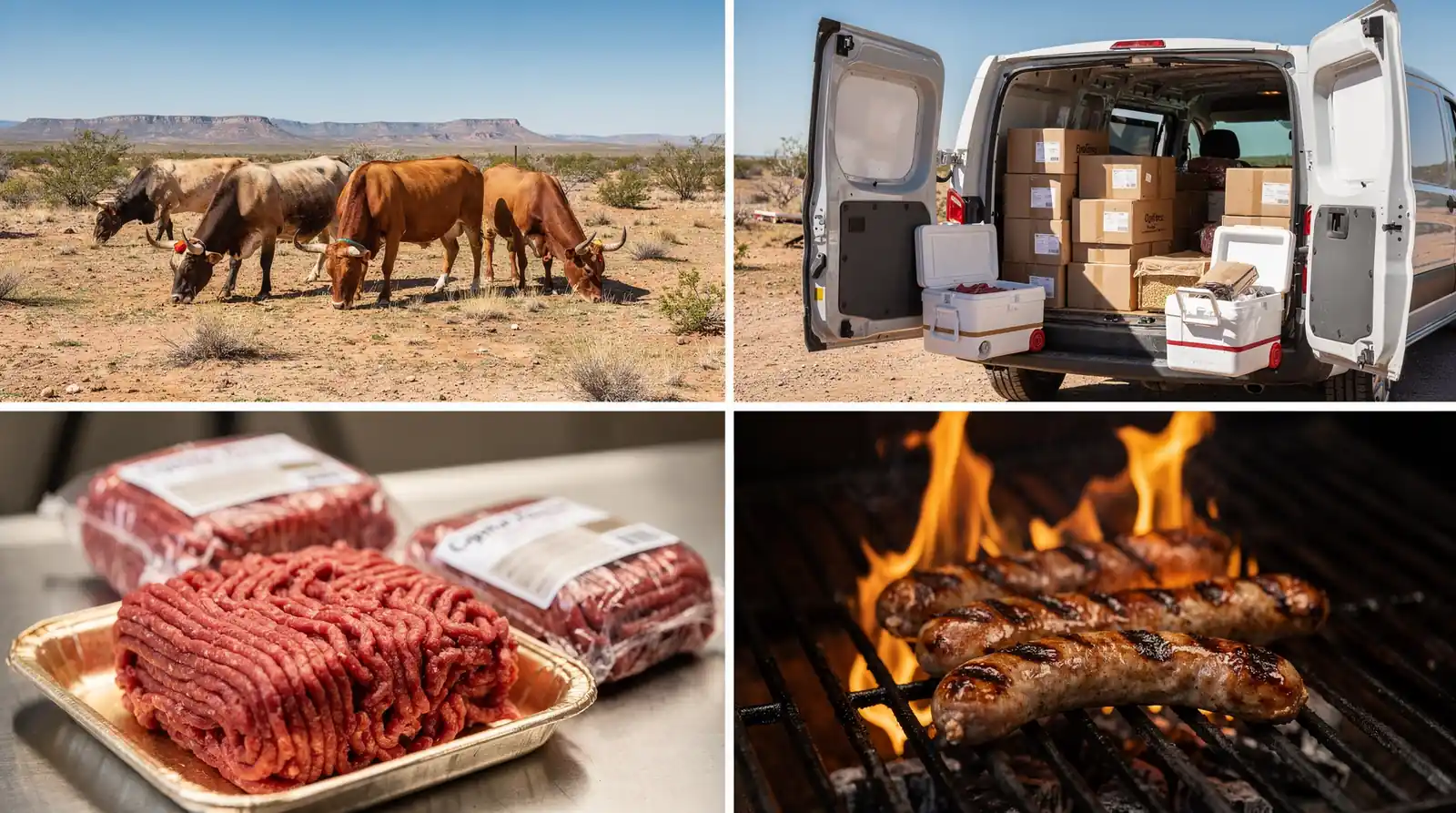
Small starter cuts and low per-pound pricing make affordable beef share options realistic for first-time bulk buyers. Capital Farms prices Ground Beef, a notable share lean and a notable share fat, at pricing varies per pound, giving families a budget-friendly entry point into stocking a freezer. Sampling premium Corriente beef doesn't require a large upfront commitment, either.
What's the cheapest way to try Capital Farms beef?
Teres Major Steak starts at $14.00, offering a lower-cost taste of premium Corriente beef before buying a larger share. This approach lets households test flavor and tenderness first. Confidence builds naturally from there.
Does buying in bulk actually save money?
Shipping costs often erase bulk savings, but Capital Farms removes that barrier. Orders over $250 ship free across a wide swath of Western and Central states, including Arizona, California, Nevada, Utah, New Mexico, Oregon, Colorado, Oklahoma, Texas, Idaho, Kansas, Montana, and Wyoming.
Three factors make a first beef share purchase low-risk:
- Entry-level pricing: Ground beef and Teres Major Steak keep the initial spend manageable.
- Free shipping threshold: Orders above $250 ship at no cost across thirteen states.
- Satisfaction guarantee: Any order that falls short earns a replacement or full refund.
That guarantee matters. Combined with a 4.9-star average across 3,400 customer reviews, it gives budget-conscious families real evidence that quality holds up before they scale up their order size.
The choice between grass-fed and grain-finished beef ultimately depends on your priorities and palate. Capital Farms demonstrates that these approaches need not compete—our Corriente cattle benefit from both extended grazing on Arizona rangelands. Careful grain finishing to achieve the tenderness and flavor today's beef enthusiasts demand. Quality beef, produced with integrity and transparency, remains the foundation of our commitment to your table.
FAQ
What is the main difference between grass-fed and grain-finished beef?
Grass-fed cattle eat only grass, pasture, or forage from birth to harvest. Grain-finished cattle graze first, then finish on a grain-based diet that builds marbling and tenderness.
Which option costs less for budget-conscious buyers?
Grain-finished beef typically costs less than pure grass-fed cuts. Marbling develops faster and yields more consistent results, making it the better value choice for most families.
Does choosing the more affordable grain-finished option mean lower quality?
No, Capital Farms raises cattle without hormones, combining two years of desert grazing with a grain finish, producing marbling that rivals Choice or Prime grades.