
Grass-Fed Beef vs Grain-Finished Beef: Key Differences
Grass-Fed Beef vs Grain-Finished Beef: Key Differences
By Capital Farms Meats & Provisions Editorial Team · Updated 2026-07-28
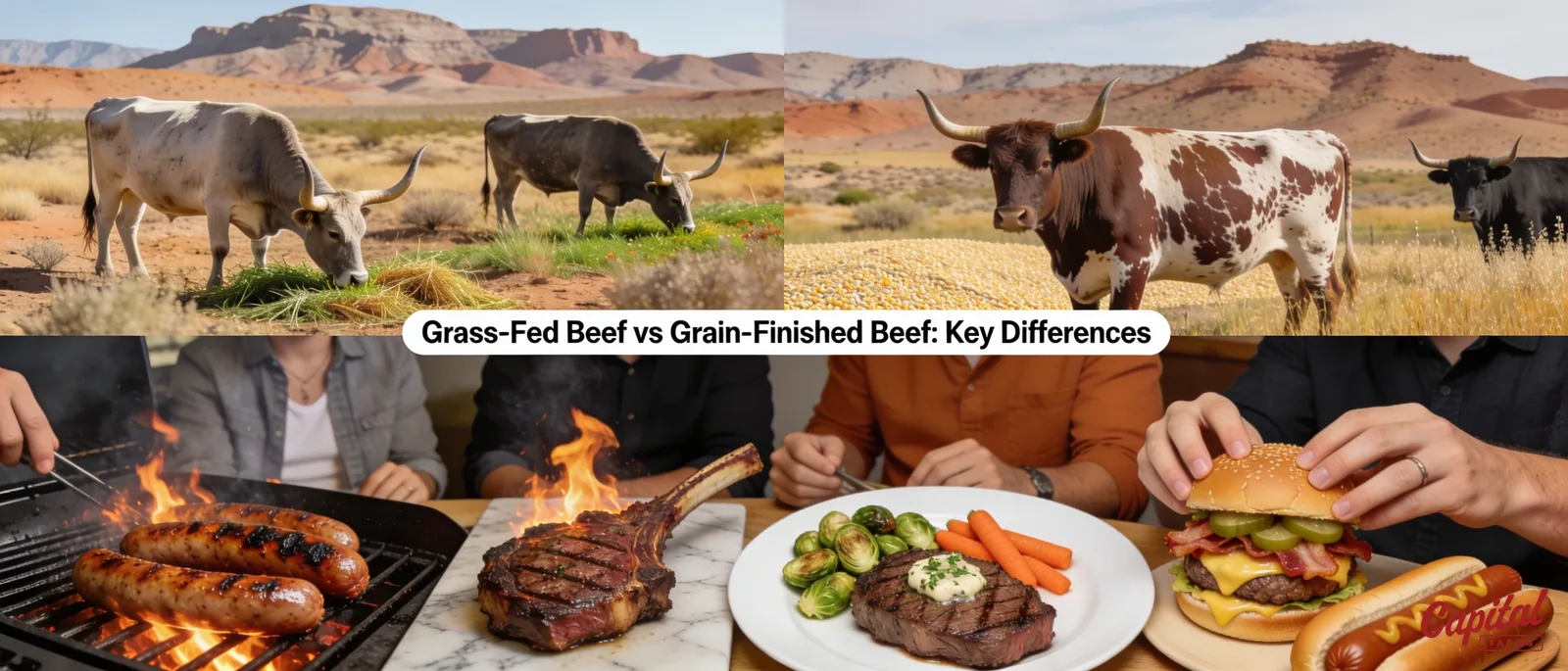
Grass-fed and grain-finished beef differ in diet, timeline, and flavor. Capital Farms cattle graze desert rangeland near Wickenburg, Arizona, for two years, then finish on grain for 240 days at Red Rock Feeding. Harvested at 48 months or older, this Corriente beef develops deep marbling and rich flavor, without hormones.
Key Takeaways
- Grain-fed cattle consume corn and grains to accelerate growth rates, a practice dating back to the 1800s.
- Grass-fed beef requires cattle grazing on grass for the final 90 days before processing and sale.
- Capital Farms offers premium Corriente beef products including NY Strip Steaks starting from $23.00 per cut.
- Beef production practices vary by region, allowing ranchers to utilize diverse local resources for raising cattle.
What Really Separates Grass-Fed From Grain-Finished Beef?
The diet timeline defines the difference. Cattle raised as true grass-fed beef eat only grass. Forage for their entire lives, with no grain phase at any point. Grain-finished beef comes from cattle that spend roughly 80 to 85 percent of their lives on pasture, then move to a grain diet for a defined stretch to build marbling and deepen flavor.
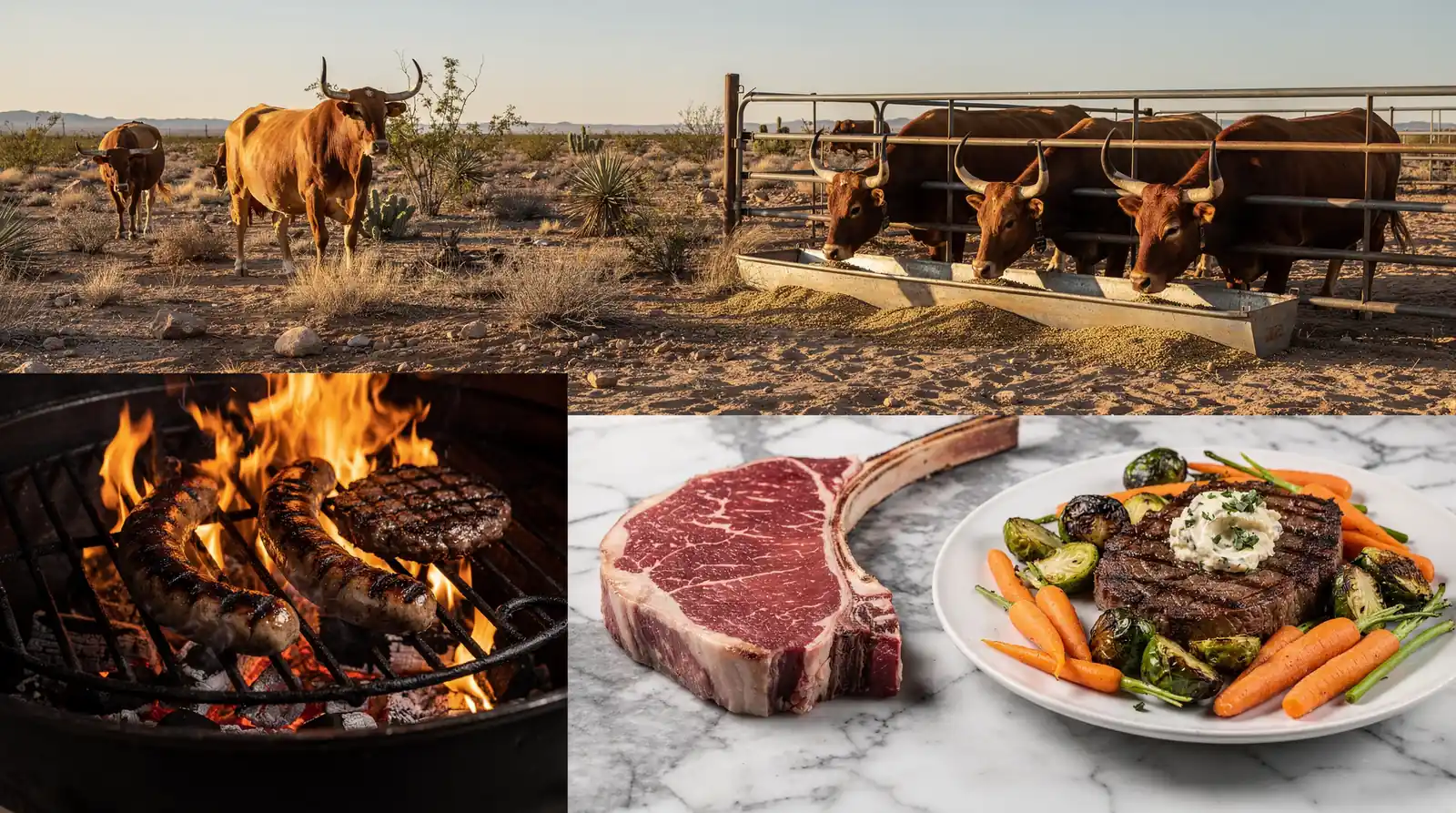
Capital Farms follows this second path with a regional twist. Its Corriente cattle graze the desert rangeland surrounding Wickenburg, Arizona, for two full years, living on natural desert plants without irrigation or fertilizer. Only after that extended pasture period does grain enter the picture. Capital Farms cattle finish on grain for 240 days at Red Rock Feeding, rather than a lifetime.
Is grass-finished beef the same as grass-fed beef?
Not always. Grass-fed only means grain never touched the diet, whether the animal lived six months or six years. Grass-finished specifically confirms the cattle ate grass right up to harvest, with no late-stage grain substitution.
Why does Capital Farms grain-finish instead of staying grass-finished?
Two years of forage builds a lean, hardy animal, but 240 days of grain finishing at Red Rock Feeding adds the marbling many shoppers associate with rich flavor. This sequence, grass-fed to grain-finished, balances pasture-raised character with a more tender, consistent eating experience.
Does Grain Finishing Change Taste and Tenderness?
Grain finishing changes both traits, adding fat marbling that shifts texture and deepens flavor. The broader debate over grass-fed beef vs grain-finished beef splits along predictable lines: grass-fed advocates call their beef leaner and healthier. Grain-finished supporters argue the marbling delivers richer taste. Neither claim is wrong; the outcome depends heavily on how long the animal is fed and finished.
Age at harvest matters more than most shoppers realize. Conventional feedlot cattle typically spend four to six months on a grain diet before harvest, reaching slaughter weight at just 14 to 22 months old. That short runway limits how much flavor and marbling the meat can develop.
Why does Capital Farms wait longer to harvest its cattle?
Capital Farms harvests Corriente cattle at 48 months or older, nearly triple the conventional timeline. This extended aging period builds a deeper, richer flavor and a buttery, tender texture rarely found in typical grocery-store beef. The extra months also allow natural marbling to form that rivals top-grade Choice or Prime cuts.
How does the finishing process affect flavor?
Cattle finish at Red Rock Feeding on a grain-based diet for 240 days, a period built specifically to sharpen tenderness and flavor. No hormones speed the process along. Instead, time and quality grain do the work, producing beef with:
- Deeper, more complex flavor from extended aging
- Buttery tenderness uncommon in standard grain-finished beef
- Natural marbling comparable to Choice or Prime grades
How Should You Choose Beef At The Counter?
Selection comes down to a simple question: leanness or flavor, or both at once? The debate over grass-fed beef vs. grain-finished beef often gets framed as a strict either-or choice, but the nutritional gap between the two is narrow. Grass-fed beef carries roughly twice the omega-3 fatty acids of grain-fed beef, an edge of about 30 milligrams. That's a modest nutrient bonus, not a dramatic one.
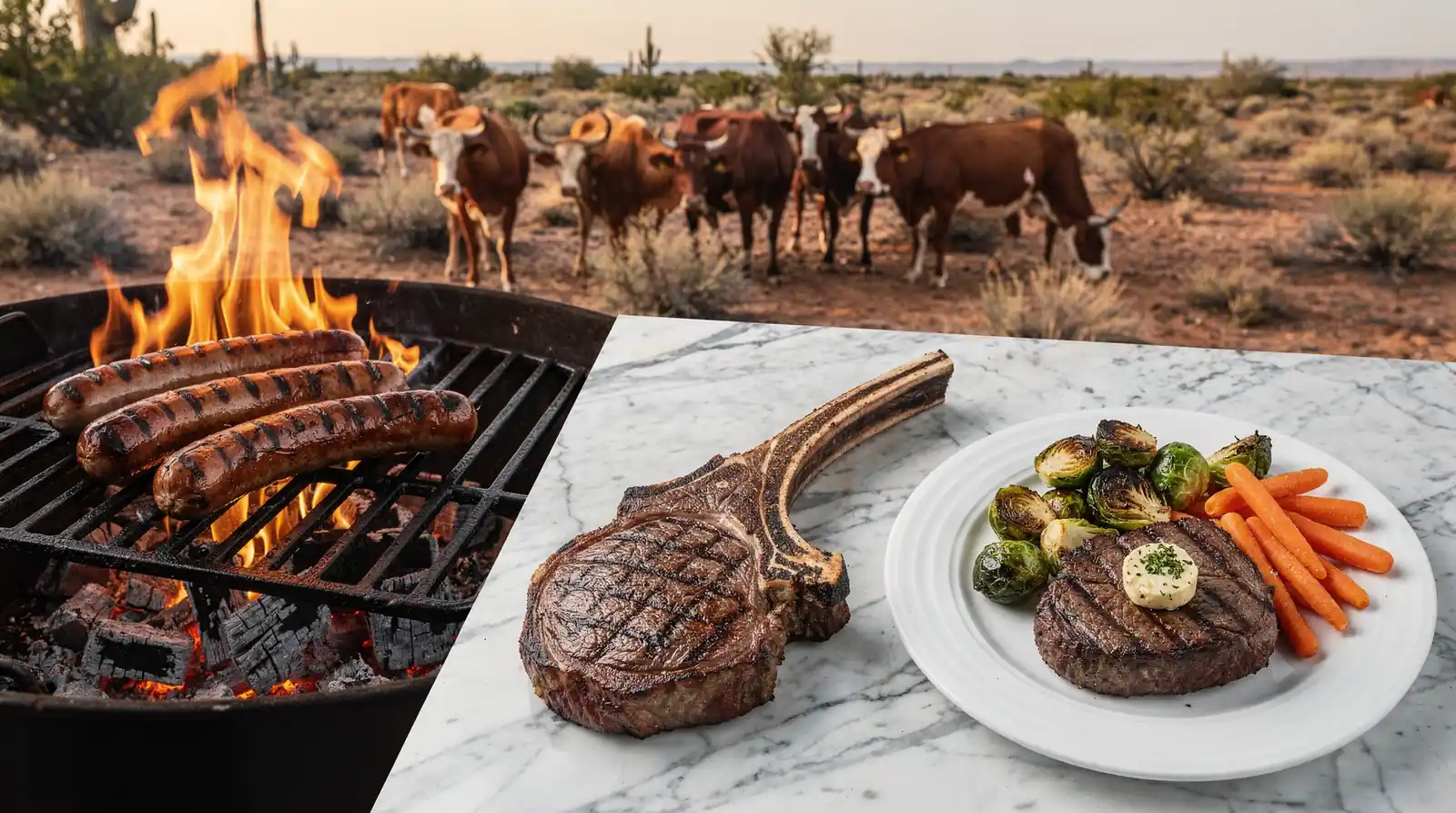
Capital Farms builds its beef around both strengths rather than picking a side. Cattle graze on desert rangeland near Wickenburg, Arizona, then move to grain finishing for added marbling. The result carries no added hormones, giving shoppers a cut that balances lean origins with richer taste.
What Cuts Are Available At The Counter?
Shoppers can choose from ribeye, NY strip, sirloin, filet mignon, and teres major steaks. Each cut reflects the same grass-fed-then-grain-finished process, so the flavor profile stays consistent across the lineup.
Does Customer Feedback Support This Approach?
Reviews suggest it does. Capital Farms holds a 4.9-star average across 3.4K customer reviews, a strong signal of trust built over repeated purchases.
The distinction between grass-fed and grain-finished beef ultimately reflects a philosophy about how cattle are raised. What consumers value in their meat. Capital Farms' approach—combining two years of rangeland grazing with a controlled grain-finishing period—demonstrates that these methods need not be opposing choices. Rather, they work together to produce beef with the nutritional benefits of grass feeding and the tenderness and flavor that grain finishing develops. This balanced methodology honors both ranching tradition. Modern quality standards, delivering a product that satisfies discerning beef enthusiasts seeking authenticity and excellence.
FAQ
What is the main difference between grass-fed and grain-finished beef?
Grass-fed cattle eat only grass and forage for their entire lives. Grain-finished cattle spend roughly 80 to 85 percent of their lives on pasture before finishing on grain to build marbling.
How long do Capital Farms cattle spend on pasture before grain finishing?
Capital Farms cattle graze desert rangeland near Wickenburg, Arizona, for two full years on natural desert plants before finishing on grain for 240 days at Red Rock Feeding.
Why does grain finishing improve flavor and tenderness?
Grain finishing adds fat marbling that shifts texture and deepens flavor. Combined with harvesting at 48 months or older, it produces a buttery, tender result rarely found in typical grocery-store beef.