
whole beef
Buy Whole Beef Online — Your Practical Guide to Premium Bulk Cuts, Costs, and Freezer Planning
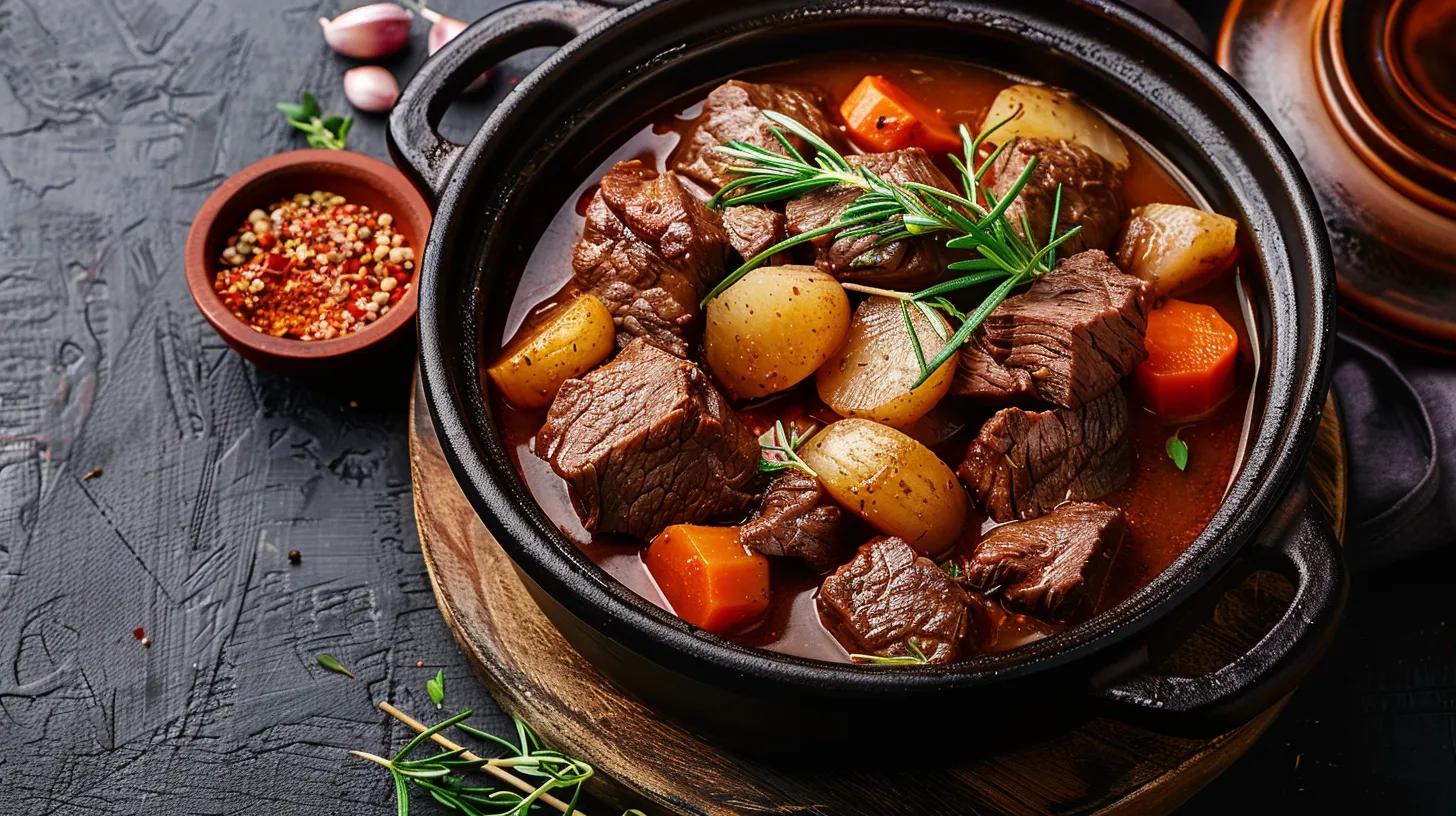
Buying a whole or half cow is a smart way to lock in steady, high-quality protein, reduce per‑pound costs, and control exactly how your meat is cut and packed. This guide breaks down what “whole beef” means, how bulk purchases work, and why many households prefer fewer, larger orders over repeated supermarket runs. You’ll learn how hanging weight converts to take‑home weight, which cuts and volumes to expect, how to plan freezer space, and how breed and regenerative rearing influence flavor and nutrition. Practical advice covers safe storage, thawing, and custom butchering options so you can choose steak thickness and ground‑beef packaging that fit your family. We also compare wholesale cost‑per‑pound to retail, explain ordering logistics, and highlight what makes our Premium Corriente beef distinctive under regenerative ranching practices.
What Is Whole Beef and How Does Buying Bulk Beef Work?
Buying whole beef means purchasing an entire carcass or a defined share (half or quarter) from a processor, then having that carcass broken into the retail cuts you want. The typical flow is straightforward: reserve the animal, the processor records hanging weight after slaughter, you select butchering and packaging options, and you receive the trimmed, packaged boxes for your freezer. Bulk buying shifts control from supermarket choices back to you — steak thickness, grind size, pack counts, and portioning can all match your household’s needs. The payoff: predictable supply, potential per‑pound savings, and the ability to select rearing and breed attributes that shape taste and nutrition.
Different package sizes suit different households. The table below summarizes common options, typical hanging weight ranges, and expected take‑home yields so first‑time buyers can plan with confidence.
| Package Type | Typical Hanging Weight Range | Estimated Take-Home Weight |
|---|---|---|
| Whole beef (entire carcass) | 1,000–1,300 lbs | 60–65% of hanging weight |
| Half beef (one side of carcass) | 500–650 lbs | 60–65% of hanging weight |
| Quarter beef (fore/hind quarter) | 250–350 lbs | 60–65% of hanging weight |
This table shows that take‑home weight is a percentage of hanging weight after trimming and aging. Knowing that conversion helps you budget, plan freezer space, and choose the right package size.
What Cuts Are Included in a Half or Whole Beef Purchase?
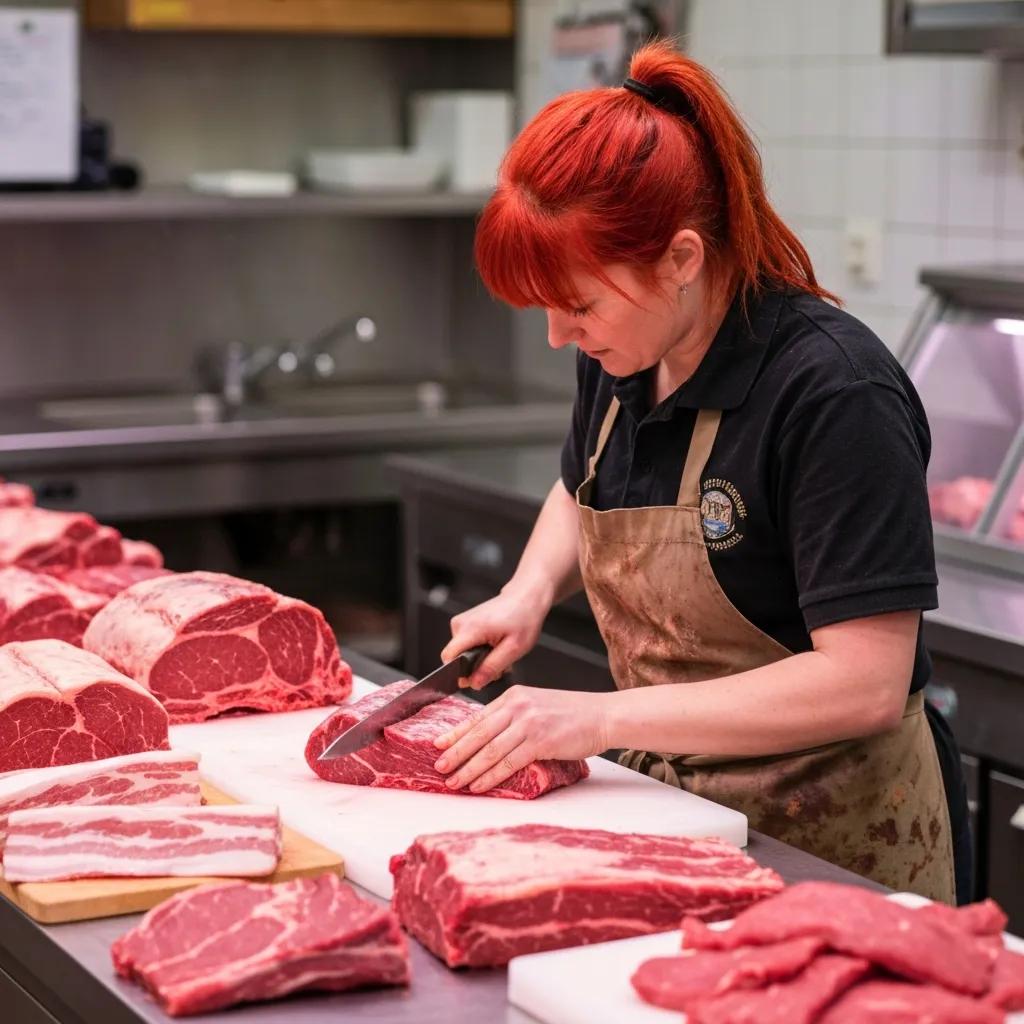
A whole or half beef is broken into primal and subprimal cuts and then portioned into steaks, roasts, and ground beef per your butcher instructions. Typical items include ribeye and strip steaks, sirloin and round steaks, chuck roasts and shoulder cuts, brisket, short ribs, flank and skirt, plus a large yield of ground beef. Offal and marrow are often available on request, and many buyers take organ meats or hides as part of a whole‑animal approach. List the cuts you use most so your butcher can make more of what you’ll actually eat — fewer wasted roasts, more weeknight steaks, or extra ground beef for burgers and chili.
Match expected counts to your meal plan: ask for more roasts if you slow‑cook frequently, or more steaks if you grill often. That planning saves space and money.
How Does Hanging Weight Compare to Take-Home Weight?
Hanging weight is the carcass weight on the rail after slaughter and initial processing; take‑home weight is what you get after trimming, aging, and packaging. Typical shrink is about 35–40% between hanging and take‑home, depending on trim level, aging time, and how much fat and bone the butcher removes. A handy conversion is: . When budgeting, also factor in butcher fees (per head and per package) that affect your effective cost‑per‑pound.
Understanding hanging vs. take‑home weight makes cost comparisons to retail accurate and prevents surprises when your boxes arrive. Next, we’ll cover the concrete benefits of buying bulk from a premium, transparent source and how breed and rearing matter.
What Are the Benefits of Buying Whole Beef from Capital Farms?
Buying whole beef from Capital Farms gives you consistent quality, transparent rearing, and clear cost advantages compared with piecing together retail buys. In bulk, you control trimming, packaging, and portion sizes — which cuts waste and makes meal planning easier. Breed, feed, and ranching practices affect flavor and nutrition; choosing a supplier that highlights breed traits and regenerative methods amplifies those benefits. Cost savings, supply security, and custom butchering are the main practical reasons households and small businesses choose whole‑animal purchases.
As a concrete example, Capital Farms offers a 1/2 of Premium Corriente Beef with a take‑home weight of 170.5 pounds priced at $1,600.00. The product highlights clear value points — Premium Corriente Beef; Hormone‑Free and mRNA‑Free; Grass‑Fed and Grain‑Finished; Regenerative Ranching; Direct‑to‑Consumer; and a 100% Satisfaction Guarantee — so you can compare that package to local retail options with confidence.
The table below links breed and rearing attributes to buyer benefits so you can see how production choices affect flavor and sustainability.
| Attribute (Entity) | Rearing/Characteristic | Benefit to Buyer |
|---|---|---|
| Corriente breed | Smaller‑framed, leaner muscle composition | Distinct beef flavor and lean profiles suited for varied cooking |
| Grass‑fed, grain‑finished | Pasture growth followed by finishing on grain | Balanced marbling and richer flavor complexity |
| Regenerative ranching | Rotational grazing and soil‑building practices | Environmental benefits and improved animal welfare perception |
This mapping explains why breed focus and regenerative practices matter for both taste and sustainability. Next we’ll cover how to store and handle your bulk beef when it arrives.
How Should You Store and Handle Your Whole Beef Purchase?
Proper storage preserves quality, ensures food safety, and maximizes your freezer space. On delivery, inspect seals, label each package with cut and date, and arrange items so daily staples are easy to reach. Start freezer planning by estimating cubic feet needed per pound, then use smart stacking and clear inventory labels to reduce unnecessary thawing. Follow safe thawing and reheating practices so the meat you worked to secure stays safe and tasty throughout its use.
The table below compares common cuts, typical package sizes, and recommended freezer space per package to help you plan before purchase.
| Cut Category | Typical Package Size | Approx. Freezer Space per Package (cu ft) |
|---|---|---|
| Steaks (individual) | 8–16 oz per steak, 2–6 per pack | 0.05–0.10 |
| Roasts | 2–6 lb per roast | 0.20–0.40 |
| Ground beef | 1–2 lb per pack | 0.06–0.12 |
Use this table to turn take‑home weight into cubic‑foot estimates and decide whether your current freezer will hold your purchase. The next sections give a rule‑of‑thumb for half‑cow storage and practical freezing and thawing tips.
What Freezer Space Is Needed for Half a Cow?
A useful rule of thumb is roughly 0.08–0.10 cubic feet per pound for efficiently packed, vacuum‑sealed beef. For a 170.5 lb take‑home example, plan on about 13.6–17.1 cubic feet. Consistent pack sizes and vacuum sealing reduce wasted space and air pockets that cause freezer burn. Store less‑used roasts deeper in the freezer and keep weeknight steaks and ground beef within easy reach.
Labeling and a simple inventory sheet cut down on door openings and repeated thaw cycles — the easiest way to keep long‑term quality high.
What Are the Best Practices for Freezing and Thawing Bulk Beef Cuts?
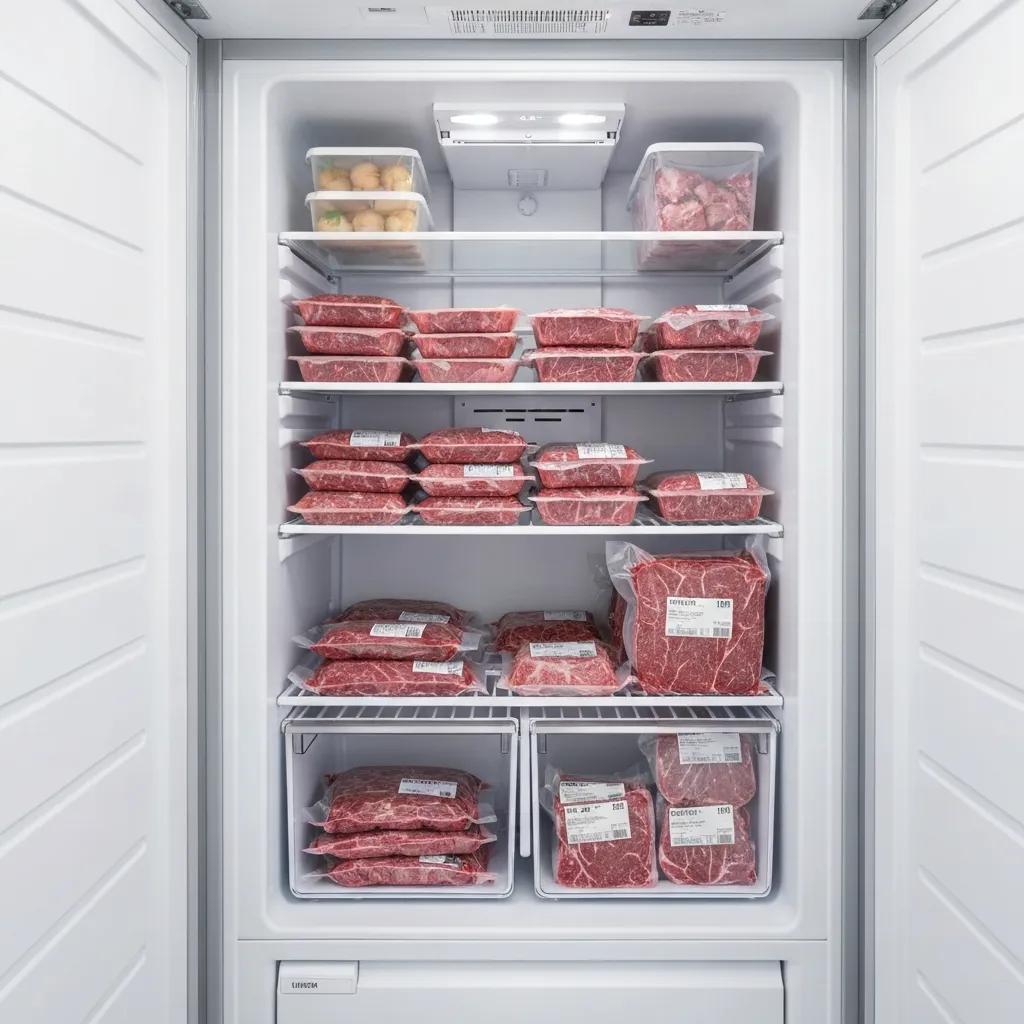
Freeze and thaw in ways that protect texture and safety: vacuum seal or wrap tightly in butcher paper to eliminate air and prevent freezer burn, and label each pack with cut and date for FIFO use. Store beef at 0°F (−18°C) or colder; vacuum‑packed whole cuts typically keep best for 6–12 months (ground beef toward the shorter end). For thawing, refrigerate 24–48 hours depending on size, use cold‑water submersion for faster thawing with sealed packaging, and reserve microwave thawing only when you’ll cook immediately. Never refreeze fully thawed meat without cooking it first.
These habits protect both flavor and food safety and prepare you to appreciate the differences made by how the animals were raised.
How Does Capital Farms’ Regenerative Ranching Impact Whole Beef Quality and Sustainability?
Regenerative ranching centers on practices like rotational grazing, diverse forage mixes, and soil‑building techniques to strengthen ecosystem resilience while raising livestock. Better forage and healthier soils can improve animal health, which can influence flavor and nutrient density indirectly. From a sustainability perspective, regenerative methods aim to sequester carbon, improve water retention, and reduce reliance on external inputs — lowering the overall environmental footprint compared with some conventional systems. That pasture‑to‑plate connection is why sourcing from regenerative operations matters to buyers focused on quality and sustainability.
Put simply: regenerative practices (entity) build better soil and forage (relationship), which supports healthier animals and better beef (entity). The short table below outlines core practices and their primary impacts.
| Practice | Key Attribute | Primary Impact |
|---|---|---|
| Rotational grazing | Frequent moves to fresh pasture | Improved forage regrowth and animal condition |
| Cover cropping/diversity | Mixed species plantings | Enhanced soil carbon and biodiversity |
| Low external inputs | Reduced synthetic inputs | Lower environmental footprint |
What Is Regenerative Ranching and How Does It Improve Soil and Animal Welfare?
Regenerative ranching is a systems approach that uses planned grazing, diverse plantings, and intentional herd movement to restore ecosystem function while producing livestock. Increasing root mass and soil organic matter improves water retention and nutrient cycling, which supports better forage and, in turn, herd health. Healthier pastures often mean fewer interventions and a system geared toward long‑term productivity rather than short‑term yield. Those ecological gains feed back into product quality and animal welfare.
These improvements help explain why many buyers prioritize regenerative sourcing when selecting bulk beef.
Why Is Hormone-Free, mRNA-Free Beef Important for Health and Environment?
“Hormone‑free” means no growth‑promoting hormones were used during production, which matters to consumers who prefer a more natural production path. “mRNA‑free” is used to signal the absence of certain genetic‑intervention materials and to reassure buyers about production methods; it’s not a medical claim. For buyers focused on the environment, reduced‑intervention systems often align with lower chemical inputs and practices that emphasize animal welfare. These product attributes fit into a broader decision framework that includes breed, feed, and ranching approach.
Knowing what these claims mean helps you choose products that match your values and informs how you customize cuts and butchering options for home use.
How Can You Customize Your Whole Beef Order and What Cuts Are Available?
Custom butchering lets you pick steak thickness, grind package sizes, roast weights, and specialty items like bones for broth or organ meats. Most processors provide a standard cut list and a menu of options — pound‑per‑package for ground beef, how many steaks per primal, bone‑in vs. boneless — so you can tailor your order to household cooking patterns. Custom choices also affect packaging and labeling, which simplifies freezer organization. Decide before butcher day to minimize waste and ensure your boxes arrive ready for your kitchen.
Below are common customization choices buyers often request when ordering a half or whole beef, to help you prioritize during the order process.
- Specify steak thickness and number per pack to match grilling or pan‑searing habits.
- Choose ground beef package sizes and lean/fat ratios for burgers, chili, and everyday meals.
- Request roasts cut to preferred weights for slow cookers or oven roasts to match meal planning.
After you choose, vendors typically confirm the cut sheet so the butcher can follow your instructions precisely.
What Are the Most Popular Beef Cuts from a Half Cow?
Popular yields from a half cow reflect a mix of everyday staples and special dishes: ground beef often makes up the largest volume, chuck roasts are ideal for slow cooking, and ribeye or strip steaks are reserved for grilling. Brisket and short ribs please barbecue fans, while sirloin and round offer leaner, quick‑cook options. Balance steaks, roasts, and ground beef to match your cooking habits and storage capacity — mapping a few weeks of meals to expected yields helps nail the right mix.
Prepare a basic cut‑preference list for your butcher to streamline processing and ensure you get portions you’ll actually use.
How Does Custom Butchering Work and What Are Your Options?
Custom butchering is a cooperative process between buyer and processor: you fill out a cut sheet with portion sizes, packaging preferences, and special instructions, and the processor follows those notes during breaking and packing. Common options include vacuum‑sealed packs, bulk boxes for roasts, pound‑per‑package ground beef, and bone‑in versus boneless choices. Timing varies by processor workload, but expect a hang‑weight confirmation, a cut confirmation step, and then pickup or delivery scheduling. Clear instructions about trim levels and pack sizes minimize surprises and make the final boxes fit your storage and cooking plans.
Choosing options up front turns the animal on the rail into usable servings in your kitchen.
What Are Common Questions About Buying Whole Beef Online?
Buyers usually ask about cost, which cuts are included, storage needs, how to order, and delivery logistics. Clear answers let you compare suppliers and plan purchases with confidence: cost‑per‑share examples, expected take‑home weights, freezer planning tips, and the pre‑order steps. The next sections answer those common questions so you can move forward without guesswork.
How Much Does Half a Cow Cost and What Is Included?
As an example, Capital Farms lists a 1/2 of Premium Corriente Beef with a take‑home weight of 170.5 lbs priced at $1,600.00 — a straightforward cost of about $9.38 per take‑home pound. Typical inclusions are a mix of steaks (ribeye, strip, sirloin), roasts (chuck, rump, round), brisket and short ribs, plus substantial ground beef, depending on your cut choices. Remember that butcher fees, shipping or pickup logistics, and your selected trim level will affect final take‑home weight and the effective per‑pound cost. Comparing this bundled cost to local retail helps you see where bulk buying can save money while delivering consistent quality and packaging you control.
This pricing example shows how breed focus and a direct‑to‑consumer model can make premium, transparent sourcing accessible to households.
How Do You Order and Receive Your Whole Beef from Capital Farms?
To order, customers pre‑order the half‑beef product and confirm butchering preferences via a cut sheet; the 1/2 Premium Corriente Beef is listed as a pre‑order item with a stated take‑home weight and price. Once processed, you receive the hanging‑weight and take‑home confirmation, then coordinate pickup or delivery according to our schedule. The product includes a 100% Satisfaction Guarantee to provide remedies if the delivery doesn’t meet expectations. Expect clear steps: place the pre‑order, confirm cut and packaging choices, receive hang‑to‑take‑home confirmation, and schedule pickup or delivery.
- Place Pre-Order: Reserve the half or whole package and select butcher preferences.
- Confirm Cut Sheet: Review and finalize portioning and packing instructions.
- Receive Notification: Get hang‑weight and take‑home confirmation once processed.
- Pickup/Delivery: Coordinate final logistics and inspect packages on receipt.
These steps make bulk buying predictable and manageable, especially if this is your first time ordering a half or whole animal.
Frequently Asked Questions
What are the environmental benefits of regenerative ranching?
Regenerative ranching techniques like rotational grazing and cover cropping improve soil health and biodiversity, which can increase carbon sequestration and water retention. These practices often reduce the need for synthetic fertilizers and pesticides, lowering the overall environmental footprint. By building a more resilient ecosystem, regenerative ranching benefits both the land and the livestock, making it a more sustainable choice for beef production.
How can I ensure the quality of my beef purchase?
Choose a supplier that prioritizes transparency in rearing practices and clear product labeling. Look for claims such as hormone‑free and grass‑fed where relevant, inspect packaging on delivery for intact seals, and follow recommended storage practices like vacuum sealing and consistent freezer temperatures. Those steps help preserve quality from the processor to your table.
What should I consider when planning meals with bulk beef?
Think about your family’s cooking patterns: which cuts you use most, whether you grill, slow‑cook, or need quick weeknight options, and how many servings you typically consume per meal. That helps you decide the right balance of steaks, roasts, and ground beef. Also plan portion sizes and freezer layout to minimize waste and keep frequently used items accessible.
How does the butchering process affect the final product?
Butchering determines portion sizes, trim levels, and packaging — all of which affect convenience and how you use the meat. Custom butchering lets you set steak thickness, grind sizes, and the inclusion of bones or organs. Clear, specific instructions to your butcher ensure the final boxes fit your cooking style and storage needs.
What are the best practices for thawing bulk beef?
Thaw beef safely in the refrigerator for 24–48 hours depending on the size. For faster thawing, use sealed packaging and cold‑water submersion, changing the water every 30 minutes. Reserve microwave thawing only when you’ll cook immediately, and never refreeze fully thawed meat without cooking it first.
Can I request specific cuts or sizes when ordering whole beef?
Yes. Most processors provide a cut sheet so you can specify steak thickness, ground‑beef package sizes, roast weights, and other preferences. Customization reduces waste and ensures you receive the cuts you’ll actually use.
Conclusion
Buying whole beef gives you real advantages: lower cost per pound, control over cuts and packaging, and confidence in sourcing. With a clear understanding of yield, freezer space, and butchering options, you can order in a way that fits your family’s needs and values. Explore our premium beef options to taste the difference regenerative ranching and breed choice make — start your journey to smarter, more sustainable meat purchasing today.