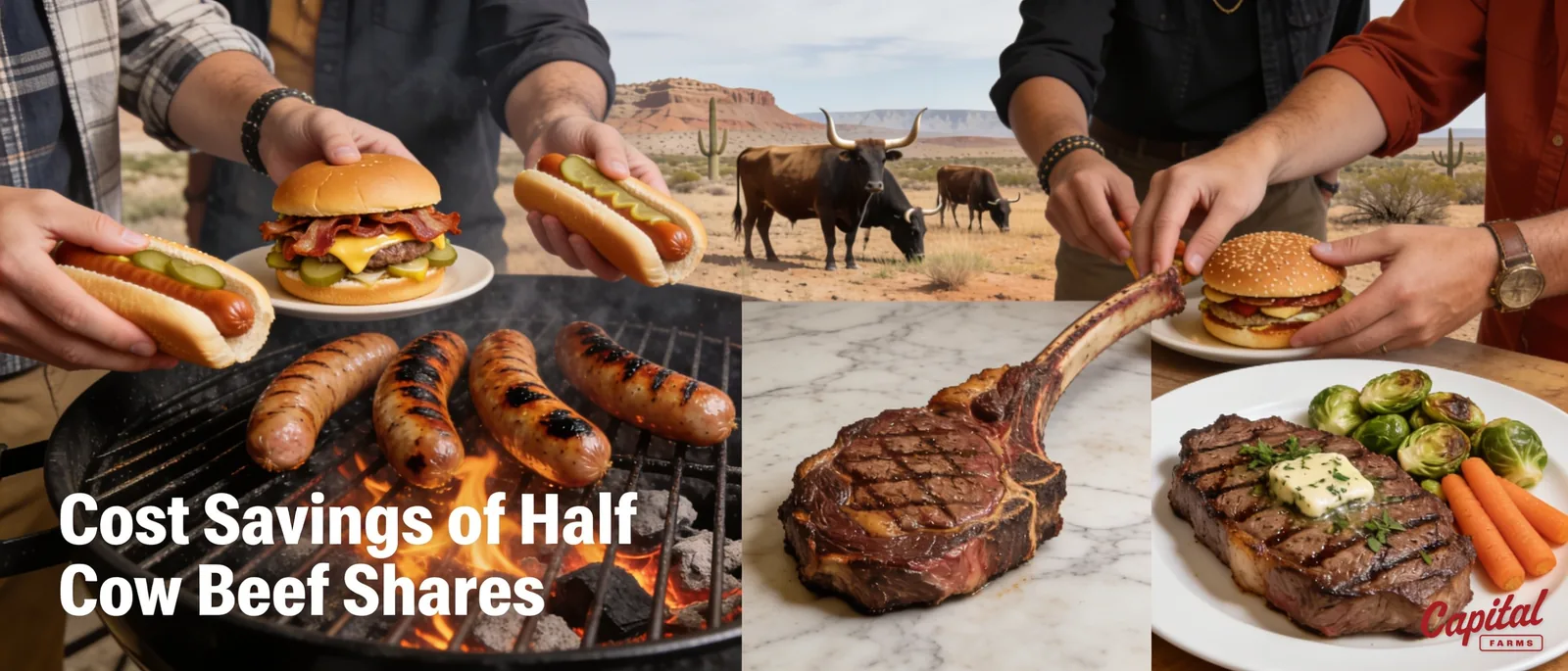
Cost Savings of Half Cow Beef Shares
Cost Savings of Half Cow Beef Shares
By Capital Farms Meats & Provisions Editorial Team · Updated 2026-07-28
Half-cow shares cut per-pound costs versus retail cuts like Capital Farms' NY Strip from $23.00 or Sirloin from $22.00, delivering bulk savings across all cuts. Capital Farms, an 8-employee Wickenburg, Arizona operation, also offers free shipping on orders over $250 to select states, boosting overall value.
Half cow beef shares deliver bulk savings by cutting per-pound costs versus grocery store prices. Customers pay one bulk rate covering steaks, roasts, and ground beef together. Capital Farms' beef is grass-fed and 200-day grain-finished, producing naturally marbled beef that stretches freezer supply for months while avoiding repeated retail markups.
Key Takeaways
- Half cow purchases reduce per-pound beef costs compared to retail grocery store prices significantly.
- Capital Farms Meats offers NY Strip Steaks starting at $23.00 and Sirloin at $22.00.
- Bulk beef buying fills freezers for months, eliminating weekly meat aisle shopping trips.
- Half cow shares include multiple premium cuts: steaks, roasts, and ground beef selections.
What Does a Half Cow Beef Share Cost?
A half beef share ranks among the most economical ways for families. Homesteaders to fill a freezer with quality cuts. Ranchers who sell direct to consumers offer this option specifically because bulk buying spreads cost across pounds of meat, rather than per-cut pricing at a grocery counter. The cost savings of a half cow become clear once individual retail prices enter the picture.
Consider what those same cuts cost when purchased one at a time:
| Cut | Starting Price (Individual) |
|---|---|
| NY Strip Steak | $23.00 |
| Ribeye Steak | $31.00 |
| Filet Mignon | $53.00 |
Buying single steaks at these prices adds up fast for a family cooking beef weekly. A half beef share bundles strip, ribeye, filet, roasts, and ground beef into one purchase, avoiding the premium attached to each individual cut.
Is a Half Cow Cheaper Than Buying Cuts Separately?
Yes, in most cases. Premium cuts like filet mignon and ribeye carry the highest per-pound prices at retail. A half share includes those same cuts alongside more affordable roasts and ground beef. Homesteaders comparing freezer costs over a full year typically find the blended average per pound favors the bulk share.
What Cuts Come With a Half Beef Share?
A half share typically includes steaks, roasts, and ground beef spanning the whole animal. That mix lets budget-conscious families rotate premium cuts with everyday staples instead of paying steakhouse prices every time.
How Much Can a Half Cow Save You?
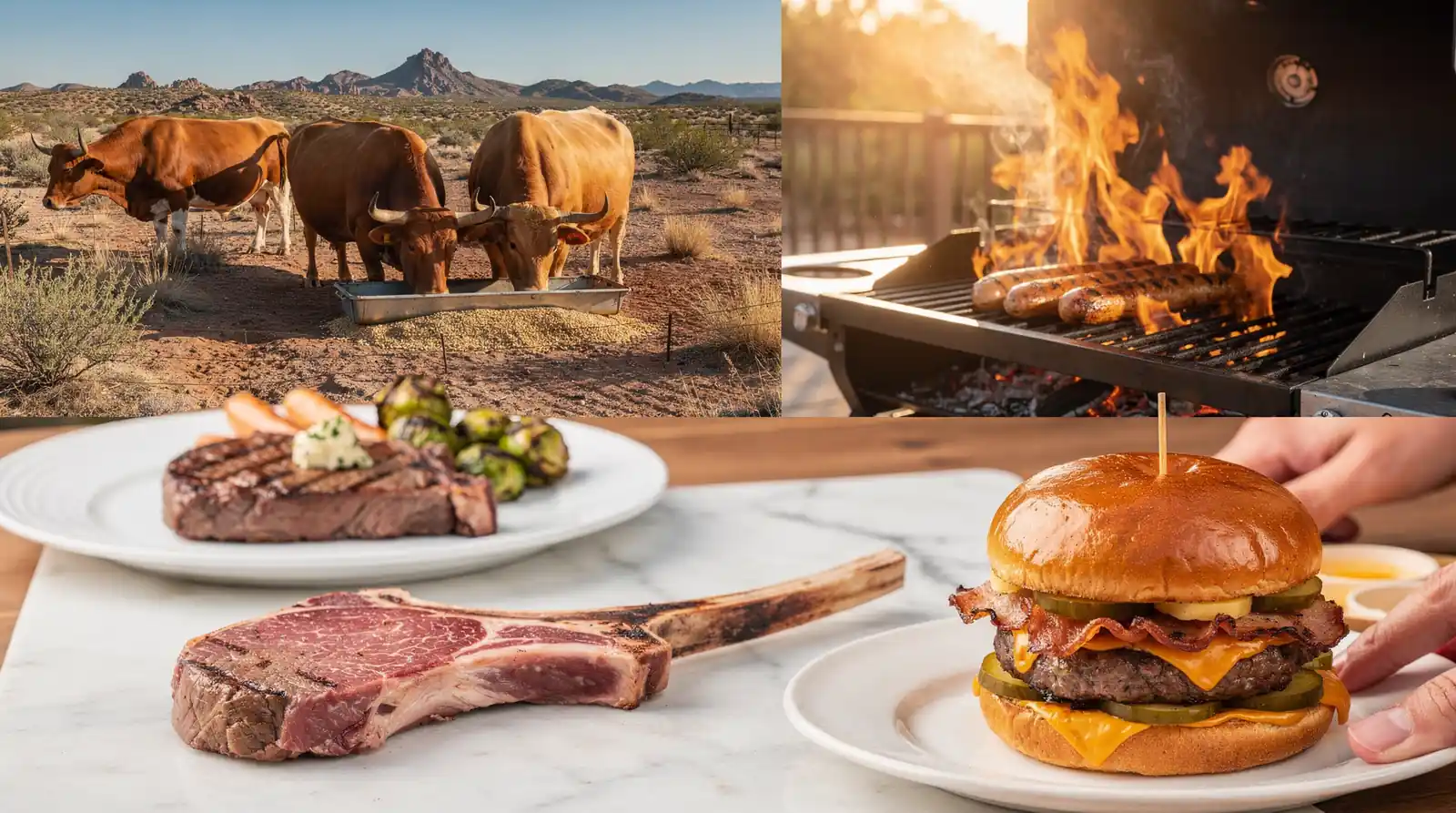
Bulk beef delivers savings that grocery-store cuts simply cannot match. More families now recognize that stepping away from weekly meat-aisle purchases represents the smarter financial path, especially as prices climb and quality varies week to week. A half-cow investment works differently than a single grocery trip. It functions as a stocked freezer that pays off across many months of meals, not just one dinner.
The math changes when quality enters the picture. Capital Farms raises cattle on grass and finishes them on grain for 200 days, without hormones, which builds flavor and value into every cut before it ever reaches a customer's freezer. That process trades speed for depth, and buyers get the benefit at a price that beats piecing together the same quality one steak at a time.
Does buying a half cow really cost less than the store?
Yes, when measured across an entire year of meals rather than one purchase. A quarter, half, or whole beef share spreads cost across roasts, steaks, and ground beef in one transaction instead of dozens.
Does shipping affect the total savings?
It can add real value. Orders over $250 ship free to a long list of states, including Arizona, California, Nevada, Utah, New Mexico, Oregon, Colorado, Oklahoma, Texas, Idaho, Kansas, Montana, and Wyoming, which lowers the effective cost per pound even further for families ordering in bulk.
What Should You Confirm Before Buying a Half Cow?
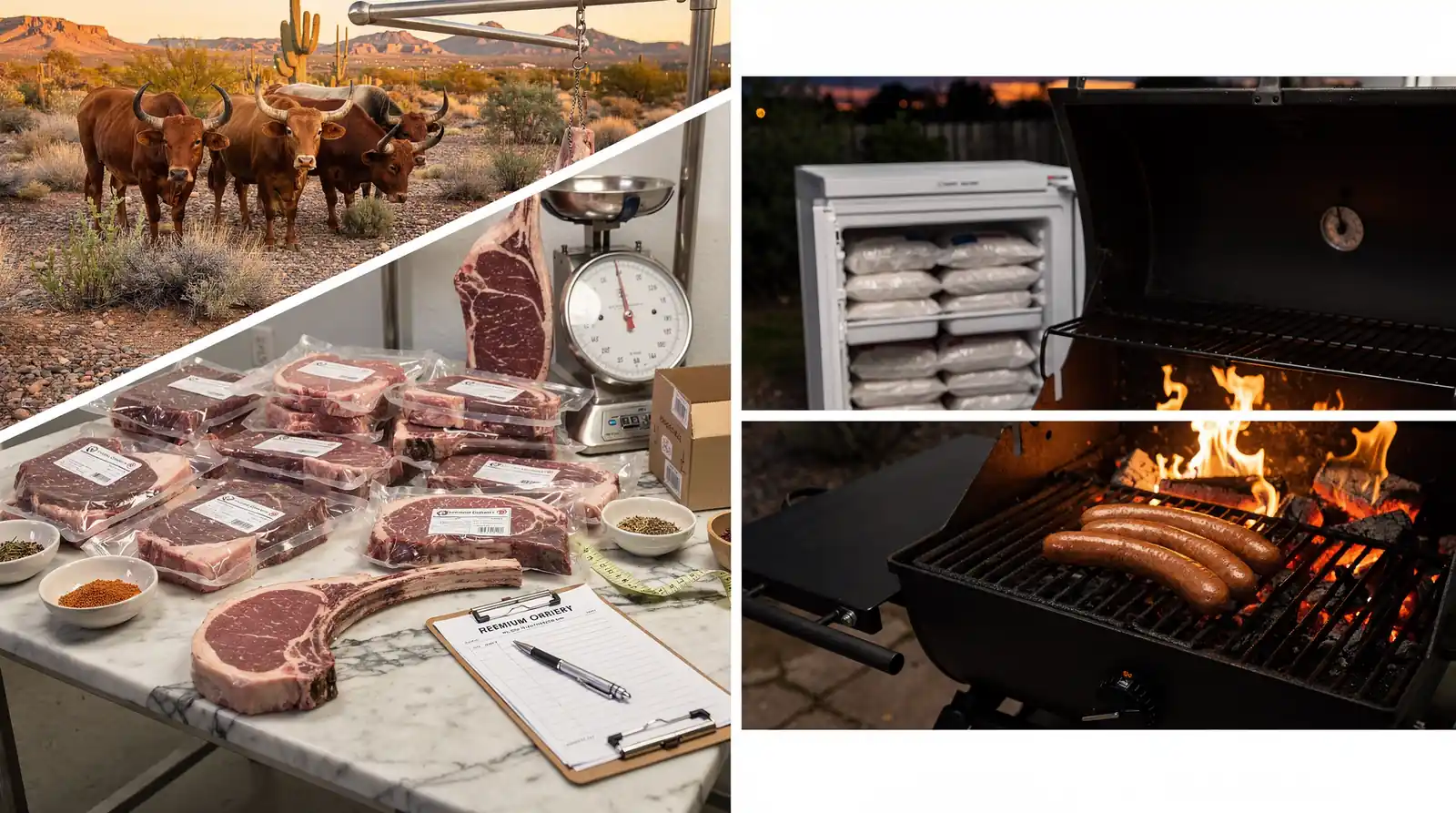
Four details separate a smart purchase from a freezer full of regret: cost components, hanging weight, storage space, and the rancher's track record. Skipping any one of these turns projected cost savings of a half cow into an expensive surprise.
Buyers should confirm exactly what they're paying for before placing an order.
- Standard cost components, including processing fees
- How packaged pounds differ from hanging weight
- Freezer space needed for a half-beef share
- Pickup or delivery expectations
How Does Per-Pound Pricing Compare to the Grocery Store?
Comparing per-pound math against retail prices reveals whether a bulk purchase actually pays off. Customization choices, such as cut thickness or ground beef ratio, along with processing decisions, shift the final price. Breed and ranching details, including flavor and sustainability practices, also factor into the value equation.
Does the Rancher's Reputation Matter?
Reputation carries real weight in a direct-to-consumer purchase. Capital Farms holds an average rating of 4.9 stars across 3.4 thousand customer reviews, reflecting consistent trust from repeat buyers.
Location matters, too. Capital Farms Meats & Provisions raises. Ships its beef from Wickenburg, Arizona, grounding every order in a specific ranching operation rather than an anonymous supply chain. Confirming these fundamentals first protects both the household budget and the freezer investment.
FAQ
Is a half cow cheaper than buying individual cuts?
Yes, buying single steaks like NY Strip at $23.00 or Sirloin at $22.00 adds up fast. A half share bundles premium and everyday cuts into one bulk-priced purchase.
What cuts come with a half beef share?
A half share includes steaks, roasts, and ground beef spanning the whole animal, letting families rotate premium cuts with affordable staples instead of paying retail prices for each.
How does Capital Farms' beef quality affect the value of a half cow share?
Capital Farms raises cattle on grass. Finishes them on grain for 200 days without hormones, building flavor and value into every cut before it reaches the freezer.