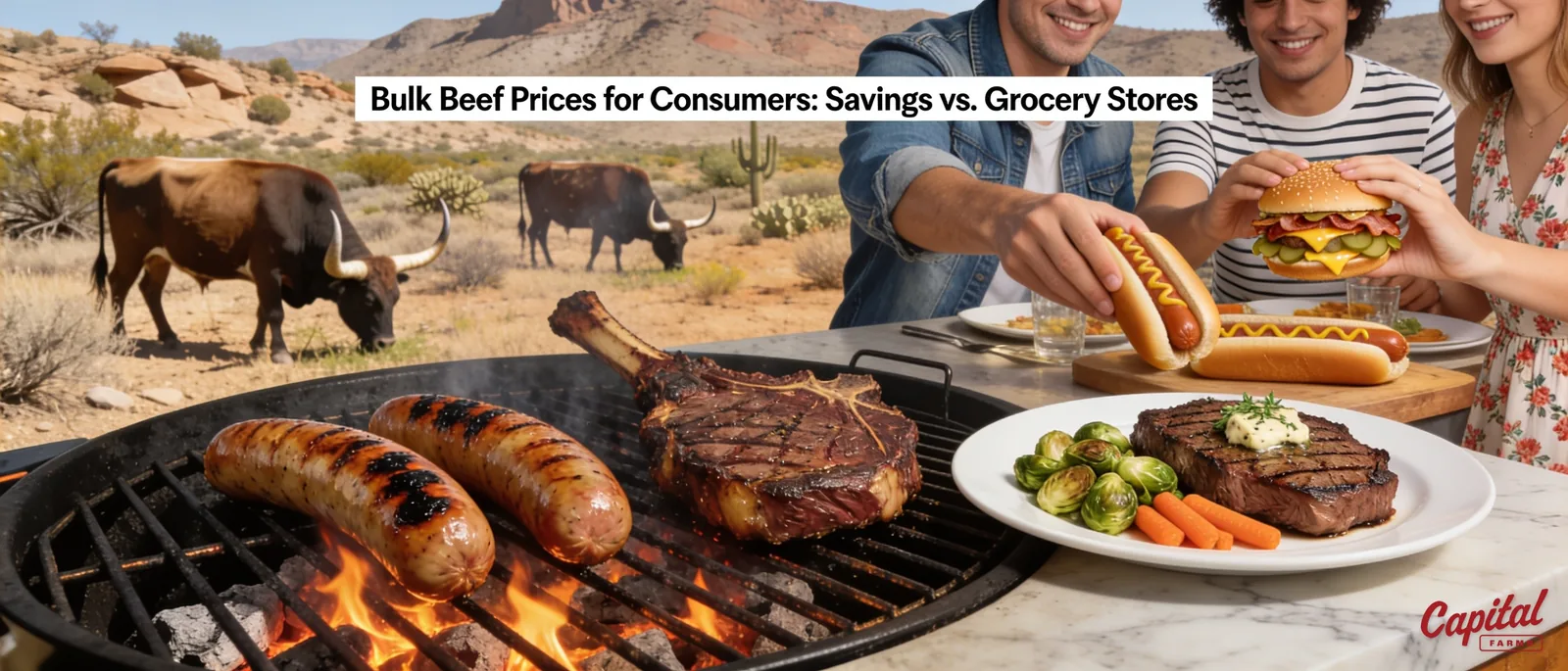
Bulk Beef Prices for Consumers: Savings vs. Grocery Stores
Bulk Beef Prices for Consumers: Savings vs. Grocery Stores
By Capital Farms Meats & Provisions Editorial Team · Updated 2026-07-28
Bulk beef purchases typically save consumers a significant amount compared to grocery store prices. Buying in bulk requires an upfront freezer investment. Skipping retail markups historically delivers meaningful savings versus grocery store cuts over the course of a year.
Bulk beef pricing typically runs lower per pound than grocery store cuts, since bulk purchases skip retail markups. Capital Farms' beef is grass-fed and grain-finished, raised near Wickenburg, AZ, producing hormone-free beef with marbling comparable to Choice or Prime, without the inflated per-cut pricing families see weekly at checkout.
Key Takeaways
- Bulk beef purchases typically offer significant savings compared to grocery store prices.
- Capital Farms offers a range of premium beef cuts; pricing varies by cut and is available directly from the brand.
- Buying beef in larger quantities, such as a half cow, can reduce annual household spending on beef compared to traditional retail purchases.
- Published data from industry and government sources shows notable price differences for beef cuts between wholesale and retail channels.
Why Is Grocery Store Beef So Expensive Now?
Retail beef prices have climbed sharply over the past several years. Grocery bills reflect the strain on household budgets nationwide. Families across the country now stretch further at checkout just to keep steak and ground beef on the menu. The assumption that ranchers pocket the difference misses how the supply chain actually works.
Do ranchers control the price shown at the grocery store?
Ranchers rarely set the number printed on a grocery store price tag. Processing, distribution, and retail markups sit between the ranch and the shelf, and ranchers have far less influence over those steps than most shoppers assume. Families weighing the benefits of bulk beef often discover that buying closer to the source removes several markup layers entirely.
Capital Farms raises cattle differently than most commodity operations supplying grocery chains. Cattle graze on grass before finishing on grain for 240 days, a longer, more deliberate process than typical feedlot timelines.
Why does grass-fed, longer-aged beef cost more to produce?
Time is the biggest factor. Corriente cattle reach harvest at 48 months or older, compared to roughly 18 months for most beef cattle sold in stores. That extended growing period demands more land, more feed, and more patience. Costs that shape price, but also shape flavor and texture in ways a faster-raised animal simply cannot match.
What Does Bulk Beef Cost Per Cut?
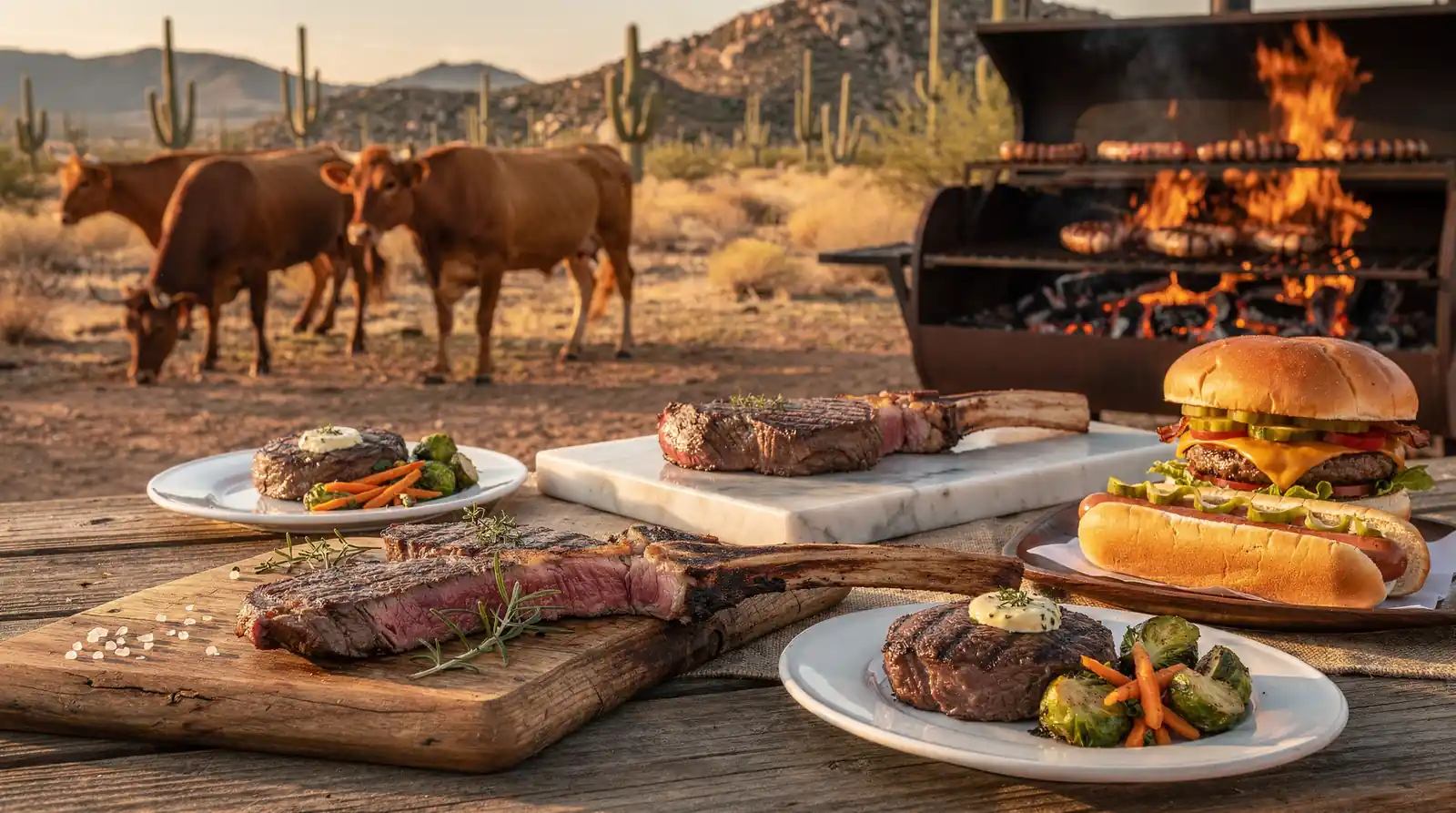
Cut-by-cut pricing at Capital Farms is structured to compare favorably with what many grocery butcher counters charge for comparable quality. Pricing for bulk beef varies by cut, reflecting differences in tenderness, marbling, and demand.
| Cut | Pricing |
|---|---|
| NY Strip Steak | Varies by order; contact Capital Farms directly |
| Sirloin Steak | Varies by order; contact Capital Farms directly |
| Ribeye Steak | Varies by order; contact Capital Farms directly |
| Filet Mignon Steak | Varies by order; contact Capital Farms directly |
Sirloin sits at the more accessible end, suited for weeknight dinners without straining a grocery budget. Ribeye and filet mignon tend to command higher pricing, matching the extra marbling and tenderness those cuts deliver. Families new to freezer beef often start with strip or sirloin cuts before moving into premium options like filet mignon.
Is Buying Beef in Bulk Actually Cheaper?
Generally, yes. Purchasing a half cow or similar bulk order typically offers significant savings compared to standard grocery store prices. That gap tends to widen further on premium cuts, where retail markup runs highest. For a family stocking a freezer for months, those savings translate into ongoing grocery-budget relief rather than a one-time discount.
Buying several cuts together, rather than picking single steaks at a store, spreads cost savings across the whole order. A household that mixes sirloin, strip, ribeye, and filet mignon into one bulk purchase can end up paying less per pound overall than buying each cut individually at retail.
Is Bulk Beef Worth It For Your Freezer?
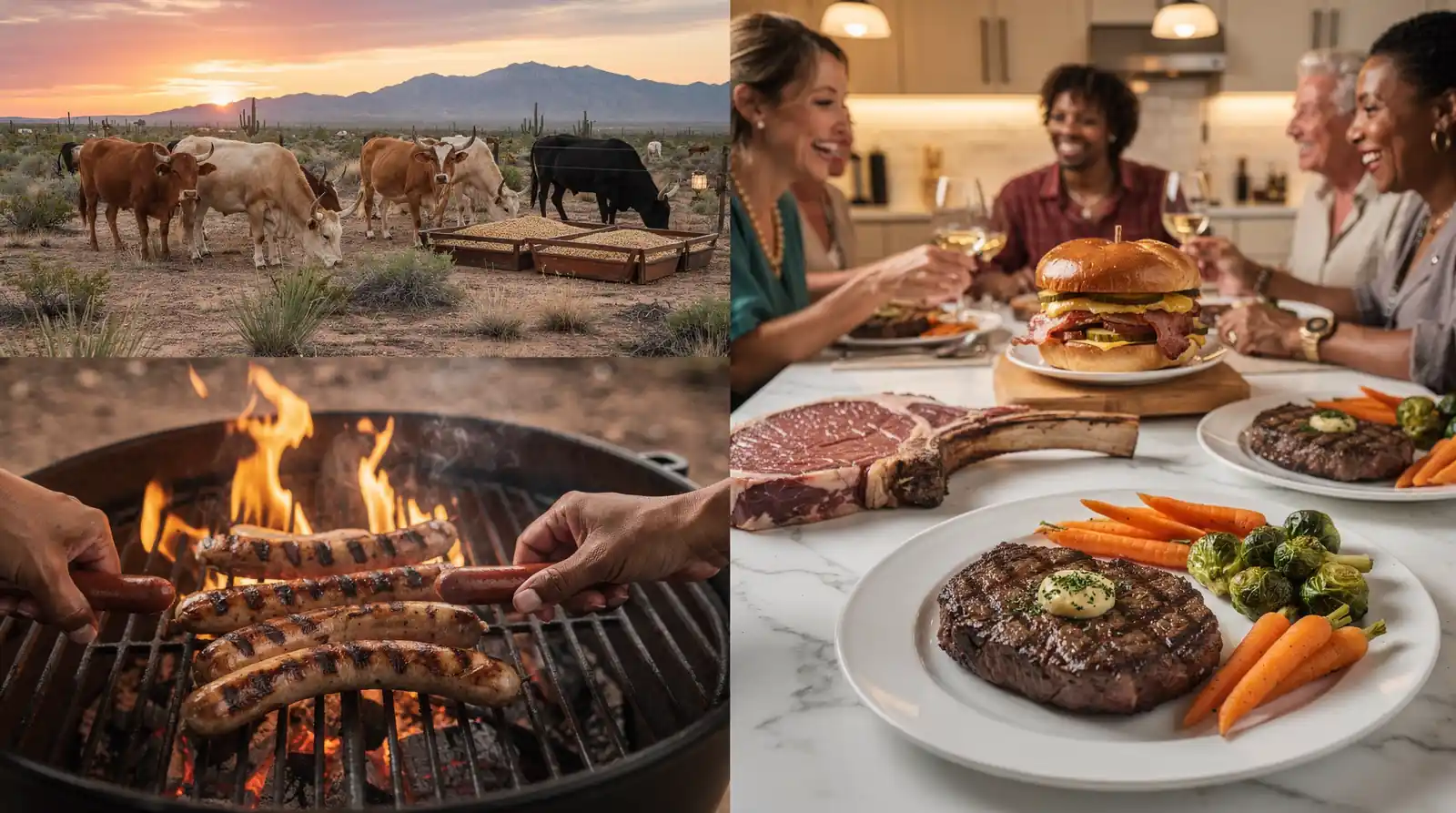
Freezer space and upfront cost determine whether a bulk order makes sense. Bulk beef purchases require a larger payment at checkout than a single trip to the grocery store. The meat needs enough freezer room to stay properly stored. That trade-off — more cash now, more savings later — is the real question families need to answer before ordering.
Capital Farms softens the upfront hit in a practical way, offering free shipping on qualifying orders to a wide list of states, including Arizona, California, Nevada, Utah, New Mexico, Oregon, Colorado, Oklahoma, Texas, Idaho, Kansas, Montana, and Wyoming. That shipping credit alone can offset a meaningful portion of the total bill.
Is bulk beef risky if I've never ordered before?
Not with the right guarantee in place. Capital Farms replaces or fully refunds any order a customer isn't satisfied with, removing the fear of wasting freezer space on a bad batch.
Confidence also comes from a track record other buyers can see, reflected in a strong average customer rating and a substantial base of customer reviews.
For a family weighing freezer space against savings, that kind of consistency makes the upfront cost easier to justify.
Capital Farms demonstrates that premium bulk beef pricing reflects genuine value—superior genetics, extended aging, and ethical ranching practices justify the investment compared to conventional grocery store offerings. When consumers choose Corriente beef from Capital Farms, they invest in a product rooted in centuries of heritage, raised on sustainable Arizona rangelands, and finished with precision to deliver the rich flavor and tenderness that define authentic quality beef. This commitment to excellence, from pasture to table, establishes a meaningful distinction in the marketplace.
FAQ
How much can consumers save by buying beef in bulk instead of at the grocery store?
Bulk beef purchases typically save consumers a significant amount compared to grocery store prices, with half cow orders offering meaningful savings for families compared to buying beef at retail throughout the year.
Why does bulk beef cost less than grocery store beef?
Bulk beef skips the retail markups added through processing, distribution, and grocery store margins. Ranchers have little control over the final shelf price at retail chains.
What cuts does Capital Farms offer and how much do they cost?
Capital Farms offers a variety of premium beef cuts, including Sirloin Steak, NY Strip Steak, Ribeye Steak, and Filet Mignon Steak, with pricing varying based on the specific cut and market conditions. Contact Capital Farms directly for current pricing.