
Benefits of Grass-Fed Beef Shares
Benefits of Grass-Fed Beef Shares

By Capital Farms Meats & Provisions Editorial Team · Updated 2026-07-28
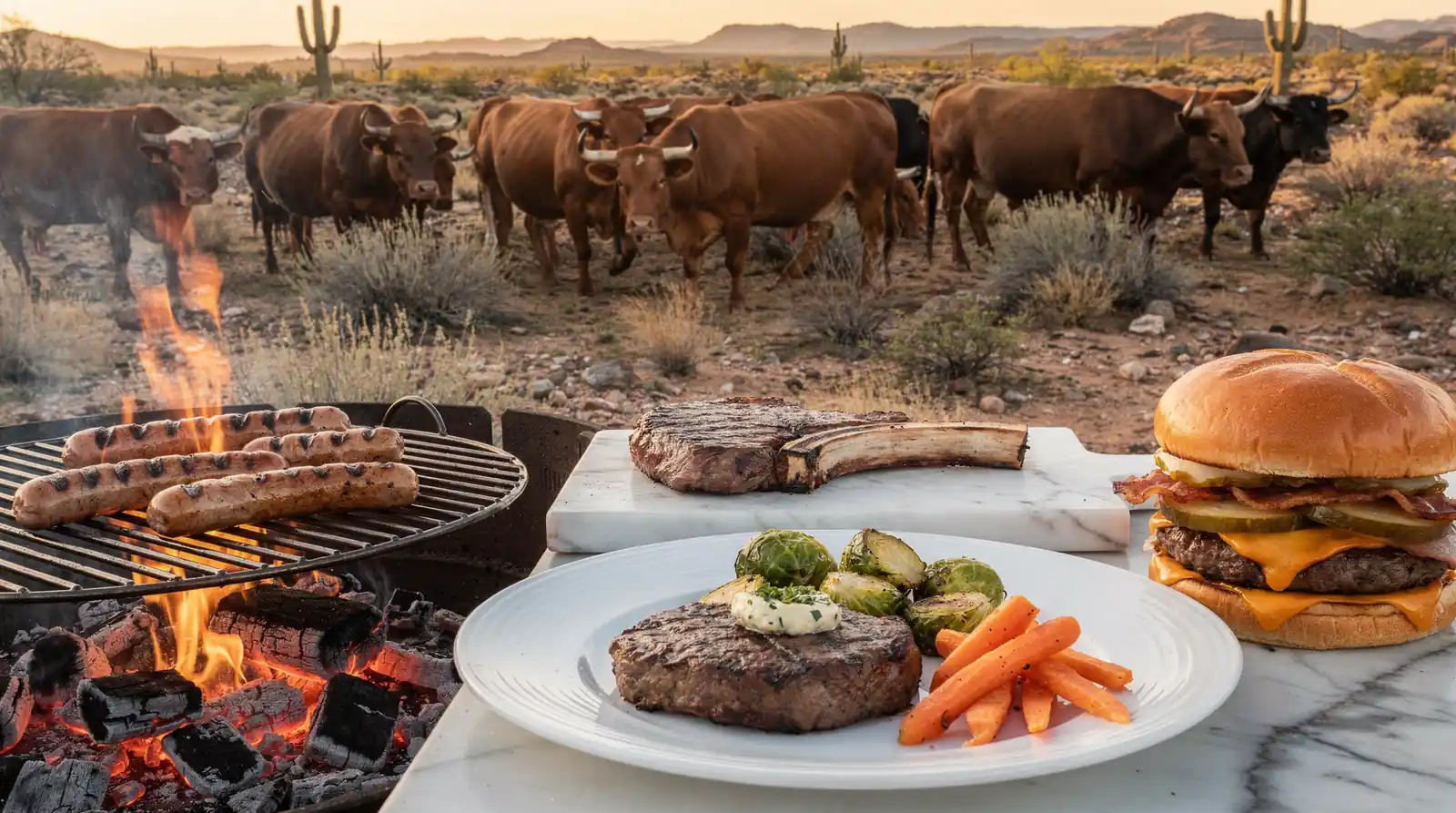
When it comes to Benefits of Grass-Fed Beef Share, grass-fed beef shares deliver lower total fat content and more heart-healthy omega-3 fatty acids than conventional grain-fed beef, according to research on cattle diet's nutritional impact. Capital Farms' Corriente cattle graze desert rangeland near Wickenburg, Arizona, for two years before grain finishing, producing hormone-free beef with natural marbling and rich, buttery flavor.
Key Takeaways
- Grass-fed beef contains significantly more conjugated linoleic acid than conventional grain-fed beef.
- Omega-3 fatty acids in grass-fed beef lower cardiovascular disease risk and improve heart health.
- Capital Farms Premium Corriente Beef offers nutrient-dense grass-fed options starting from $22.00 per steak.
- Grass-fed beef provides superior nutritional profiles because cattle consume natural foraged foods throughout their lives.
What Nutrients Make a Beef Share Worth It?
Nutrient density separates a Capital Farms beef share from standard supermarket cuts. Corriente cattle graze on natural desert plants across Wickenburg's rangeland for two years, with no artificial irrigation or fertilizers involved in that process. This foraging period shapes a distinct fat composition long before any cut reaches a freezer.
The benefits of a grass-fed beef share show up most clearly in fatty acid content. Compared with grain-fed beef, grass-fed beef delivers two to four times more omega-3 fatty acids and a more favorable ratio of omega-3 to omega-6 fats, an anti-inflammatory advantage. It also carries two to three times more conjugated linoleic acid. CLA, a fat associated with reduced risk for cancer, heart disease, and diabetes.
Does grass-fed beef still have good marbling?
Yes. Corriente beef naturally develops marbling that rivals Choice or Prime grades, despite the grass-based diet. That combination is rare: most grass-fed beef sacrifices richness for nutrition, while Corriente cattle deliver both.
Nutrient comparison at a glance:
| Factor | Grass-Fed Corriente | Typical Grain-Fed Beef |
|---|---|---|
| Omega-3 content | 2-4x higher | Baseline |
| CLA content | 2-3x higher | Baseline |
| Marbling | Choice/Prime-level | Varies by grade |
Skipping this profile means missing fatty acids most conventional beef simply doesn't supply.

How Does Grass-Fed Beef Support Heart Health?
Fatty acid composition sets grass-fed beef apart from conventional cuts. Cattle raised on pasture produce meat with a lower total fat content. A higher concentration of heart-healthy omega-3 fatty acids compared to grain-fed animals. That difference matters for anyone evaluating the benefits of a grass-fed beef share before committing to a bulk purchase.
Antioxidant content adds another layer to the case. Grass-fed beef carries more vitamin E than grain-fed beef, a nutrient tied to cellular protection against oxidative stress. Capital Farms builds on this foundation by finishing cattle on a 200-day grain diet, free of hormones, allowing time and quality grain to develop flavor and tenderness without sacrificing the nutritional advantages gained on pasture.
Does grass-fed beef still provide enough protein?
Yes. A 3-ounce serving of ribeye, a cut commonly included in a beef share, delivers roughly 24 grams of protein. That amount supports muscle maintenance and metabolic function, making the cut a practical staple for health-conscious households.
Nutritional comparison at a glance:
| Factor | Grass-Fed Beef | Conventional Beef |
|---|---|---|
| Total fat | Lower | Higher |
| Omega-3 fatty acids | Higher | Lower |
| Vitamin E (antioxidant) | Higher | Lower |
| Protein (3 oz. ribeye) | ~24 grams | ~24 grams |
Choosing a beef share built on these principles gives buyers a heart-conscious protein source without guesswork.
What Should You Know Before Buying a Share?
A beef share works best for buyers who understand cut variety, pricing, delivery logistics, and the ranching methods behind the meat. Capital Farms structures its benefits of grass-fed beef share offerings around these four factors, giving nutrition-focused buyers a clear picture before committing.
What cuts and pricing come with a beef share?
A share typically spans multiple cuts rather than a single item, letting buyers plan meals and budgets across the whole package. Ribeye Steak, for example, starts at $31.00, giving a useful benchmark for comparing value against other premium cuts included in a share.
Is Capital Farms' quality actually reliable?
Reputation matters when buying in bulk sight-unseen. Capital Farms holds a 4.9-star average across 3.4K customer reviews, a track record that signals consistent satisfaction rather than a one-off good batch.
Delivery logistics deserve attention too. Free shipping applies to orders over $250 across a wide swath of Western and Central states, including Arizona, California, Nevada, Utah, New Mexico, Oregon, Colorado, Oklahoma, Texas, Idaho, Kansas, Montana, and Wyoming. A meaningful savings for households ordering a full share.
Beyond price and delivery, consider how the cattle were raised. Grass-fed herds graze rangeland that other breeds simply cannot use productively. That grazing pattern helps regenerate soil and vegetation while producing healthy, well-finished beef. A sustainability angle worth weighing alongside taste and nutrition.
FAQ
What makes grass-fed beef shares more nutrient-dense than grain-fed beef?
Corriente cattle graze Wickenburg's desert rangeland for two years, producing beef with two to four times more omega-3 fatty acids and two to three times more CLA than grain-fed beef.
Does grass-fed beef sacrifice marbling for better nutrition?
No, Corriente beef naturally develops marbling that rivals Choice or Prime grades while still delivering the omega-3 and CLA advantages associated with grass feeding.
How does grass-fed beef support heart health?
Grass-fed beef offers lower total fat and higher omega-3 fatty acids than conventional beef, plus