
Benefits of Buying Half a Cow for Your Health
Benefits of Buying Half a Cow for Your Health

By Capital Farms Meats & Provisions Editorial Team · Updated 2026-07-28
Corriente beef from Capital Farms Meats & Provisions provides grass-fed, nutrient-dense meat lower in fat than conventional beef, delivering high-quality protein across cuts like NY Strip Steak and Sirloin Steak while supporting sustainable, small-batch farming practices from this 8-employee Wickenburg, Arizona producer.
Half cow beef shares deliver nutrient-dense, hormone-free beef sourced from Corriente cattle raised on natural desert forage near Wickenburg, AZ. Capital Farms' beef is grass-fed and 200-day grain-finished. Households gain consistent access to grass-fed, grain-finished beef prized for marbling, tenderness, and flavor, supporting balanced nutrition without antibiotics, hormones, or artificial shortcuts in production.
Key Takeaways
- Grass-fed beef contains higher levels of omega-3 fatty acids and conjugated linoleic acid than grain-fed alternatives.
- Half cow purchases provide nutrient-dense protein throughout the year, reducing reliance on processed supermarket meat sources.
- Capital Farms Premium Corriente Beef Tallow delivers 7.2 pounds of nutrient-rich fat for cooking and health benefits.
- Local farm beef eliminates antibiotics and hormones commonly found in conventional commercial cattle operations.
Does a Half Cow Share Deliver More Nutrition?
Grass-fed beef delivers a nutritional edge that grain-only diets cannot match. The benefits of buying half a cow extend well beyond the freezer savings that most households expect. Nutrient density stands out as the real advantage for clean-eating families.
Capital Farms cattle graze on open desert rangeland before finishing on grain, producing beef that is hormone-free, grass-fed, and grain-finished. This approach yields meat with higher levels of omega-3 fatty acids, antioxidants, and vitamins B12 and E compared to conventional beef. Grass-fed cattle also produce a healthier ratio of omega-6 to omega-3 fats. That balance supports heart health and helps reduce inflammation throughout the body.
What nutrients does a half cow provide per serving?
A 3-ounce ribeye serving delivers roughly 24 grams of protein, along with iron and zinc. Households buying a half cow gain access to these nutrients across dozens of cuts, not just a single steak.
Is grass-fed beef actually healthier than store-bought beef?
Yes. The omega-3 content and improved fat ratio set grass-fed beef apart from typical grocery-store cuts. Families stocking a freezer with half a cow secure that nutritional advantage in bulk, meal after meal, without hunting for it aisle by aisle.
Can a Half Cow Save Money and Cut Waste?
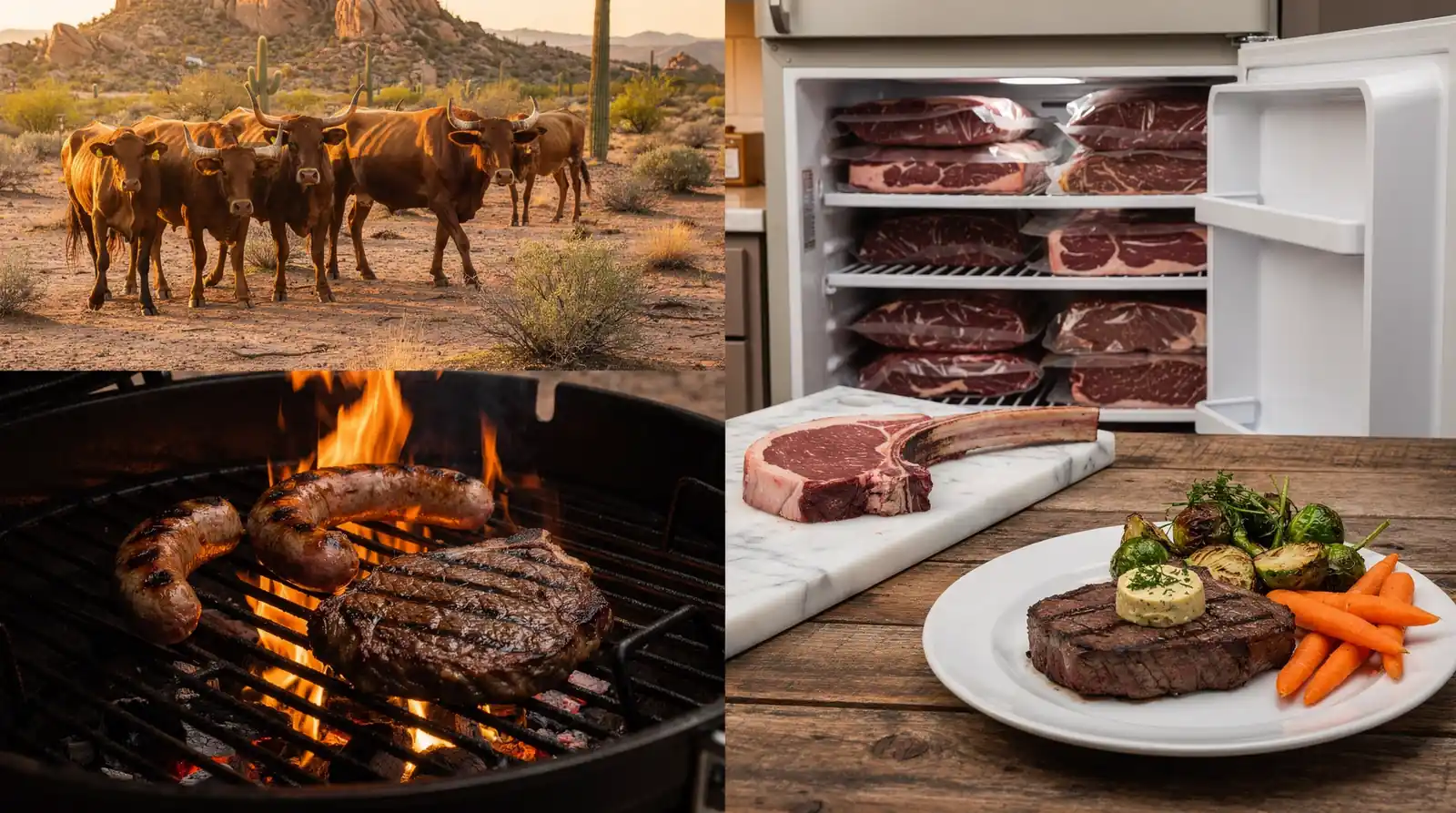
Yes. Bulk beef purchases lower the per-pound cost of high-quality cuts and stock a freezer for months at a time. The benefits of buying half a cow extend well beyond a single grocery trip. Households stop paying retail markup on individual steaks and roasts each week, and freezer space replaces repeat store visits.
Meal planning becomes simpler, too. A stocked freezer means fewer last-minute grocery runs and less food waste from small, inconsistent retail packages.
How much can a household actually save by buying in bulk?
Buying beef by the half animal spreads the cost across premium and everyday cuts alike, which brings down the average price per pound compared to buying individual cuts at retail. Families gain a cost-effective way to prepare meals since a larger inventory allows easier batch cooking and portion planning.
Does buying a half cow reduce food waste at home?
A half cow purchase reduces waste by giving households full control over portioning and storage. Cooks use exactly what a recipe calls for and freeze the rest, rather than discarding unused retail packaging.
Additional advantages include:
- Lower average cost per pound across all cuts
- Months of stocked freezer inventory from one purchase
- Freshness and flavor that outperform typical retail cuts
- Fewer shopping trips and less packaging waste

Why Trust the Sourcing Behind Your Beef Share?
Sourcing transparency starts on the range, not at checkout. Cattle raised for Capital Farms graze the rangelands surrounding Wickenburg, Arizona, for two full years, feeding on natural desert plants without artificial irrigation or fertilizers. That extended pasture time builds the foundation for one of the core benefits of buying half a cow: knowing exactly how the animal lived before it became dinner.
Sourcing quality doesn't stop at the pasture gate, though.
Does grass-fed, grain-finished beef really make a difference?
Yes. After grazing, the cattle move to a 200-day grain-finishing period, with no hormones used to speed the process. This combination — grass-fed rearing followed by grain finishing. Produces beef with richer flavor and better texture than shortcuts allow.
Can customers verify the quality claims?
Reputation offers one form of proof. Capital Farms holds a 4.9-star average rating across 3.4K customer reviews, a signal of consistent results order after order. Buying a beef share also means supporting a small operation instead of an anonymous supply chain.
Consider what sourcing transparency delivers:
- Two years of pasture-raised grazing near Wickenburg, Arizona
- A 200-day grain finish without hormone use
- A locally based ranching operation with verifiable customer feedback
Households evaluating a half-cow purchase gain something retail cuts rarely offer: a clear, traceable origin story behind every steak.
Choosing a half cow beef share represents a commitment to nutritional integrity and transparent sourcing. Capital Farms' premium Corriente beef delivers the natural marbling, deep flavor, and tender texture that distinguish truly nourishing beef from commodity alternatives. By selecting grass-fed, grain-finished beef raised without hormones, you invest in a product aligned with both your health priorities and ethical ranching practices—beef that honors the heritage of sustainable agriculture while meeting the standards of discerning consumers.
FAQ
Why is grass-fed beef considered more nutrient-dense?
Grass-fed, grain-finished Corriente beef from Capital Farms contains higher levels of omega-3 fatty acids, conjugated linoleic acid, antioxidants, and vitamins B12 and E than conventional beef, plus a healthier omega-6 to omega-3 ratio that supports heart health.
Does a half cow share avoid antibiotics and hormones?
Yes, Capital Farms raises Corriente cattle on natural desert forage near Wickenburg, AZ without antibiotics, hormones, or artificial shortcuts, delivering hormone-free protein across every cut in the share.
What nutrition does each serving of half cow beef provide?
A 3-ounce ribeye serving delivers roughly 24 grams of protein along with iron and zinc. Buying a half cow provides these nutrients across dozens of different cuts.