
1 2 beef for sale near me
Buy Half Beef Online — Find Premium 1/2 Beef for Sale Near Me
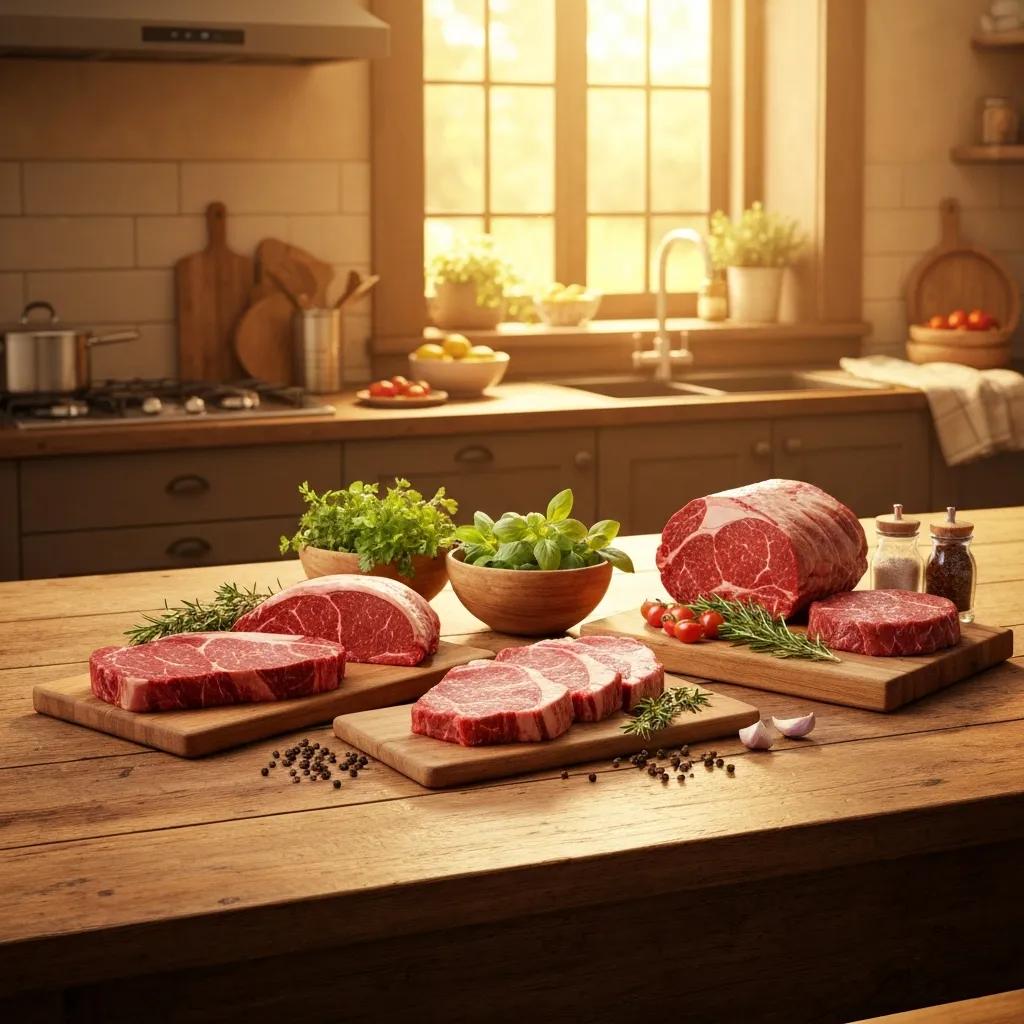
Buying a half beef share puts a steady supply of high-quality meat in your freezer, lowers the cost per meal, and gives you clearer traceability from pasture to plate. This guide walks you through how to find and evaluate 1/2 beef for sale near you: what a half share actually includes, typical take-home weights, which cuts arrive in the box, and practical steps for ordering, storing, and cooking grass-fed half beef. We use Corriente beef and regenerative ranching as a premium example, show per-pound math with a real pre-order, and outline delivery and freezer logistics so you can judge whether a half cow fits your household. Read on for yield tables, pricing examples, freezer-planning checklists, and cooking notes tuned to leaner, grain-finished Corriente beef. The sections below cover definitions and yields, breed and ranching differences, clear cost comparisons, buying and delivery options, cooking methods and recipes, plus an FAQ addressing common buyer questions.
What Is a Half Beef Share and How Much Meat Does It Include?
A half beef share is a bulk purchase where you take home roughly half of an animal after processing — a mix of steaks, roasts, and ground beef meant to feed a household for months. Processors split a carcass into two long halves, then cut and trim each half to the buyer’s specifications; that’s why take-home weight differs from hanging weight once bones and trim are removed. Buying a half share gives you better traceability and often a lower price per pound than retail, though trim level and bone-in versus boneless choices will change your final yield. Below we use concrete take-home numbers to help you plan freezer space and budget.
This table shows typical take-home quantities for a half beef share and how common cuts usually add up.
| Cut Category | Typical Avg. Weight Range (lbs) | Typical Use |
|---|---|---|
| Steaks (ribeye, strip, sirloin) | 30–50 | Grilling, quick sear |
| Roasts (chuck, rump, round) | 40–60 | Roasting, braising |
| Brisket & Short Ribs | 20–30 | Low-and-slow smoking or braise |
| Ground Beef & Trim | 30–40 | Everyday cooking, burgers |
Use the table above as a planning tool: processor choices and trim levels change exact totals, but these ranges give a reliable starting point for estimating meal counts and freezer needs. The next section puts a typical take-home weight into clearer perspective.
How Much Meat Comes from a Half Cow Share?
Expect about 140–180 pounds of take-home beef from a typical half cow after processing, depending on the animal’s size and your butcher choices. A practical planning number is around 158–160 pounds. The chain that converts live animal weight to what you take home goes: hanging weight → processor trim → packaging choices → customer take-home. Trim level, bone removal, and how much gets portioned into steaks versus ground all change usable weight and the number of meals you’ll get. Knowing these variables makes it easier to plan freezer space and calculate per-meal cost when comparing bulk buys to grocery-store purchases.
What Cuts Are Included in a Half Beef Share?
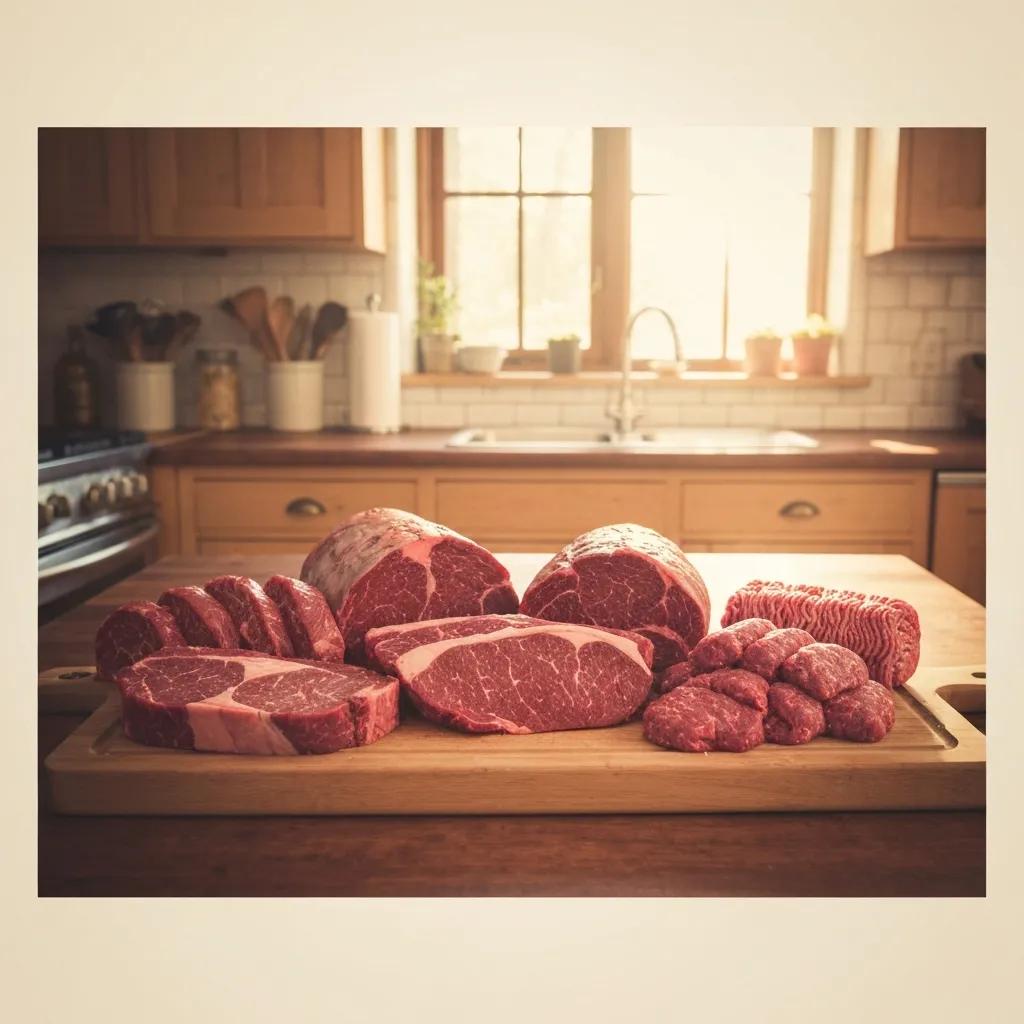
A standard half share usually includes a balanced mix of steaks, roasts, brisket, short ribs, and ground beef, all packaged in family-ready portions by the processor. Typical steaks are ribeye, NY strip, and sirloin; roasts commonly include chuck, rump, and round; brisket and short ribs are for low-and-slow cooking; and much of the trim becomes ground beef. Most sellers let you fill out a butcher sheet to request steak counts and grind ratios, which directly affects how long the share lasts. Knowing the expected cut list helps you plan menus and storage, and leads into breed and quality differences that affect both flavor and cooking approach.
Why Choose Premium Corriente Beef for Your Half Beef Purchase?
Corriente beef offers a leaner profile with concentrated beef flavor and efficient resource use — a choice many buyers prefer for nutrient density and a firmer texture than typical commercial Angus. Corriente cattle are active and well adapted to arid conditions, producing lean, muscular cuts. When grass-fed and grain-finished, they can develop pleasing marbling while still remaining leaner than many feedlot breeds, delivering a balance of flavor and lower overall fat. Below we compare Corriente to common breeds and explain how ranching practices translate into meat quality and environmental benefits.
Research into Corriente cattle helps explain the breed’s specific carcass and muscle characteristics.
Carcass and Longissimus Muscle Characteristics of Texas Longhorn and Corriente Cattle
Wolf, Cathleen C. Clemson University. ProQuest Dissertations & Theses, 2000. 9992589. Carcass and longissimus muscle characteristics of Texas Longhorn and Corriente cattle, 2000
Corriente’s breed traits produce a distinct eating experience and often require slightly different preparation than heavily marbled breeds — we cover those cooking differences next.
What Makes Corriente Beef Different from Other Breeds?
Corriente cattle are known for leanness and adaptability, contrasting with breeds like Angus or Hereford in how muscle and fat are distributed. Corriente meat tends to be leaner, with a strong beefy flavor and a firmer texture — ideal for cooks who prefer less rendered fat but still want rich taste when the meat is prepared correctly. For active adults and households focused on protein-dense eating, Corriente delivers high protein and lower fat that performs well both as quick-sear steaks and as slow-roasted cuts when cooked to suit the muscle structure. Recognizing these breed differences helps you choose suitable cooking methods and set realistic expectations for tenderness and marbling.
How Does Regenerative Ranching Improve Beef Quality and Sustainability?
Regenerative ranching uses practices like rotational grazing, restoring native grasses, and reducing external inputs to build healthier soils and more resilient animals. When applied consistently, these methods increase biodiversity, boost soil organic matter, and can improve forage quality — all of which support animal health and consistent flavor in the meat. For consumers, regenerative practices add a clear sustainability narrative linking pasture management to the product on your plate, and many buyers value those environmental benefits alongside taste and traceability. With that context, next we look at cost and the overall value of buying a half beef share.
Researchers have examined how regenerative ranching affects human-animal relationships and animal welfare outcomes.
Human-Animal Relationships in Regenerative Ranching: Implications for Animal Welfare
Regenerative ranching prioritizes ecosystem restoration and holistic decision-making, offering a chance to reshape human-animal relationships in the industry. This study investigated those relationships in the U.S. Pacific Northwest, using semi-structured interviews with 16 regenerative ranchers and 10 key informants, supplemented by participant observation and thematic analysis. Findings revealed tensions between relational values and entrenched practices: ranchers expressed empathy and used low-stress handling methods, yet traditional practices and systemic constraints sometimes limited welfare gains. The authors recommend explicitly integrating animal welfare into holistic frameworks, pursuing policy reforms, and engaging Indigenous perspectives to better align ethical, ecological, and economic priorities.
Human-animal relations in regenerative ranching: implications for animal welfare, M Hargreaves-Méndez, 2025
How Much Does a Half Cow Share Cost and What Is the Value?
Half cow pricing varies by producer, breed, and processing choices, but the best way to judge value is with per-pound math and a side-by-side comparison to retail prices for similar cuts. Buying in bulk spreads processing and distribution costs over a larger quantity, often lowering the effective price for steaks and ground beef. To illustrate, we use a real product example so you can run the numbers yourself and plan freezer and budget needs. The table below shows total price, an example take-home weight, and the implied price per pound for a premium half share.
This table lays out a clear pricing example for a premium half beef option so you can apply the same per-pound math when comparing offers.
| Product Option | Attribute | Value |
|---|---|---|
| 1/2 Premium Corriente Beef | Total price | $2,199.00 |
| 1/2 Premium Corriente Beef | Example take-home weight | ~158.5 lbs |
| 1/2 Premium Corriente Beef | Implied price per lb | $13.87 per lb (approx.) |
Divide the listed total by the example take-home weight to get an approximate per-pound cost you can compare to grocery steak and ground-beef prices. The next section explains where those per-pound savings show up over time and how to budget for a bulk purchase.
What Is the Half Cow Share Price at Capital Farms?
Capital Farms lists a pre-order price for their 1/2 Premium Corriente Beef at $2,199.00 with an indicated ship date of August 25, 2025, and an example take-home weight of about 158.5 pounds. That math produces an approximate cost of $13.87 per pound. Many buyers find that competitive once quality and traceability are factored in. Because this is a pre-order, plan for the stated ship date and normal processing lead times when you arrange freezer space and payments. This concrete example helps you decide whether the upfront investment fits your meal planning and budget.
How Does Buying Bulk Beef Save Money Long-Term?
Buying a half beef share lowers per-pound costs and cuts down on frequent grocery runs. If you’re paying roughly $13–14 per pound for a mix of steaks and ground beef and you substitute that for higher retail prices, annual savings can be significant — especially for families who eat beef several times a week. Other benefits include less packaging waste, better portion control, and fewer impulse buys, all of which add to long-term budget stability. With the cost case clear, the next section covers where to find and order grass-fed half beef near you and how delivery and pickup typically work.
Where Can I Buy Grass-Fed Half Beef Near Me with Delivery Options?
Many farms and ranches sell half beef shares directly through pre-orders and scheduled processing. Direct-to-consumer models simplify traceability and often offer shipping or local pickup. When searching for “half beef for sale near me,” look for clear product descriptions, processing options, and stated ship or pickup dates so you can coordinate freezer space and payment timing. Knowing typical lead times and delivery methods helps you plan; the table below compares common delivery and pickup options to set expectations. After that, we outline the usual order-to-delivery flow for direct purchases.
This table compares delivery and pickup attributes to help you plan when ordering a half beef share.
| Delivery Method | Lead Time | Typical Cost / Notes |
|---|---|---|
| Farm shipping (ground) | Several weeks to months (pre-order schedule) | Shipping charges vary; plan freezer space |
| Local pickup at ranch | Scheduled on processing date | Often no shipping fee; coordinate pickup |
| Regional distributor delivery | Varies by partner schedule | May include delivery fee and handling |
Lead times and costs differ by delivery method, so plan around the listed ship date when you place a pre-order.
How Does Capital Farms’ Direct-to-Consumer Model Work?
Capital Farms sells defined beef share packages by pre-order: the animal is processed to match customer requests, packages are finalized at the butcher, and orders are shipped or made available for pickup on scheduled dates. The typical workflow is pre-order → processing at a partner butcher → final packaging → scheduled ship/pickup. For the 1/2 Premium Corriente Beef example, the product is listed for pre-order with a stated ship date of August 25, 2025, so plan payments and freezer logistics to match that schedule. Knowing this sequence helps you assess lead-time risk and align delivery with your storage capacity.
What Are the Freezer Space Requirements for Storing Half Beef Shares?
A half beef share usually needs about 8–12 cubic feet of freezer space when vacuum-sealed, depending on packaging density and whether bones are included. Vacuum-sealed meal-size portions pack tighter and save space; boxed, bone-in primals take more room. Estimating around 10 cubic feet is a conservative planning figure for a half share near 158–160 lbs. Label smaller portions for easy thawing and keep a simple inventory list so packages don’t get forgotten. Once freezer planning is sorted, the next section covers how to cook Corriente cuts for the best results.
How Do I Prepare and Cook Premium Corriente Beef from a Half Share?

Match cooking method to cut: lean steaks benefit from quick, high-heat searing and careful resting, while roasts, brisket, and short ribs need low-and-slow heat to break down connective tissue. The principle is simple: high and fast for steaks to preserve juiciness; long and gentle for tough cuts to convert collagen into gelatin. For lean, grain-finished Corriente cuts, short marinades or brines can add moisture without masking the beefy flavor, and monitoring internal temperature prevents dryness. Below are quick method mappings to help you get consistent results across your half share.
- Ribeye and Strip: High-heat sear to medium-rare, rest five minutes.
- Sirloin and Flank: Quick sear or slice thin across the grain after resting.
- Brisket and Short Ribs: Low-and-slow braise or smoke until tender.
Those method mappings give practical, usable guidance; exact times and temperatures depend on cut size and preferred doneness, which we outline in the following subsection.
What Are the Best Cooking Methods for Different Beef Cuts?
Match technique to muscle structure: marbled steaks do best with high heat and short cook times, while collagen-rich roasts need long, moist heat to turn connective tissue into gelatin. For steaks, use a hot pan or grill to build a crust and monitor internal temperature for desired doneness. For roasts and brisket, cook low and slow in an oven or smoker until a probe slides easily into the meat. Lean Corriente steaks benefit from resting and slicing against the grain to preserve tenderness. Using these methods will help you get the most from each cut in your half share.
Where Can I Find Recipes to Maximize Flavor and Tenderness?
Look for recipes organized by cut—steak, roast, ground, brisket—so you can match technique and timing to the meat. A recipe hub focused on Corriente will emphasize ways to protect moisture in leaner cuts, build flavor through seasoning and resting, and add modest fat or brines where helpful. Ground beef from the half share shines in chili, meatballs, and burgers; roasts and brisket reward braises and long smoker sessions. Using cut-specific recipes helps ensure consistently great results from your half share.
What Are the Common Questions About Buying Half Beef Shares?
Buyers often ask whether a half share fits their household, how long meat keeps in the freezer, what processing options exist, and how to handle pickup or delivery. Clear, practical answers remove uncertainty and help you make a confident purchase: measure freezer space, calculate per-meal costs, and coordinate pickup/delivery around scheduled dates. Below are concise, practical responses to the most frequent questions, followed by quick transactional tips for checking availability on pre-order items.
Is Half a Cow Suitable for Small Families?
A half cow can work for small families if you plan portions, split the share with another household, or choose a butcher plan that favors more ground beef and smaller packs. For one- or two-person homes, consider sharing a half with friends or relatives, or request more ground and meal-size packaging to avoid wasting thawed packages. Custom grind options and smaller packs let smaller households use a half share without extra waste.
How Long Does Beef from a Half Share Last in the Freezer?
When vacuum-sealed and stored at 0°F or below, steaks and roasts keep top quality for about 9–12 months; ground beef is best within 3–4 months for peak flavor, though it remains safe longer if frozen consistently. Vacuum sealing reduces freezer burn and color loss compared with traditional paper. Label packages with dates and rotate stock. Thaw in the refrigerator or under cold water for small packs, and avoid refreezing raw beef unless it’s cooked first to preserve texture.
If you’re ready to act, note that Capital Farms lists pre-order availability and a stated ship date for the 1/2 Premium Corriente Beef product — confirm the seller’s ordering steps and your freezer logistics well before delivery.
- Plan freezer space: Measure cubic feet and clear room ahead of the ship date.
- Confirm payment and scheduling: Follow seller instructions for deposits and final payment.
- Coordinate pickup/delivery: Align dates with your schedule to avoid delays.
Frequently Asked Questions
What are the benefits of buying half beef compared to purchasing individual cuts?
Buying a half beef typically lowers your cost per pound and ensures a steady supply of high-quality meat, which makes meal planning easier and reduces grocery trips. It also supports local ranchers and often aligns with sustainable practices like regenerative ranching. For households that cook beef regularly, the combination of savings, traceability, and portion control makes bulk buying a practical choice.
How can I ensure the quality of the beef I purchase?
Research the ranch or farm before you buy: look for clear information about animal handling, feed, and pasture practices. Read reviews and ask for references when possible. Ask the seller about breed and finishing practices, and request a butcher sheet so you can see expected cuts and packaging. Transparent producers will gladly answer questions about traceability and processing.
What should I consider when planning freezer space for a half beef share?
Measure your freezer’s usable cubic feet and plan for roughly 8–12 cubic feet for a half share, depending on packaging and bones. Vacuum-sealed portions pack tighter than boxed primals. Clear space ahead of delivery, label packages with dates, and organize meal-size portions so you only thaw what you need.
Can I customize my half beef order based on my family's preferences?
Yes. Many ranchers let you customize cut ratios and packaging on a butcher sheet — for example, requesting more ground beef, different steak counts, or smaller packs. Customization ensures the share matches your cooking habits and household size, making the purchase more practical.
What are the best cooking methods for lean cuts of Corriente beef?
Lean Corriente steaks do best with high-heat, quick cooking to preserve juiciness; rest and slice against the grain. Tougher cuts like brisket and short ribs need low-and-slow cooking (braise or smoke) to turn collagen into gelatin. Brief marinades or light brines can add moisture without masking natural beef flavor. Monitor internal temperatures to avoid overcooking.
How does the delivery process work for half beef shares?
Most producers use a pre-order system. After the order window closes and processing happens, the butcher packages the beef and it’s either shipped or made available for pickup on a scheduled date. Communicate with the seller about lead times, packing, and delivery logistics so you’re ready to receive and store your order.
What are the environmental benefits of choosing regenerative ranching for beef?
Regenerative ranching focuses on soil health, increased biodiversity, and better water retention, often through rotational grazing and native-plant restoration. These practices can lead to healthier pastures, more resilient animals, and a smaller environmental footprint over time. Consumers who prioritize sustainability often pay a premium to support these outcomes.
Conclusion
Buying a half beef share gives you months of high-quality meat at a lower per-pound cost while supporting ranchers who prioritize land health and traceability. Choosing premium options like Corriente delivers a leaner, flavor-forward profile that cooks well when matched with the right techniques. If you’re ready to streamline meal planning and back regenerative practices, consider a half share — and prepare your freezer and schedule ahead of the ship date to make the experience smooth and rewarding.