
half cow cost
How Much Does a Half Cow Cost? A clear, practical guide to half-cow pricing and value from Capital Farms
Buying a half cow is a bulk approach to beef that gives households a steady supply of steaks, roasts, ground beef and specialty pieces — often at a lower per‑pound cost than shopping cut by cut. This guide walks you through how half‑cow pricing works in 2025, how that price is divided among animal value, processing and packaging, and what to expect when you order. You’ll get clear definitions of hanging weight versus take‑home weight, a simple way to calculate $/lb, typical cuts and quantities, how much freezer space to save, and the practical steps to order. We close by mapping these principles to Capital Farms’ real offering so you can compare value and decide with confidence. First we’ll show costs and inclusions, then detail cuts and logistics, explain quality and sustainability drivers, and finish with storage and ordering tips.
What Is the Cost of a Half Cow from Capital Farms?
Short answer: Capital Farms lists the 1/2 of Premium Corriente Beef at $2,199.00. The packaged share yields about 158.5 pounds of take‑home beef and includes processing and vacuum packaging. That single price covers the animal share, custom butchering into standard cuts, vacuum sealing for freezer storage, and a documented cut breakdown you receive with the order.
When comparing value, the most important facts are the take‑home pounds and what’s included up front — so you can tell whether processing, packaging or aging are extra. Below is a concise, side‑by‑side look at the Capital Farms product and the per‑pound math using the confirmed take‑home weight and a common hanging‑to‑take‑home shrinkage example.
| Product | Price Type | Value |
|---|---|---|
| 1/2 of Premium Corriente Beef | Total price | $2,199.00 |
| 1/2 of Premium Corriente Beef | Confirmed take-home weight | 158.5 lbs |
| 1/2 of Premium Corriente Beef | Price per take-home lb (exact) | $13.88 / lb |
| 1/2 of Premium Corriente Beef | Example price per hanging lb (assumes ~30% shrinkage) | ~$9.70 / lb |
The table above lays out the firm numbers — total price and finished take‑home pounds — and an example conversion to hanging weight using a typical shrinkage assumption. With those figures clear, next we’ll break down the components that add up to the $2,199 total and show how the per‑pound math works.
How Is the $2,199 Price for a Half Cow Calculated?
The advertised price bundles several elements: the animal share (raw meat value), custom processing (butchering and chosen cuts), packaging (vacuum sealing and portioning), and any included aging or finishing. For Capital Farms’ half cow, the $2,199 reflects the finished, packaged product that delivers the confirmed 158.5 pounds of take‑home beef and includes vacuum packaging plus the documented cut list. You can mentally divide the total into: animal value + processing labor and materials + packaging + any maturation premium.
A straightforward way to compare offers is to divide total price by take‑home pounds to get the consumer‑facing $/lb — here, $13.88 per take‑home pound. If you want to compare to hanging‑weight quotes, convert using a reasonable shrinkage rate (industry norm: ~25–35%). Doing that makes locker or slaughterhouse quotes comparable to finished, packaged offers and helps with budgeting and meal planning.
What Is the Price Per Pound: Hanging Weight vs. Take‑Home Weight?
Hanging weight is the carcass weight after slaughter and initial trimming but before aging, trimming and cutting. Take‑home weight is the final packaged weight you receive. The gap comes from shrinkage (moisture loss and trimming) and conversion into retail cuts. Capital Farms’ half cow yields 158.5 pounds take‑home, which gives a direct price of $13.88 per take‑home pound. To estimate a hanging‑weight price, pick a shrinkage percentage and convert — at 30% shrinkage, the implied hanging weight would be roughly 226 pounds and the hanging‑weight price about $9.70.
It matters because some sellers quote hanging weight while shoppers budget with take‑home pounds. Use take‑home $/lb for grocery comparisons and hanging‑weight $/lb when evaluating slaughterhouse or locker quotes. With that per‑pound clarity, the next section lays out what cuts compose the 158.5 pounds so you can plan meals and storage.
What Cuts and Meat Quantity Are Included in a Capital Farms Half Cow?

A half cow generally yields a mix of steaks, roasts, ground beef and specialty primals. Capital Farms supplies a clear cut breakdown and sends the meat vacuum‑sealed for long‑term freezer storage. Knowing the split between steaks, roasts and ground beef is key for meal planning and estimating how long your supply will last. Below is a concise list of the primary cuts you can expect from a Premium Corriente half cow and how each is typically used in the kitchen.
Most half‑cow shares include premium grilling steaks, mid‑range roasts, braising pieces and ground beef for everyday meals. The list below highlights core cuts and their common culinary uses so you can visualize how the 158.5 pounds will feed your household.
- Ribeye and Strip Steaks: Center‑of‑plate cuts prized for marbling and straightforward grilling.
- Sirloin and Top Round Steaks: Leaner, versatile steaks for quick sears, marinades or weeknight dinners.
- Roasts (Chuck, Rump, Round): Perfect for slow roasting, pot roasts and family dinners.
- Brisket and Short Ribs: Made for smoking, braising or low‑and‑slow recipes.
- Ground Beef and Bulk Trim: Everyday workhorses — burgers, sauces, tacos and casseroles.
- Specialty Cuts (Oxtail, Bones): Great for stocks, soups and specialty dishes.
This breakdown helps you plan: steaks for special meals, roasts for bigger family dinners, and ground beef for daily cooking. Below is a quick, at‑a‑glance table showing estimated counts or weights so you can scan the expected yield fast.
| Cut | Estimated count or lbs | Typical use |
|---|---|---|
| Ribeye steaks | ~8 steaks / ~12 lbs | High‑heat grilling or pan‑sear |
| Sirloin/top sirloin | ~10 steaks / ~18 lbs | Everyday steaks, pan sear |
| Roasts (chuck/round) | ~6 roasts / ~36 lbs | Slow roast, pot roast |
| Brisket/short ribs | ~1–2 items / ~20 lbs | Smoking, braising |
| Ground beef | ~30 packs / ~40 lbs | Burgers, sauces, tacos |
| Bones & trim | ~various / ~5–10 lbs | Stock, soups |
This table aligns with the total 158.5 pounds take‑home weight and shows how cuts translate into meals and preparations. Next, we answer which premium cuts are included and then quantify how many meals a half cow typically provides.
Which Premium Beef Cuts Come with the Half Cow Share?
Premium pieces in a half‑cow share often include ribeye, strip (New York), sirloin and occasional specialty steaks — each with its own cooking strengths. Ribeye brings marble and richness for high‑heat grilling or skillet sears; strip delivers a firmer bite and great crust formation. Sirloin and top round are leaner, ideal for quick sears or marinades, while roasts like chuck and rump shine with slow cooking. Capital Farms’ 1/2 Premium Corriente Beef lists a full cut breakdown and ships steaks and roasts vacuum‑sealed so they store and portion cleanly for future meals.
Those premium pieces form the backbone of your meal rotation, and vacuum packaging preserves texture and flavor until you’re ready to cook them. Next we’ll translate the total weight into meal servings so you can see how long a half cow will last.
How Much Meat Do You Get from Half a Cow?
Yield varies with breed, finishing and cutting preferences, but the Capital Farms half cow delivers about 158.5 pounds of take‑home meat — enough to feed a household for many weeks. Using a typical dinner portion of 0.5 to 0.75 pounds per person, 158.5 pounds translates to roughly 210–317 servings. That estimate covers everything from special steak nights to routine weeknight meals, thanks to the mix of steaks, roasts and ground beef included.
Knowing the actual weight and cut split helps with freezer planning and meal scheduling. Next we’ll explain the quality and sustainability choices that influence price and why they matter to taste and the land.
Why Is Capital Farms’ Half Cow Price Worth It? Understanding Quality and Sustainability
Price reflects more than simply pounds of beef — it also reflects breed traits, production methods, animal welfare, and post‑slaughter handling that shape eating quality and environmental impact. Capital Farms raises Corriente cattle using regenerative ranching practices; those choices affect feed, grazing, and land stewardship and can increase operating costs while delivering traceability and environmental benefits. Premium breeding, hormone‑free management, grass‑fed with a grain finish, and careful maturation all contribute to better flavor and tenderness that help explain a higher per‑pound price versus commodity beef.
- Regenerative ranching that focuses on soil health, biodiversity and resilient pastures.
- Corriente breed traits that yield concentrated flavor and efficient forage conversion.
- Hormone‑free, grass‑fed with grain finish for balanced marbling and eating quality.
- Extended maturation practices that enhance tenderness and depth of flavor.
Those attributes deliver tangible eating‑quality benefits and less tangible advantages like traceability and environmental stewardship. Below we unpack how regenerative practices affect costs and why Corriente beef stands out.
How Do Regenerative Ranching Practices Affect Half Cow Cost?
Regenerative ranching relies on rotational grazing, soil‑building and ecosystem management that typically requires more planning, labor and infrastructure than conventional systems. Those investments can raise per‑head costs — fencing, pasture management and monitoring add up — but they also support healthier forage, stronger soils, potential carbon benefits and improved animal wellbeing. For buyers, that usually shows up as a modest price premium coupled with improved flavor, animal health and a claim to better environmental outcomes.
Understanding these tradeoffs helps you choose whether lowest upfront cost or longer‑term quality and sustainability matter more to your household. Next we cover the breed‑specific reasons Capital Farms positions Corriente beef as premium.
What Makes Corriente Beef Premium and Different?
Corriente cattle are a smaller, hardy breed known for efficient forage conversion and resilience in arid climates. Those traits tend to concentrate flavor and require different herd management than commodity breeds. Capital Farms markets its Corriente beef as hormone‑free, grass‑fed with a grain finish — a balance that supports lean muscle and enough marbling for great eating quality. Extended maturation practices cited by the farm can further improve tenderness and flavor, producing a sensory profile that stands apart from standard supermarket beef.
Breed and finishing protocols therefore influence both the eating experience and the price. With that context, the next section covers freezer logistics so you can store your half cow correctly and maximize shelf life.
How Much Freezer Space Do You Need for a Half Cow? Storage and Preparation Tips
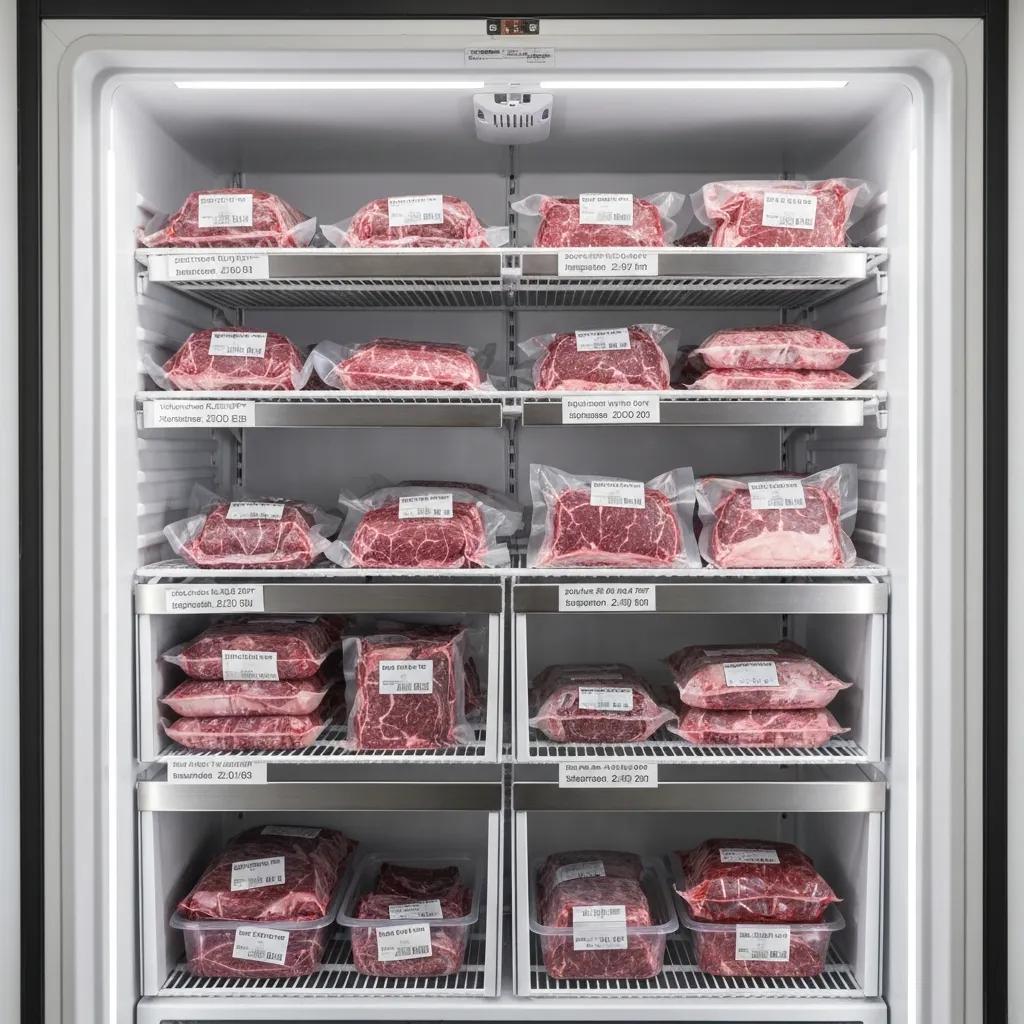
Planning freezer capacity before you buy prevents spoilage and last‑minute scrambling. For Capital Farms’ half cow, plan on roughly 9 cubic feet of freezer space to accommodate the confirmed 158.5 pounds of vacuum‑sealed take‑home beef — a medium chest or upright freezer usually works. Beyond raw capacity, how you portion, vacuum seal and label determines how efficiently that space is used and how easily you can pull specific cuts for meals.
| Total take-home weight | Recommended freezer space | Typical storage approach |
|---|---|---|
| 158.5 lbs | ~9 cubic feet | Vacuum‑sealed packs stacked flat in chest or upright |
| 100 lbs | ~6 cubic feet | Portion into meal‑sized packs and label by date |
| 50 lbs | ~3–4 cubic feet | Use bins/shelves for separation and rotation |
Use this mapping to confirm capacity, decide whether to stagger pickup or split a share, or to upgrade freezer space if needed. Next we offer step‑by‑step storage and organization tips so your half cow stays safe, accessible and tasty.
What Is the Recommended Freezer Space for 158.5 lbs of Beef?
Reserve about 9 cubic feet of usable interior freezer space for 158.5 pounds of vacuum‑sealed beef stacked flat. Chest freezers are often the most space‑efficient for bulk meat; uprights give better organization but may require more room for large roasts. Measure usable internal cubic footage (not exterior size) and leave a small buffer for airflow and easy access.
Confirming space before ordering avoids overcrowding, which can reduce freezing efficiency and safety. Next we’ll cover practical packing and labeling steps to maximize efficiency and freshness.
How Should You Store and Organize Your Half Cow Meat?
Good storage starts with portioning, vacuum sealing, clear labels and first‑in, first‑out rotation. Pack meal‑sized portions (single steaks, 1–2 lb roast packs, 1 lb ground packs), vacuum seal flat for space savings, and label each pack with the cut and pack date. Group like cuts together and keep frequently used items near the top. For thawing, plan ahead with fridge thawing overnight or use a cold‑water thaw for faster needs, and reseal or tightly wrap any opened packages to keep freezer integrity.
These simple habits cut waste and make a half cow convenient for everyday cooking. Next we walk through the straightforward steps to buy a half cow from Capital Farms.
How to Buy a Half Cow from Capital Farms: Ordering Process and Options
Buying a half cow typically follows an easy sequence: pick the share, confirm cut and packaging choices, pay or place a deposit, and schedule pickup or delivery. For Capital Farms the available option is the 1/2 of Premium Corriente Beef priced at $2,199.00 with a confirmed 158.5 pounds take‑home yield; the product listing includes the cut breakdown and notes that orders are vacuum‑sealed and backed by a customer satisfaction guarantee. For details on pickup windows or delivery in Arizona, check the product page or contact the farm directly to finalize logistics.
Below are the standard steps so you know what to expect and can plan freezer space and timing.
- Select your half cow product: Choose the 1/2 of Premium Corriente Beef option on the site.
- Confirm cut options and packaging preferences: Review the standard cut list and request any available customizations.
- Place payment or deposit: Complete checkout per the seller’s terms to reserve your share.
- Schedule pickup or delivery: Arrange a collection window or delivery time and confirm freezer readiness.
- Receive and inspect order: Check vacuum seals, review the cut breakdown and keep documentation for any guarantees.
Following these steps reduces surprises at pickup or delivery. Below we cover local logistics specific to Arizona.
What Are the Steps to Order Your Half Cow Share?
Ordering is straightforward: select the product, verify inclusions, submit payment and schedule pickup or delivery. For Capital Farms start with the 1/2 of Premium Corriente Beef listing showing the $2,199 price and 158.5 pounds take‑home weight. Confirm any cut or packing choices offered, complete your purchase to reserve the share, and set a pickup or delivery time. When you receive the order, inspect the cut list and packaging and keep records in case you need to use the customer satisfaction guarantee.
Clear steps make planning freezer space and menus easier. The next subsection covers pickup and delivery options around Arizona.
Are There Delivery or Pickup Options Available in Arizona?
Capital Farms works out of Arizona and commonly provides local pickup or delivery options for regional customers. Availability and scheduling can vary by season and location, so confirm pickup windows or delivery logistics with the farm when you place your order. Many buyers prefer in‑region pickup to shorten transport time and protect product integrity, while scheduled delivery may be available in the service area to help customers without a freezer‑capable vehicle.
Confirming logistics ahead of purchase ensures the full take‑home package arrives frozen and intact. Next we answer common buyer questions about value and fees.
What Are the Most Common Questions About Half Cow Cost? FAQs Answered
Shoppers often wonder whether a half cow is cheaper than retail and how much processing and packaging add to the total. Short, direct answers help you compare quickly and decide whether a bulk purchase fits your budget and food priorities. Below are clear Q&A entries addressing frequent concerns with practical context.
Is Buying a Half Cow More Cost-Effective Than Retail Meat?
Generally yes — buying a half cow is often cheaper per pound than buying individual cuts at retail, because bulk purchasing spreads processing costs and cuts out many middlemen. In the Capital Farms example the effective price per take‑home pound is $13.88, which can be below comparable retail prices for similar quality, especially for steaks and roasts. Beyond savings, buyers also get consistent supply, traceability and the ability to choose a cut distribution that fits their household.
Remember that real savings depend on how often you use specific cuts and how you value quality and sustainability. Next, we explain processing and packaging costs.
How Much Does Processing and Packaging Add to the Half Cow Price?
Processing and packaging cover butchering labor, portioning, vacuum sealing and any included aging. Some locker facilities quote these fees separately, while direct sellers bundle them. For Capital Farms the $2,199 price includes processing and vacuum packaging, so the 158.5‑lb figure represents finished, packaged meat. When comparing suppliers, add any separate processing fees to the animal price before calculating $/lb — bundled offers make budgeting simpler and avoid surprises at pickup.
Being clear about what’s included prevents hidden charges and makes per‑pound comparisons straightforward, wrapping up the core facts you need to decide about buying a half cow in 2025.
Ground Beef Market Dynamics and Implications for Cattle Producers
This excerpt discusses how changes in fed cattle premiums can flow through to wholesale and retail prices. For example, if half of a 2014 fed cattle premium were passed on, wholesale prices could be about 10% lower than otherwise — and retail prices would likely follow. The point: shifts in the wholesale or ground beef market affect what consumers ultimately pay.
Market dynamics for ground beef influence the value of bulk purchases. Knowing how premiums shift between producer, wholesaler and retailer helps when you compare a half‑cow $/lb to fluctuating grocery prices — bulk purchases often bypass some retail markups, which is why per‑pound comparisons matter.
Ground Beef Market Dynamics and Implications for Cattle Producers
This study passage highlights how producer premiums can alter downstream wholesale and retail prices. A portion of a cattle price premium passed to wholesale would reduce final retail costs — a useful lens for understanding how market changes affect consumer beef prices.
Frequently Asked Questions
What are the benefits of buying a half cow compared to purchasing individual cuts?
Buying a half cow gives you lower per‑pound costs, a dependable supply of high‑quality beef, and the flexibility to tailor cut distribution to your household. It also supports local farms and sustainable practices, and provides better traceability and animal welfare than many commodity options. For families who eat beef regularly, a half cow can be both economical and convenient.
How can I ensure the quality of the beef I receive?
Choose a trusted supplier that documents its practices, like Capital Farms. Ask about breed, feeding and finishing protocols, animal welfare standards, and any aging steps. Inspect packaging at pickup to ensure vacuum seals and accurate labeling. Transparency from the farm and clear packaging are the best ways to confirm quality.
What should I consider when planning meals with a half cow's worth of meat?
Think about the variety of cuts you’ll receive and match them to recipes: reserve steaks for special meals, use roasts for Sunday dinners or batch cooking, and portion ground beef for weeknight staples. Plan portion sizes and a meal calendar so you use cuts while they’re freshest and rotate your freezer to avoid waste.
How long can I store the meat from a half cow in the freezer?
With proper vacuum sealing, most cuts will keep quality for 6 to 12 months in the freezer. Label each pack with cut and pack date and follow first‑in, first‑out rotation. Proper sealing and consistent freezer temperature are the keys to long shelf life.
What are the environmental benefits of purchasing beef from regenerative farms?
Regenerative farms focus on soil health, biodiversity and water retention, which can build more resilient ecosystems. Practices like rotational grazing can improve carbon sequestration and animal health over time. By buying from these operations you support farming methods aimed at healthier land and ecosystems.
Can I customize my order when buying a half cow?
Yes — many farms, including Capital Farms, offer customization for cuts and packaging. Review the standard cut list and communicate preferences at order time. Customization helps you get the cuts you use most and maximize the value of your share.
Conclusion
Buying a half cow is a practical way to secure quality beef at a predictable cost while supporting regenerative ranching and traceable supply chains. Understanding the take‑home weight, what’s included and how production choices affect price makes it easier to decide if a half cow fits your household. To explore options and reserve your share of Premium Corriente Beef, visit Capital Farms and review the 1/2 of Premium Corriente Beef product listing. Enjoy better beef, better stewardship, and a well‑stocked freezer.