
Grass Fed Beef Share Benefits With Sustainable Farmers
Grass Fed Beef Share Benefits With Sustainable Farmers
By Capital Farms Meats & Provisions Editorial Team · Updated 2026-07-21
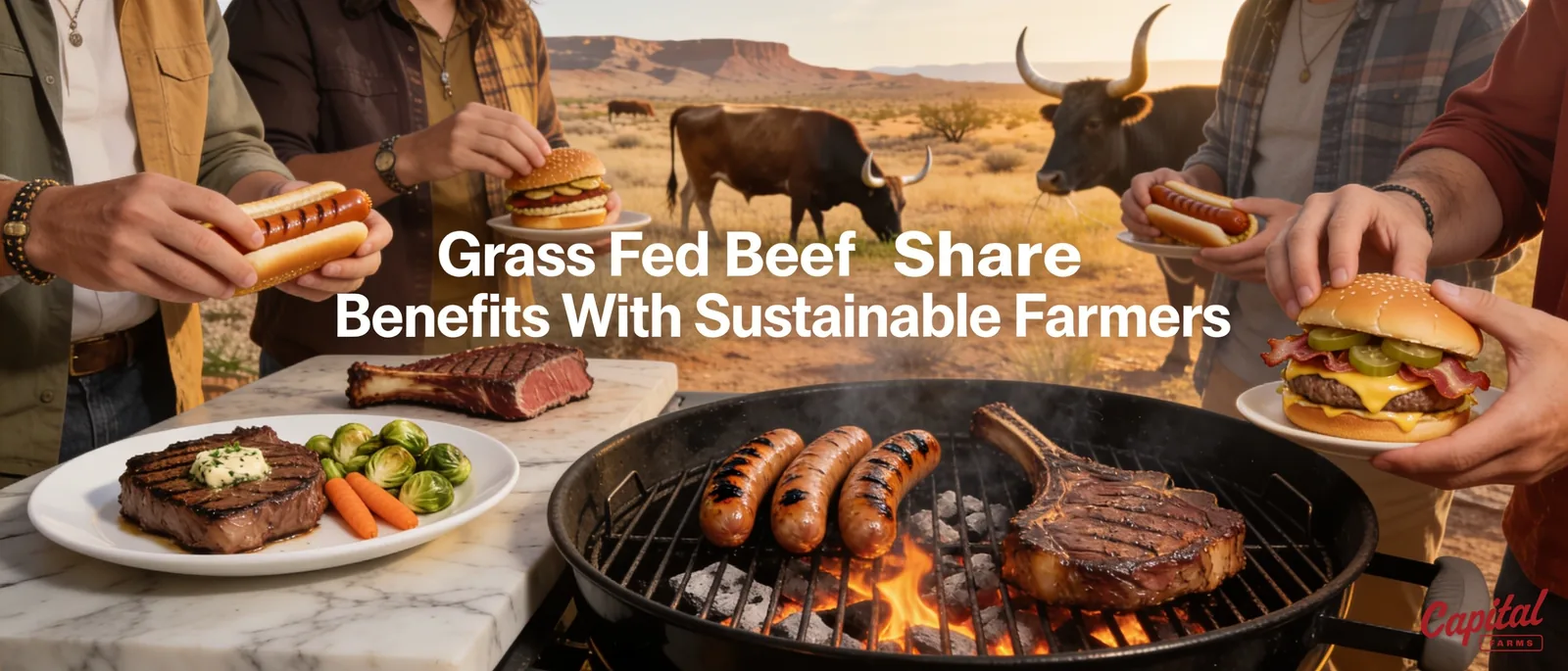
For Grass Fed Beef Share Benefits, grass-fed beef delivers sustainable benefits for farmers by using rangeland unsuitable for crops, reducing dependence on irrigation and synthetic fertilizers. Corriente cattle, raised on desert rangeland near Wickenburg, Arizona, are grass-fed and 200-day grain-finished, regenerating land while producing hormone-free beef that rewards patience over speed.
Key Takeaways
- Grass-fed beef production reduces carbon footprint compared to conventional livestock farming methods.
- Local beef purchases from farms like Capital Farms support sustainable agriculture and farm-to-table movements.
- Families purchasing whole cow shares store meat for year-round food security and sustainability.
- Capital Farms in Wickenburg, Arizona operates with 8 employees producing premium Corriente beef.
Can Grass-Fed Ranching Really Shrink Carbon Footprints?
Grass-fed ranching challenges old assumptions about beef and emissions. Livestock production carries a reputation as a net greenhouse gas emitter, largely because ruminant digestion produces methane. cite-1 That reputation drove decades of belief that feedlot systems, with tighter land use, automatically beat grass-based ranching on carbon footprint. A modeling study published last year pushed back on that assumption, finding the comparison isn't so simple.
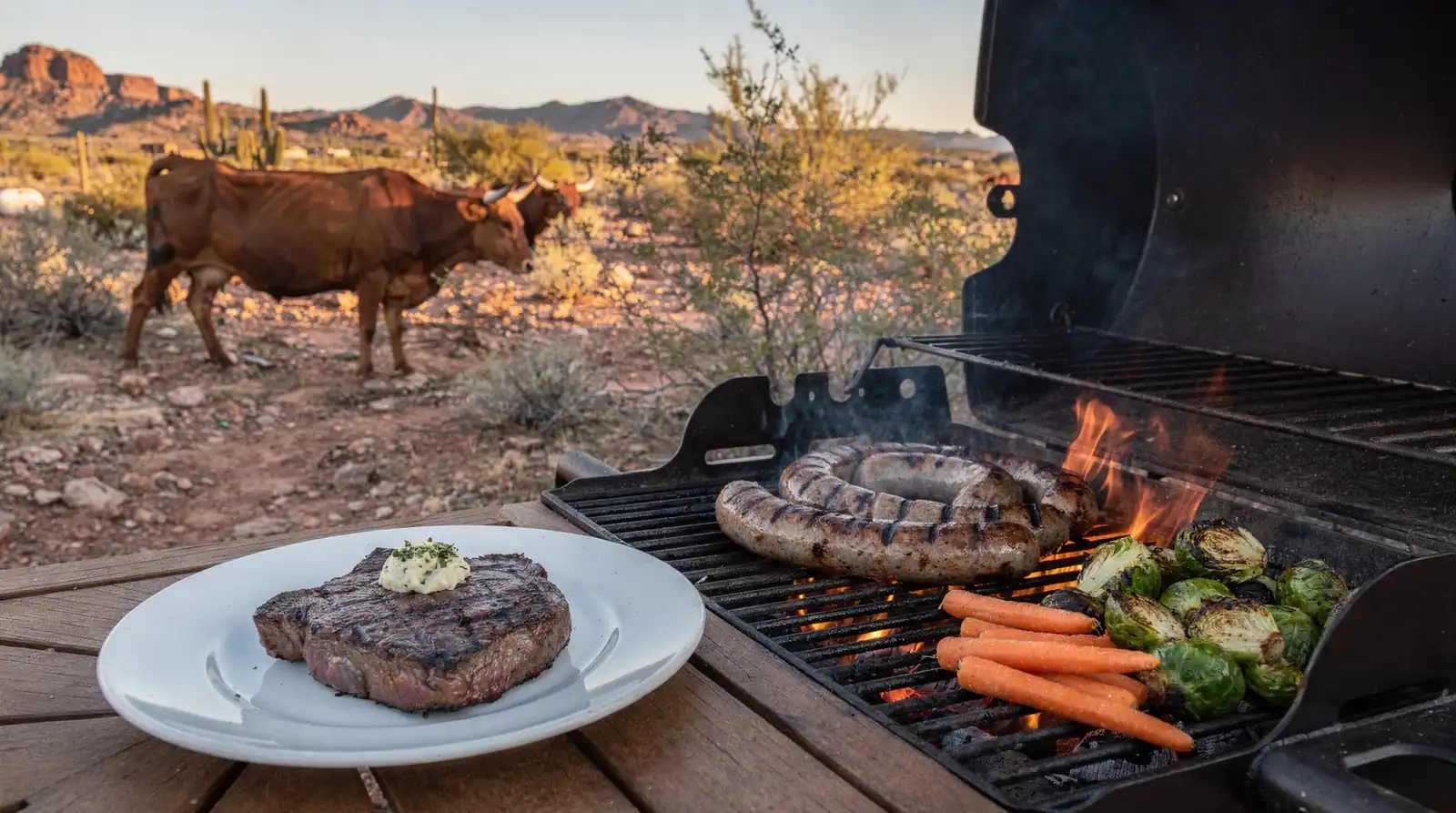
Land management matters as much as diet. Corriente cattle graze natural desert plants without artificial irrigation or fertilizer inputs, converting rangeland that other cattle breeds cannot use into productive, healthy grazing ground. That process regenerates soil rather than depleting it.
Does grazing location affect sustainability outcomes?
Location shapes the entire equation. Capital Farms' Corriente herds graze the rangelands surrounding Wickenburg, Arizona, for two full years before moving toward finishing. That extended grazing period lets cattle build strength on terrain unsuited to crop farming or conventional grazing.
For farmers and ranchers weighing direct-to-consumer models, this distinction carries real weight:
- Land regeneration: grazing marginal desert acreage restores rather than strains it
- Reduced inputs: no irrigation or fertilizer dependency lowers the resource footprint
- Challenged assumptions: modeling research shows feedlot systems aren't automatically the lower-carbon choice
These factors matter directly to anyone evaluating Grass Fed Beef Share Benefits as part of a sustainability-focused buying decision.
Why Do Beef Shares Pay Off for Small Farms?
Beef shares pay off because they let small operations sell in volume while giving customers a lower per-pound cost than retail cuts. Grass Fed Beef Share Benefits extend beyond price: buyers get easier meal planning. Exposure to cuts they might never pick from a butcher case. For farmers, that repeat demand builds a predictable, direct-to-consumer revenue stream without relying on wholesale buyers.
Family-run farms depend on this model to keep fresh, local beef flowing to nearby households. Selling shares removes layers of distribution, connecting the ranch directly to the dinner table.
Does buying a beef share support sustainable farming?
Direct beef delivery reinforces practices like crop rotation and attentive animal welfare, both central to the farm-to-table movement. cite-2 Farmers who sell shares often manage land and herds with more care, since customers see the results firsthand.
What does a beef share include, and how does volume selling work?
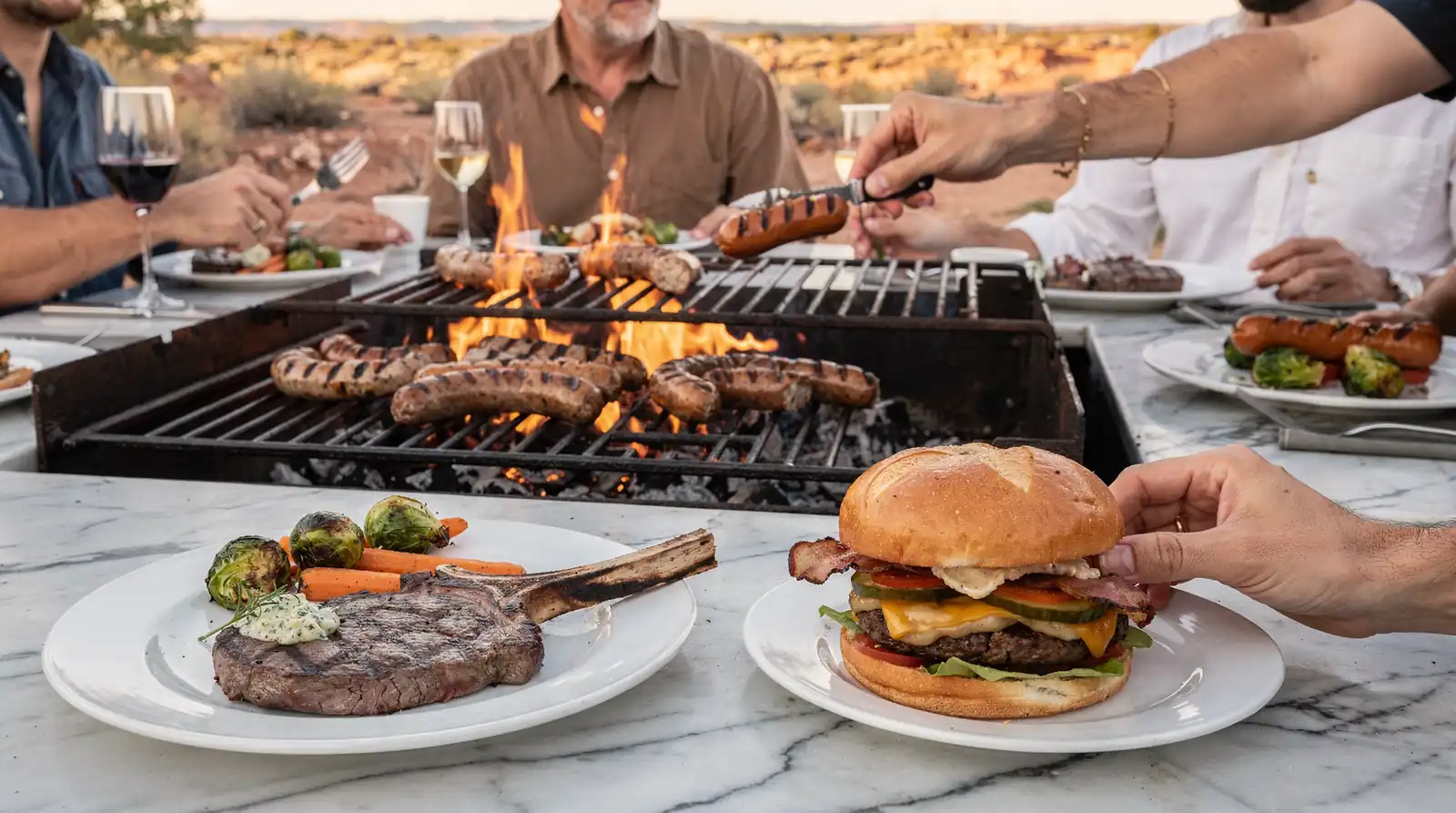
A beef share typically bundles multiple cuts together, similar to how Capital Farms sells individual retail cuts such as NY Strip, Sirloin, Ribeye, Filet Mignon, and Teres Major. Farmers can model assortments after this approach:
- Steaks for grilling
- Roasts for slow cooking
- Ground beef for everyday meals
Wider distribution matters too. Capital Farms offers free shipping on orders over $250 across states including Arizona, California, Nevada, Utah, and Texas, showing how logistics support can extend a small ranch's reach well beyond its home market.
Does Slow Grass Feeding Improve Beef Quality?
Slow grass feeding measurably improves beef quality by shaping fatty acid composition and depth of flavor. Extended time on pasture, followed by careful finishing, builds a nutritional and taste profile conventional systems rarely reach. Farmers and ranchers evaluating direct-to-consumer beef sales gain a real quality argument here, not just a marketing claim.
Research on pasture-based systems shows access to forage, fresh or conserved, directly influences the fatty acid profile of meat. Evidence increasingly points to pasture access as a key driver of better nutritional quality in beef. Capital Farms builds on that principle by pairing grass feeding with a 200-day grain finish, avoiding shortcuts that speed up growth at the expense of flavor.
Why does harvest age matter for beef flavor?
Most cattle reach harvest weight around 18 months, long before deep flavor compounds fully develop. Capital Farms holds its Corriente cattle to 48 months or older, giving muscle and fat time to mature. That extra time produces richer, more tender beef than early-harvest systems typically deliver.
Key factors behind that quality difference include:
- Grass Fed Beef Share Benefits rooted in pasture-driven fatty acid improvement
- Extended harvest age of 48 months or beyond, versus the industry-standard 18 months
- A hormone-free approach that lets nature, quality grains, and time build flavor
- A 200-day grain finish that rounds out tenderness without artificial acceleration
Slower cattle-raising costs more time upfront, but it pays off in flavor and nutrition that fast-tracked beef cannot match.
Grass-fed beef production represents a convergence of agricultural sustainability and farmer prosperity. By raising cattle on rangeland that regenerates naturally without artificial inputs, farmers steward their land while building resilient operations. Capital Farms demonstrates this commitment through our Corriente cattle program in Arizona. Traditional ranching practices and environmental stewardship work in concert. This approach proves that premium quality and sustainable farming are not competing interests. Complementary goals that benefit both producers and consumers alike.
FAQ
Does grass-fed ranching reduce carbon footprint compared to feedlots?
Recent modeling research challenges the assumption that feedlot systems automatically beat grass-based ranching on carbon footprint. Corriente cattle graze desert rangeland without irrigation or fertilizer inputs, regenerating soil rather than depleting it.
Why does grazing location matter for sustainability?
Capital Farms' Corriente herds graze rangelands around Wickenburg, Arizona, for two full years, building strength on terrain unsuited to crop farming. This extended grazing restores marginal desert acreage and lowers dependence on irrigation and fertilizer.
How do beef shares benefit small farms and sustainable practices?
Beef shares let small operations sell in volume, creating predictable direct-to-consumer revenue without wholesale buyers. This model reinforces sustainable practices like crop rotation and attentive animal welfare central to the farm-to-table movement.